EXPLORE THIS STORY
Show your friends how the world sees the same news differently.
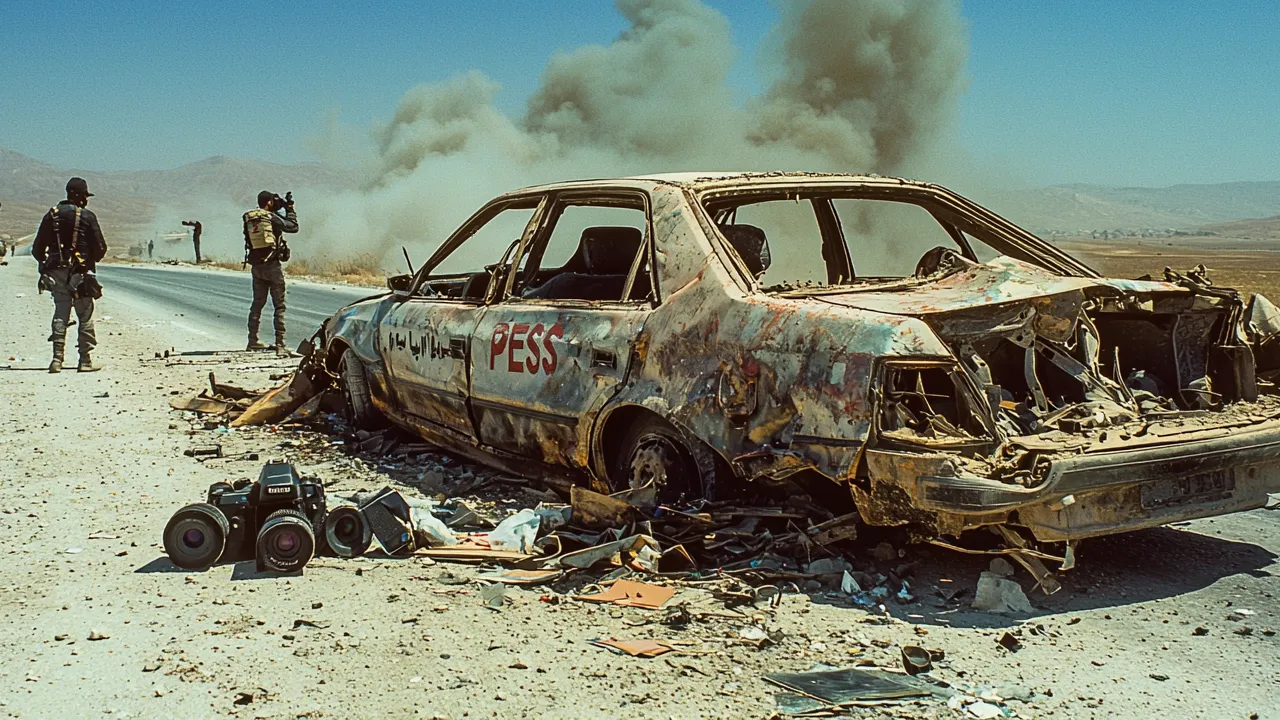
An Israeli airstrike in southern Lebanon kills three Lebanese journalists in their vehicle. CNN crew detained and injured in the West Bank. Fourteen countries cover the event — from Turkish denunciation to Israeli justification. War on media as a blind spot in the conflict.
FRAMING GAP
82/100Perspectives diverge strongly
Here are the main framing differences identified between media coverages.
DOMINANT ANGLE
Attacking the Lebanese press means attacking the Francophone world — personal historical bond
Dominant angle identified — does not reflect unanimity of this country’s media
KEY POINTS
BIASES
DOMINANT ANGLE
Both versions in the same headline — India between Israel and the Arab world
Dominant angle identified — does not reflect unanimity of this country’s media
KEY POINTS
BIASES
DOMINANT ANGLE
Not journalists — Hezbollah operatives behind cameras
Dominant angle identified — does not reflect unanimity of this country’s media
KEY POINTS
BIASES
DOMINANT ANGLE
'Blatant crime' — the most direct condemnation after Turkey
Dominant angle identified — does not reflect unanimity of this country’s media
KEY POINTS
BIASES
DOMINANT ANGLE
Three journalists plus nine medics equals bloodshed across Lebanese civil society
Dominant angle identified — does not reflect unanimity of this country’s media
KEY POINTS
BIASES
DOMINANT ANGLE
'Continued targeting of media' — Turkey accuses Israel of systematic policy
Dominant angle identified — does not reflect unanimity of this country’s media
KEY POINTS
BIASES
DOMINANT ANGLE
Three journalists in a car — the vehicle detail as moral judgment
Dominant angle identified — does not reflect unanimity of this country’s media
KEY POINTS
BIASES
DOMINANT ANGLE
'Officials Say' — American caution that avoids naming the act a crime
Dominant angle identified — does not reflect unanimity of this country’s media
KEY POINTS
BIASES
DOMINANT ANGLE
Attacking the Lebanese press means attacking the Francophone world — personal historical bond
Dominant angle identified — does not reflect unanimity of this country’s media
KEY POINTS
BIASES
DOMINANT ANGLE
Both versions in the same headline — India between Israel and the Arab world
Dominant angle identified — does not reflect unanimity of this country’s media
KEY POINTS
BIASES
DOMINANT ANGLE
Not journalists — Hezbollah operatives behind cameras
Dominant angle identified — does not reflect unanimity of this country’s media
KEY POINTS
BIASES
DOMINANT ANGLE
'Blatant crime' — the most direct condemnation after Turkey
Dominant angle identified — does not reflect unanimity of this country’s media
KEY POINTS
BIASES
DOMINANT ANGLE
Three journalists plus nine medics equals bloodshed across Lebanese civil society
Dominant angle identified — does not reflect unanimity of this country’s media
KEY POINTS
BIASES
DOMINANT ANGLE
'Continued targeting of media' — Turkey accuses Israel of systematic policy
Dominant angle identified — does not reflect unanimity of this country’s media
KEY POINTS
BIASES
DOMINANT ANGLE
Three journalists in a car — the vehicle detail as moral judgment
Dominant angle identified — does not reflect unanimity of this country’s media
KEY POINTS
BIASES
DOMINANT ANGLE
'Officials Say' — American caution that avoids naming the act a crime
Dominant angle identified — does not reflect unanimity of this country’s media
KEY POINTS
BIASES
War crime or collateral damage?
Turkey and Pakistan say 'crime.' Al Jazeera says 'bloodshed.' The US says 'Officials Say.' Israel says 'Hezbollah operative.'
Frame this way
Frame the opposite
The Hezbollah claim: credible or pretext?
Israel asserts one journalist was Hezbollah. India reports the claim with 'Claims.' The NYT uses 'Officials Say.' Turkey and Pakistan ignore it entirely.
Frame this way
Frame the opposite
Direct condemnation
Shared narrative
Flagrant crime, systematic targeting of media, no qualification
Diplomatic caution
Shared narrative
'Officials Say' and 'Claims' — report without taking sides
Historical solidarity
Shared narrative
The Franco-Lebanese bond makes the strike personal
Self-defense
Shared narrative
Combatants behind cameras, not journalists
Omitted topics
Highlighted by
Omitted topics
Highlighted by
The killing of journalists in conflict zones is a barometer of war brutality. When a country fires on press vehicles, it tells the world: I do not want witnesses. Each country reads this message through its own interests — Israel justifies, the US hesitates, Turkey accuses, France grieves, Pakistan condemns, India balances. But the fact remains: three journalists died in their car, and the world cannot even agree on the word to describe it.
AI-powered analysis
AI-generated content — Analyses are produced by artificial intelligence from press articles. They may contain errors or biases. Learn more