EXPLORE THIS STORY
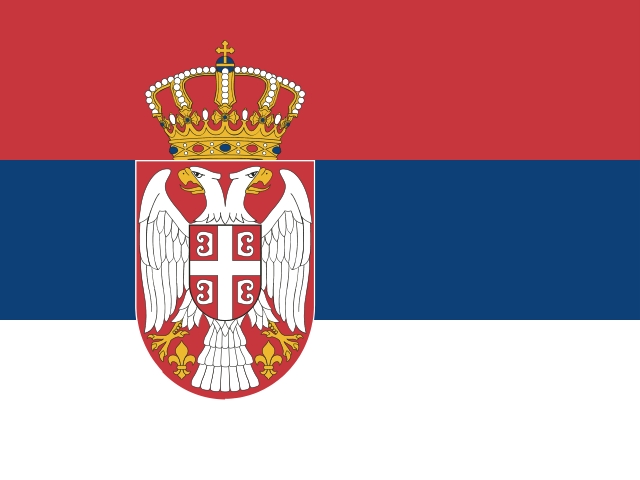
SERBIA PERSPECTIVE
HUNGARIAN ELECTIONS: ORBAN FACES THE TIGHTEST RACE OF HIS 16 YEARS IN POWER
Single source
DOMINANT ANGLE
Belgrade treads carefully between explosives found on its soil and its alliance with Orban
Dominant angle identified — does not reflect unanimity of this country’s media
ANALYSIS
Belgrade finds itself at the center of an electoral thriller that is not its own, with explosives discovered near the gas pipeline on Serbian territory.
N1 Serbia covers the incident from two distinct angles. The first reproduces the statements of Hungarian opposition leader Magyar: 'Many had predicted that something would accidentally happen on the pipeline' — an insinuation of false flag that the Serbian media reproduces without validating or dismissing it. The second article poses the question directly: 'Are the explosives near Kanjiza linked to Hungarian elections?'
Serbia's position is uncomfortable. It was President Vucic who revealed the explosives discovery near the TurkStream pipeline extension. Yet Vucic is an ally of Orban — both share proximity to Moscow and skepticism toward Brussels. The fact that the discovery occurred six days before the Hungarian vote, when polling was tightest in the Orban era, raises a question that N1 Serbia formulates but does not answer.
What Serbian media reveal obliquely: the TurkStream gas pipeline that transects Serbia toward Hungary has become as much a political instrument as an energy artery. Whoever controls the narrative about pipeline security controls a lever of influence over the Hungarian election. For Belgrade, this episode exposes the vulnerability of being caught between powerful allies with competing interests.
KEY POINTS
- Explosives were found on Serbian territory near Kanjiza, not in Hungary
- Vucic, an Orban ally, revealed the discovery — timing raises questions
- The TurkStream pipeline is now as much a political instrument as an energy conduit
COGNITIVE BIASES IDENTIFIED
Excessive caution that avoids taking position on the explosives' origin
The Vucic-Orban alliance is not interrogated in depth
Framing centers on Serbia rather than the implications for Hungary
SOURCES (1)
Does this analysis seem accurate?
SHARE






