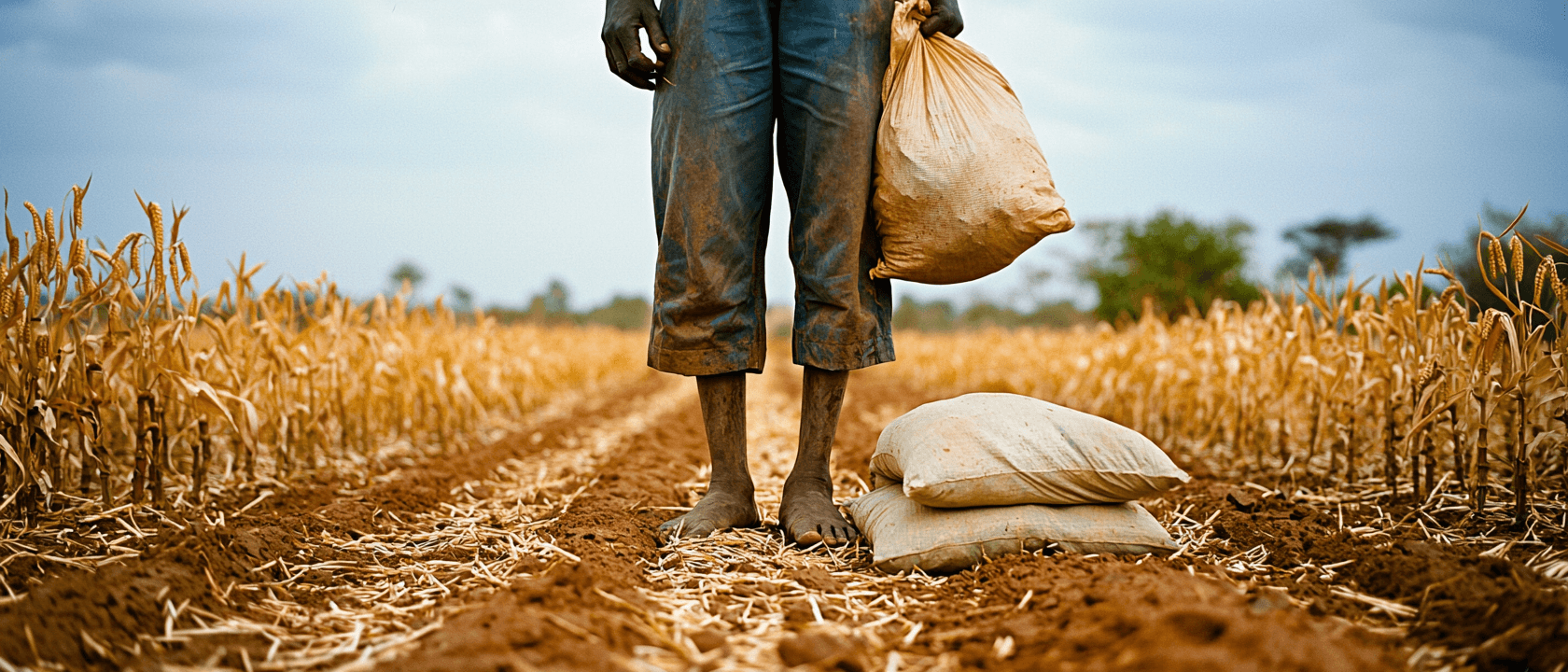
Hormuz Blocks Fertilizers, Not Just Oil — and Famine Is Brewing
|4 min
pkinbdphidvnsnmletegir
Everyone is watching the price of oil. Nobody is watching the price of urea. And that is where the next crisis will unfold.
Roel Gaano used to earn 500 pesos a day driving his tricycle in San Francisco, Agusan del Sur. Since March, he no longer goes out — LPG is nowhere to be found. His story, told by [Rappler](/en/sujets/guerre-entre-dans-cuisines-prix-etranglent-quotidien-20260401), is that of millions of Filipino workers. But it is only the visible symptom of a crisis that threatens 2 billion people.
The numbers nobody is assembling
Since the closure of the Strait of Hormuz in late February, 46% of global urea exports have been blocked. Prices have surged from $482 to over $700 per ton in three weeks. For comparison: during the last global food crisis in 2008, urea hit $825 per ton — and 18 countries experienced food riots (Burkina Faso, Cameroon, Haiti, Egypt, Indonesia, Mexico...). The 2008 threshold will be breached by late April if nothing changes.
But urea is not oil. Oil can be rationed. Urea is binary: either crops receive fertilizer in time, or yields collapse. There is no half measure.
Short term — the energy crisis (weeks)
The same strait blocks both oil and fertilizers. But oil is immediately visible — pump prices, queues, rationing. Fertilizers will only show up when harvests fail.
The energy crisis is already here:
- Pakistan: 70-80% of oil imported from the Gulf, 99% of LNG from Qatar and the UAE. Reserves: 10-14 days only. LPG up 35% in one month (see our analysis).
- Philippines: 95% of crude oil from the Gulf. Reserves: 50-60 days. State of calamity declared in Agusan del Sur province.
- Indonesia: 37% of gas and 30% of LPG imported from the Gulf. Reserves: 23 days. Remote work mandated on Fridays.
- Vietnam: 49% of gas and 70% of LPG from the Gulf. Reserves: 30-45 days.
The invisible crisis is fertilizers. India imports 7.17 million tons of urea per year (2025 figure, up 120%). Over 70% comes from the Gulf — Oman alone supplies 46%, Saudi Arabia and the UAE the rest. All of it transits through Hormuz.
The southwest monsoon arrives in Kerala in late May and progresses northward through July. Kharif rice planting — which feeds 600 million Indians — must begin in June. To plant, you need urea. The urea is stuck at sea for 5 weeks.
A 10-day delay in supply reduces rice yields by 78 kg/ha according to IGIDR. A 5-week delay is unprecedented.
India had banned wheat exports in May 2022 to protect its domestic market. It lifted the ban in March 2026 after a record harvest. But if fertilizers do not arrive, the next harvest will be anything but record — and the export ban will return.
The chain that leads to Africa
In 2021-22, India exported 7-8 million tons of wheat. Bangladesh received 3.8 million tons — 50% of Indian shipments. Sri Lanka 548,000 tons, Indonesia 366,000 tons, the Philippines 352,000 tons.
Africa is a more recent destination: Senegal (500,000 tons over 6 months), Mali (100,000 tons), Gambia (50,000 tons) — government-to-government sales. If India cuts exports to protect its population, these countries have no short-term alternative.
The Carnegie Endowment (source) estimates that 200 million additional people could fall into food insecurity by September. IFPRI (source) documents that the Hormuz closure has blocked nearly 50% of global urea exports. UNCTAD (source) warns that fertilizer supply chain disruptions translate into yield losses 6-9 months later.
Why nobody is talking about it
Western media cover the price per barrel ($127, up 60% in March). They do not cover the price of urea ($700+, up 50% in 3 weeks) because urea is not exchange-traded like Brent crude. It is negotiated over the counter between importers and exporters. The data is fragmented, the markets opaque. The result: an invisible crisis until it becomes a visible famine.
The "energy," "Iran," and "India" stories, covered separately by every outlet, are in reality a single crisis seen through three windows. Oil makes the headlines today. Fertilizers will make the famines.
CriticalWarningAffectedNeutral
1
46%
Hormuz closure (Feb. 28): of global urea exports blocked
2
50%
Urea price: $482 → $700+/t in 3 weeks (+ )
3
17 Mt
India imports 7. urea/year — 70% from the Gulf via Hormuz
4
600M
June monsoon: kharif rice planting for Indians
5
40%
Without fertilizer by May: yields down 20- (IFPRI)
6
8 Mt
Indian wheat feeds Bangladesh (3. ) + Sahel Africa
7
200M
people heading toward food insecurity (Carnegie)
SHARE THIS COMPARISON
Show your friends how the world sees the same news differently.
AI-generated content — Analyses are produced by artificial intelligence from press articles. They may contain errors or biases. Learn more