Pakistan, Qatar and the UAE now form a mediation triangle independent of P5+1 and G7 frameworks. This triangle has a particularity: none of these three countries is bound by EU sanctions or NATO obligations, and all three maintain operational relations with Tehran and Washington simultaneously.
Pakistan: Acquired Centrality
Pakistan's Chief of Army Staff Asim Munir traveled to Tehran on April 16 (see our analysis) -- the first visit by a Pakistani Chief of Army Staff to Iran since 2017. Pakistan shares a 909 km border with Iran (Sistan-Baluchistan province), manages four commercial border crossings, and informally cooperates with the Pasdaran on drug trafficking. This density of operational connections gives Islamabad a tactical legitimacy that Washington cannot directly reproduce.
Qatar: The Channel Open to Everyone
Doha simultaneously maintains diplomatic relations with Israel (indirect channel via Mossad on the 2023-2024 Gaza hostage exchange), Hamas (political bureau based in Doha since 2012), Hezbollah (Hassan Nasrallah-emir Tamim channel), Houthis (2022-2023 mediation), Pasdaran (IRGC-Qatari military intelligence channel), the Taliban (Doha headquarters since 2013) and the Trump administration (Doha-Camp David 2020 summit still active). This versatility is unique in the world.
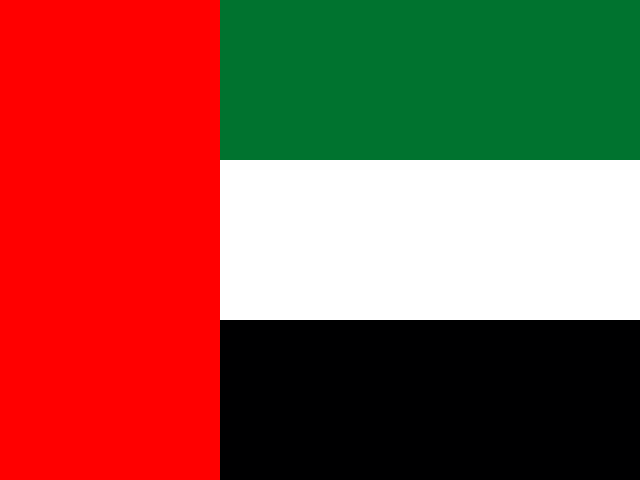
UAE: The Financial Channel
The UAE bring to the triangle what neither Pakistan nor Qatar can provide: financial depth. Emirati sovereign wealth funds (ADIA, Mubadala, ADQ) collectively manage approximately $1.5 trillion. The UAE can therefore structure complex peace transactions: guarantee deposits, escrow accounts, reconstruction program financing. The precedent is the 2020 Abraham Accords: the UAE brought $10 billion in promised investments to Israel as the deal's economic dimension.