N°28
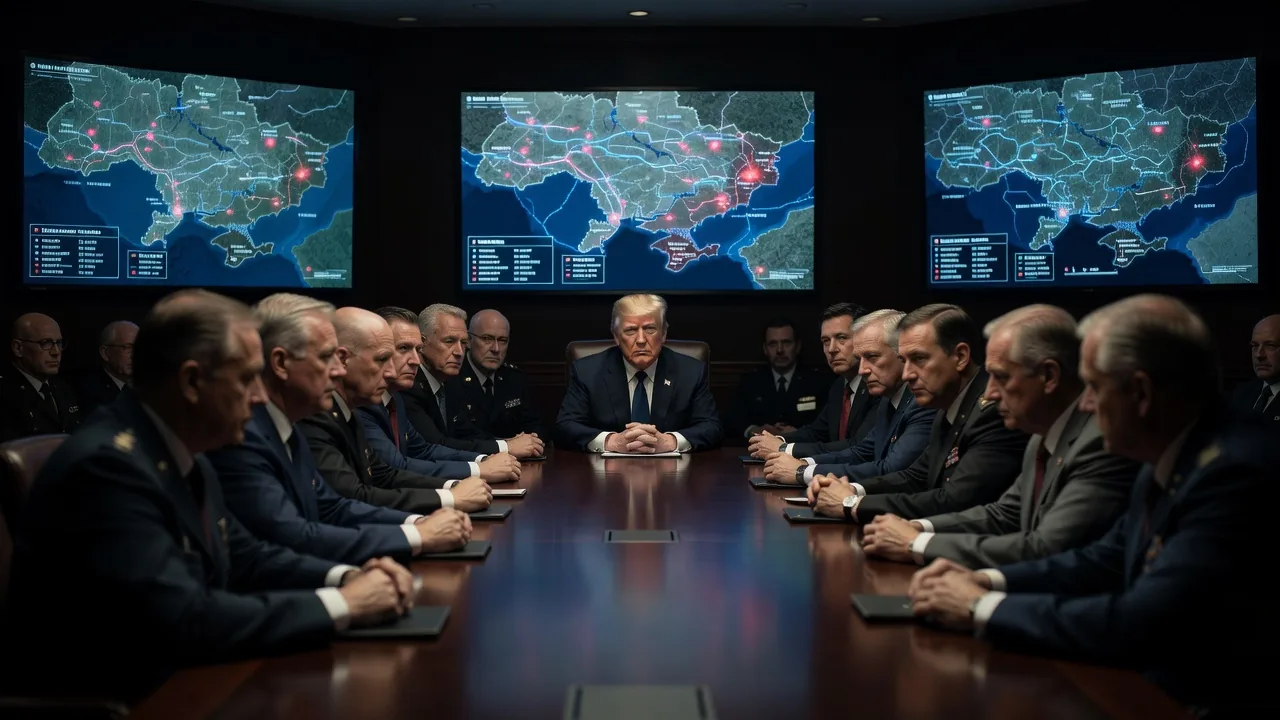
The week four wars converged on a single man
37point gap
Between the most divided subject (Netanyahu-Gaza, 43) and the most consensual (the Sharjah-Karachi cargo crash, 6), the world showed a 37-point spread in a single week. The rule is stark: the moment a strike carries political intent, the narratives fracture; the moment it comes down to a verifiable material fact, they converge.Sources — Al Jazeera · Reuters · Le Monde · The New York Times · Xinhua
20
Subjects analysed
40
Countries compared
52%
Owned track-record
The week's three acts
01What divides — free02Under the radar — weak signals03What we bet — predictionsAct 1Free · open access
What divides
The divergence score measures the framing gap between the world’s newsrooms on the same event. The higher the score, the more the narrative fractures along borders.
↑ Most divergent
43/100
Netanyahou sous le feu : frappes sur Gaza, médecin détenu
34/100
Escalade militaire entre les États-Unis et l'Iran
32/100
Trump s'en prend aux alliés de l'OTAN au sommet d'Ankara
↓ Least divergent
6/100
Crash d'un avion cargo entre Charjah et Karachi
9/100
Verdict Le Pen : condamnée mais éligible, bracelet électronique
11/100
Explosions à Damas pendant la visite de Macron en Syrie
Convergences — what every newsroom tells without connecting
Trump, the common denominator of the five most divisive subjects
Jul 6: Washington sharpens its tone against NATO allies at the Ankara summit (divergence 32)Jul 7: Trump calls FIFA to overturn Balogun's red card (divergence 22)Jul 8: the United States strikes Iranian targets near Hormuz (divergence 29)Jul 10: the US-Iran military escalation moves up a notch (divergence 34)Jul 11: an alleged Iranian plot to assassinate him is revealed (divergence 21)
Of the six most divergent subjects of the week, five run through a decision, a statement, or the very person of Donald Trump. This is not editorial coincidence: when a single actor concentrates the power to strike, to sanction and to set the narrative, every capital must position itself relative to him rather than to the fact. Here, divergence measures less the event than the centrality of one man.
Confidence 82% · US · IR · TR · IT · NG
Four military theaters activated within the same six-day window
Jul 6: a fresh wave of Russian strikes on Ukraine, Kyiv retaliates against an oil terminalJul 6: Israel intensifies its strikes on Gaza
Act 2◆ Signals & shifts locked
Under the radar
Weak signals and narrative shifts are the Prism’s deep analysis: what newsrooms have not yet named. Subscribers only. The blind spots stay free.
Weak signals ◆ Locked
The Strait of Hormuz becomes the silent tipping point again
China's Pacific missiles read as a message to allies, not to Beijing
South African xenophobia turns into a state dispute with Abuja
Narrative shifts ◆ Locked
NATO summit in Ankara
Confrontation with Iran
Blind spots Free · open access
Venezuela
Deadly double earthquake
A natural disaster with a heavy human toll (divergence 25, 7 perspectives) was drowned out by the global military sequence. Powers focused on Hormuz, Gaza and the Pacific saw no strategic stake in it, illustrating that suffering without geopolitical leverage stays invisible.
Covered: VE · CO · BRIgnored: US · CN · RU · FR · IL
Mexico
Lawsuit against the United States after a fatal ICE shooting
Mexico filing suit against Washington (divergence 27) touches on a major question of border sovereignty. The subject stayed confined to the US-Mexico axis, other capitals seeing no resonance with their own migration disputes.
Covered: MX · USIgnored: CN · RU · FR · DE
Spain
Deadly wildfires in Andalusia
Ten perspectives for a divergence of 19, but an almost exclusively European audience. The summer climate crisis is still treated as a regional, seasonal fact, never as the signal of a systemic risk shared by the major powers.
Covered: ES · FR · PTIgnored: US · CN · RU · IR · IL
Act 3◆ Reasoning locked
What we bet
Dated, falsifiable predictions, judged publicly. The statement and deadline are free — the reasoning behind them is for subscribers. We settle them later, won and lost alike.
21
Jul 2026
The price of Brent crude will have crossed a 5% weekly-gain mark at least once as long as tension around Hormuz is not defused.
Reasoning: Two subjects converge on the strait and Asian importers have already reacted; historically, any prolonged military uncertainty over Hormuz translates into a…
🔒 Full reasoning for subscribers
70%
Confidence
22
Jul 2026
No additional direct US strike on continental Iranian soil will be officially confirmed before July 22.
Reasoning: The current escalation targets maritime objectives near Hormuz and stays below the threshold of Iranian territory; the alleged assassination plot pushes toward…
🔒 Full reasoning for subscribers
60%
Confidence
23
Jul 2026
The diplomatic crisis between South Africa and Nigeria will be the subject of at least one joint official statement or an African Union mediation.
Reasoning: A dispute between the continent's two largest economies exceeds the bilateral frame and almost mechanically calls for continental institutional intervention.
🔒 Full reasoning for subscribers
62%
Confidence
24
Jul 2026
China will conduct at least one new missile launch or major exercise in the Pacific before July 24.
Reasoning: Two launches in three days indicate an ongoing demonstration sequence rather than an isolated act, usually followed by exercises confirming the tested…
🔒 Full reasoning for subscribers
58%
Confidence
Our track-record — free, owned, verifiable
52%
of predictions confirmed across all settled editions. We publish everything: bets won and bets lost. Transparency is the contract — not infallibility.
22
ConfirmedPredictions that landed
20
DeniedOwned publicly
42
Settled totali.e. 52% success — won and lost
Unlock
edition N°28
The statement is free. Reading the world, less so. Access the weak signals, the narrative shifts and the full reasoning behind every prediction.
- 3 weak signals decrypted in full
- 2 narrative shifts with their evidence
- The reasoning of each of the 4 predictions
- Full access to the 20 subjects of the week
- All archives, from the start to today
Subscribe to the Prism
Secure payment · Cancel anytime
— The newsroom that bets on the future
Complete weak signals, narrative shifts with evidence, and the reasoning behind every prediction.
$4.99/month$39.99 /year · save 33%
The Prism is published every Saturday. The in-depth analysis is for subscribers.
SHARE THIS RECAP
SHARE THIS COMPARISON
Show your friends how the world sees the same news differently.
Subscribe to the newsletter
Get the Weekly every Saturday morning. Free.