Explore every perspective on this subject across 16 countries.
Compare viewpoints and see where they diverge.
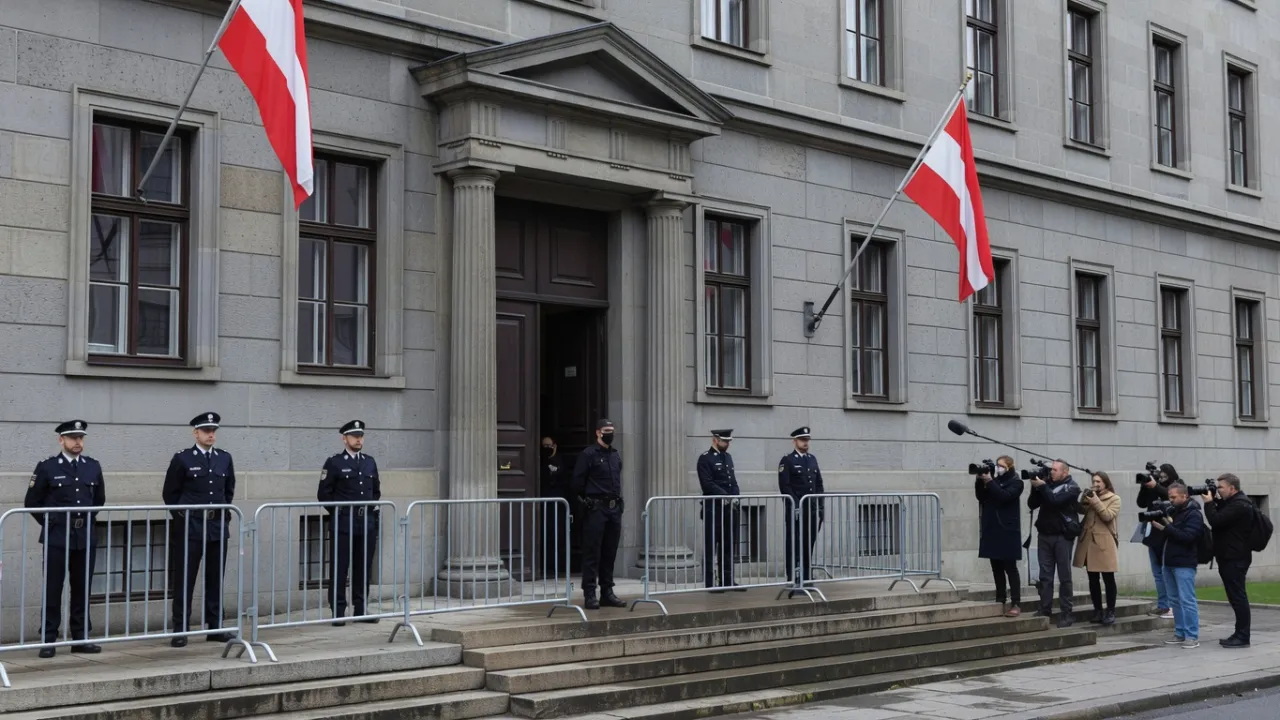
On 28 May 2026, the Wiener Neustadt court sentenced Beran A., a 21-year-old Austrian, to 15 years in prison. The court found that he had planned a jihadist attack, inspired by the Islamic State, against the Taylor Swift concerts scheduled in Vienna in August 2024. He had manufactured homemade TATP explosives and tried to acquire weapons before being arrested.
The attack was thwarted thanks to intelligence passed on by US services, which led to the cancellation of the three concerts that more than 170,000 people were due to attend. Psychiatric assessments found no mental illness, describing the radicalisation as deliberate and ideological.
The case fits into a reshaping of the jihadist threat in Europe. After the organisation's territorial retreat in Syria and Iraq between 2017 and 2019, it developed decentralised online radicalisation, targeting young Europeans recruited and trained remotely, sometimes within a transnational logic linking several cities.
Views diverge on which angle to prioritise. Some actors emphasise the protection of fans and the cultural dimension, others the security analysis and the mechanisms of radicalisation. Praise for cooperation with US intelligence is also debated, as is the question of whether such radicalisation reflects an individual path or a more structural weakness of open societies.
published on
countries
sources
articles
gap












