
Common ground and differences in coverage across the media analysed.
Somali referee Omar Artan was denied entry upon arrival at Miami International Airport, confirmed by FIFA before the tournament started.
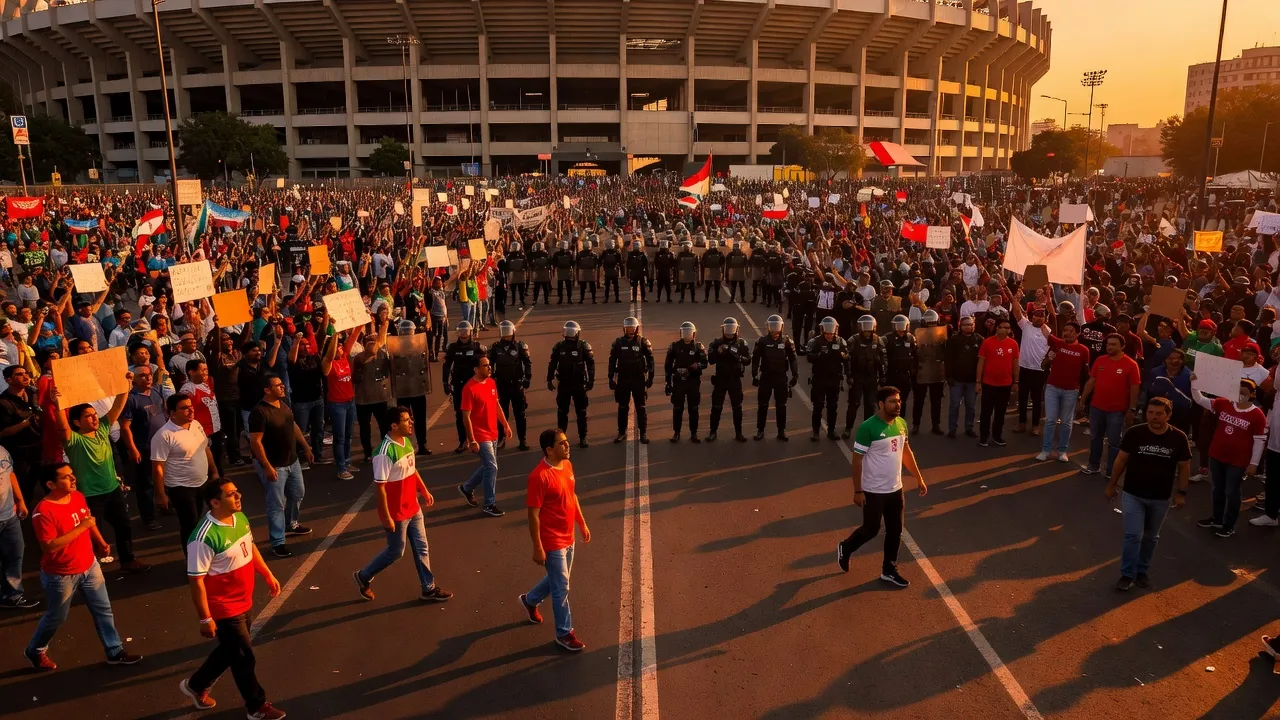
The 2026 World Cup kicks off in a context of multiple geopolitical tensions: the Iran-US war, US visa restrictions, and social protests in Mexico.
The US and close allies defend sovereign right to deny entry for security reasons; Global South, African and Islamic countries see it as selective discrimination and weaponizing the World Cup as a foreign policy tool.
Coverage aligned with this reading
Northern countries believe FIFA handled the referee crisis according to its rules; Southern countries criticize FIFA's statement that 'visa decisions belong to host nations', deflecting all responsibility.
Coverage aligned with this reading
Iran-friendly press and many Middle Eastern media present the tribute as a legitimate act of national dignity; pro-American press frames it as political intrusion into sport.
Coverage that diverges
This grouping describes the publications analysed, not the position of these countries’ populations or of their governments.
What the coverage of each country leaves aside, while others put it forward.
United States
United Kingdom
Preview: 3 of 8 media perspectives. Syntheses of the media analysed — not direct quotations. Method & limitations
France puts the World Cup under a geopolitical lens: sport cannot stand apart from reality
3 sources · View sources
Brazil watches Miami: White House defends denying entry to Somali referee and Iranians
2 sources · View sources
London between sport and politics: the Somali referee detained, cartels at the stadium
3 sources · View sources
DOMINANT ANGLE
France puts the World Cup under a geopolitical lens: sport cannot stand apart from reality
ANALYSIS
France approaches the 2026 World Cup through a markedly geopolitical lens.
DOMINANT ANGLE
Brazil watches Miami: White House defends denying entry to Somali referee and Iranians
ANALYSIS
Brazilian coverage of the 2026 World Cup carries a particular ambivalence: Brazil hosts the next World Cup in 2030.
DOMINANT ANGLE
London between sport and politics: the Somali referee detained, cartels at the stadium
ANALYSIS
British press juxtaposes two tones: the diplomatic incident around Omar Artan and excitement for England's matches.
DOMINANT ANGLE
Washington between Giuliani, extreme heat, and the FIFA-Trump courting effort
ANALYSIS
Washington's 2026 World Cup coverage is surprisingly little centered on diplomatic incidents.
DOMINANT ANGLE
Sydney between Somali referee, Iranian tickets, and racism: the World Cup of all tensions
ANALYSIS
Australia, multicultural and attached to civil rights, approaches the 2026 World Cup through particularly varied angles.
DOMINANT ANGLE
Canada ready for 300,000 visitors in Toronto, balancing host pride and critical eye on Washington
ANALYSIS
Canada is a 2026 World Cup co-host.
DOMINANT ANGLE
Rome reads the World Cup as Italy's mirror: Ancelotti to Brazil, the Somali referee in a cell
ANALYSIS
Italian coverage is marked by two very different events: Carlo Ancelotti departing to coach Brazil — an Italian heading the Seleção for the first time — and the Omar Artan incident, handled by La Repubblica with a directness few other Western media have shown.
DOMINANT ANGLE
New Delhi follows Ronaldo and IShowSpeed: the World Cup seen through viral streaming
ANALYSIS
India has never qualified its national team for a World Cup.
Explore every perspective on this subject across 8 countries.
Compare viewpoints and see where they diverge.
published on
countries
sources
articles
gap
Two days before kickoff, the 2026 World Cup opens in a tense climate. FIFA confirmed that Somali referee Omar Artan was denied entry on arrival at Miami International Airport. At the same time, the tournament is unfolding against a backdrop of multiple tensions: an active conflict between Iran and the United States, US visa restrictions, and social protests in Mexico.
This is the first 48-team edition, the largest in football history, co-hosted by the United States, Canada and Mexico. It comes amid heightened international tensions and restrictive US immigration policies. The US organizing committee is headed by Andrew Giuliani. For a tournament of this scale, the coexistence of sporting and political dimensions is unprecedented.
Readings diverge sharply. The United States and several of its allies defend the sovereign right to refuse entry on security grounds, while countries of the Global South, African and Islamic states see selective discrimination and the use of the tournament as diplomatic leverage.
FIFA's role is also contested: some argue it applied its rules, others fault it for shifting responsibility onto the host states by stressing that visa decisions belong to them. The tribute paid by Iranian players to the victims of US strikes is read by some as a gesture of national dignity, by others as politics intruding on sport. Visa status for Morocco and Algeria remained uncertain.
Measured with the previous method (distance between texts), on a different scale.