Common ground and differences in coverage across the media analysed.
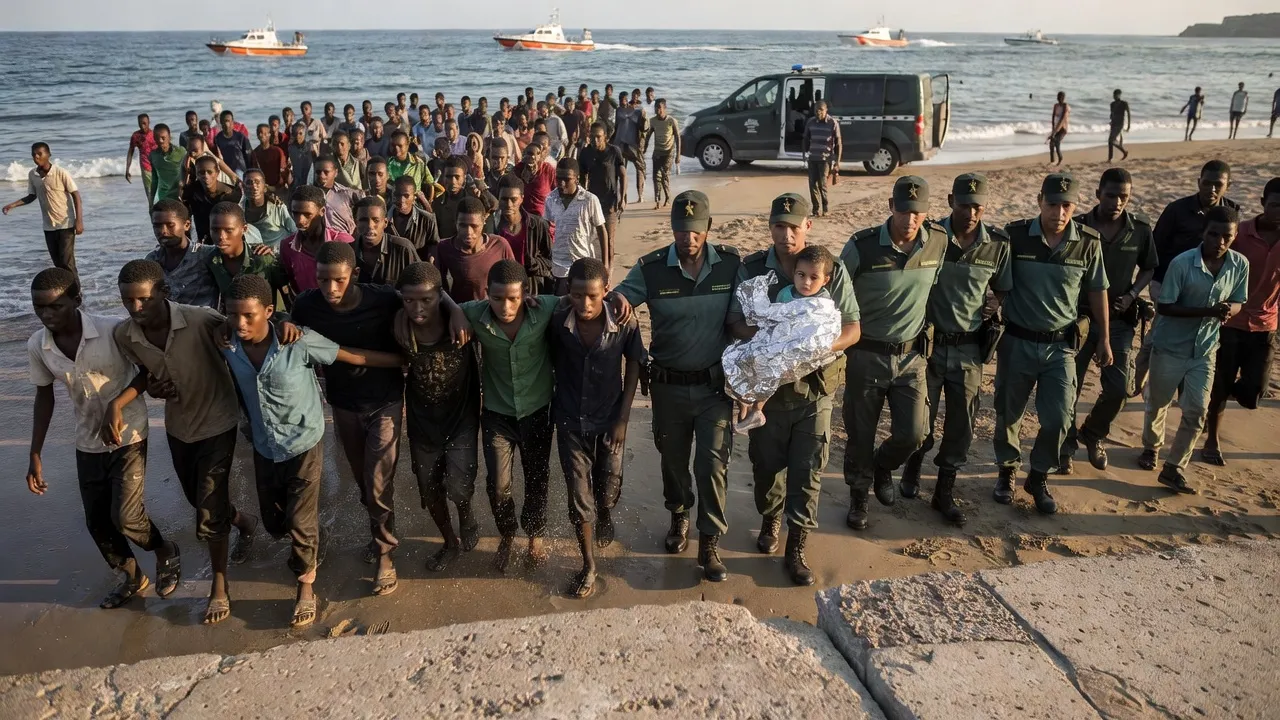
Up to 60,000 migrants crossed the Ceuta border from Morocco within 24 hours, via land and maritime routes.
The death toll stands between 34 and 57 according to sources, mostly from drowning while attempting to circumvent the El Tarajal border dike.
Spain claims to have returned the vast majority of arrivals to Morocco the next day, between 25,000 and 48,300 people according to counts.
Some coverage attributes the massive influx to a loosening of Spanish migration policy, particularly the regularization of 500,000 undocumented migrants mentioned in late January 2026, while others point to a Spanish court ruling or dynamics on Morocco's side beyond Madrid's control.
Italy justifies its unilateral Schengen suspension by national security, while Spain attributes it to an excessive reading of the situation and Germany favors a coordinated strengthening of Frontex rather than bilateral closure.
Part of the press evokes the hypothesis of a border deliberately relaxed by Rabat, without official Moroccan confirmation, while the majority of coverage focuses on Spain's response without exploring this angle.
Coverage that diverges
This grouping describes the publications analysed, not the position of these countries’ populations or of their governments.
What the coverage of each country leaves aside, while others put it forward.
China
Germany
Spain
France
Preview: 3 of 11 media perspectives. Syntheses of the media analysed — not direct quotations. Method & limitations
Madrid manages the humanitarian crisis at Ceuta while defending Schengen's integrity against Italian and French pressures.
5 sources · View sources
Rome moves ahead without waiting for Brussels: Italy suspends Schengen agreement with Spain from August 1st, renewable monthly, to lock down its own borders before the Ceuta crisis spreads to its territory.
6 sources · View sources
Paris tightens border controls and displays solidarity with Madrid, while the Ceuta crisis transforms into internal controversy between a right wing that accuses Pedro Sánchez of creating a pull factor and a left wing that denounces political exploitation of the tragedy.
3 sources · View sources
DOMINANT ANGLE
Madrid manages the humanitarian crisis at Ceuta while defending Schengen's integrity against Italian and French pressures.
ANALYSIS
Madrid, July 31, 2026.
DOMINANT ANGLE
Rome moves ahead without waiting for Brussels: Italy suspends Schengen agreement with Spain from August 1st, renewable monthly, to lock down its own borders before the Ceuta crisis spreads to its territory.
ANALYSIS
Rome, August 1, 2026.
DOMINANT ANGLE
Paris tightens border controls and displays solidarity with Madrid, while the Ceuta crisis transforms into internal controversy between a right wing that accuses Pedro Sánchez of creating a pull factor and a left wing that denounces political exploitation of the tragedy.
ANALYSIS
Paris, August 1, 2026.
DOMINANT ANGLE
Berlin demands strengthened EU external borders while questioning the precise causes of the Ceuta influx—a deliberate Moroccan hybrid maneuver or a misinterpreted judicial ruling.
ANALYSIS
Berlin, August 1, 2026.
DOMINANT ANGLE
London fears the Ceuta migration crisis could become Britain's own, caught between government caution and opposition alarm over the Channel and Gibraltar.
ANALYSIS
London, August 1st, 2026.
DOMINANT ANGLE
Washington views the Ceuta crisis as a window into the United States' own migration debate, with prominent political figures warning that similar chaos could unfold domestically amid ongoing electoral tensions.
ANALYSIS
Washington, August 1, 2026.
DOMINANT ANGLE
Moscow argues that European hypocrisy defines the Ceuta crisis, pointing to Brussels' reluctance to blame Morocco while it readily accuses Russia on other matters.
ANALYSIS
Moscow, August 1, 2026.
DOMINANT ANGLE
Beijing reads the Ceuta crisis as a window into Europe's fracturing migration coordination, between Spanish humanitarian response and Franco-Italian diplomatic confusion.
ANALYSIS
Beijing, August 1, 2026.
DOMINANT ANGLE
Pretoria measures the Ceuta crisis through the lens of its own migration fractures, where the debate over African reception already divides the nation.
ANALYSIS
Pretoria, August 1, 2026.
DOMINANT ANGLE
Doha views the Ceuta crisis through the lens of fractures it reveals in the Schengen area, between humanitarian urgency on the ground and generalized security hardening across Europe.
ANALYSIS
Doha, August 1, 2026.
DOMINANT ANGLE
Islamabad reads the Ceuta crisis through Western wire service dispatches, focusing on the hypothesis of a deliberately relaxed Moroccan border and the political exploitation of the humanitarian tragedy by the transatlantic right.
ANALYSIS
Islamabad, August 1, 2026.
Explore every perspective on this subject across 11 countries.
Compare viewpoints and see where they diverge.
published on
countries
sources
articles
gap
Up to 60,000 migrants crossed from Morocco into the Spanish enclave of Ceuta within 24 hours on 31 July 2026, leaving at least 34 people dead according to a first toll. The Spanish government says it returned 48,300 of the arrivals to Morocco the following day. Prime Minister Pedro Sanchez travelled to Ceuta, while France stepped up checks on its Pyrenean border. Italy suspended its Schengen free-movement agreement with Spain for one month, starting 1 August.
Measured with the previous method (distance between texts), on a different scale.