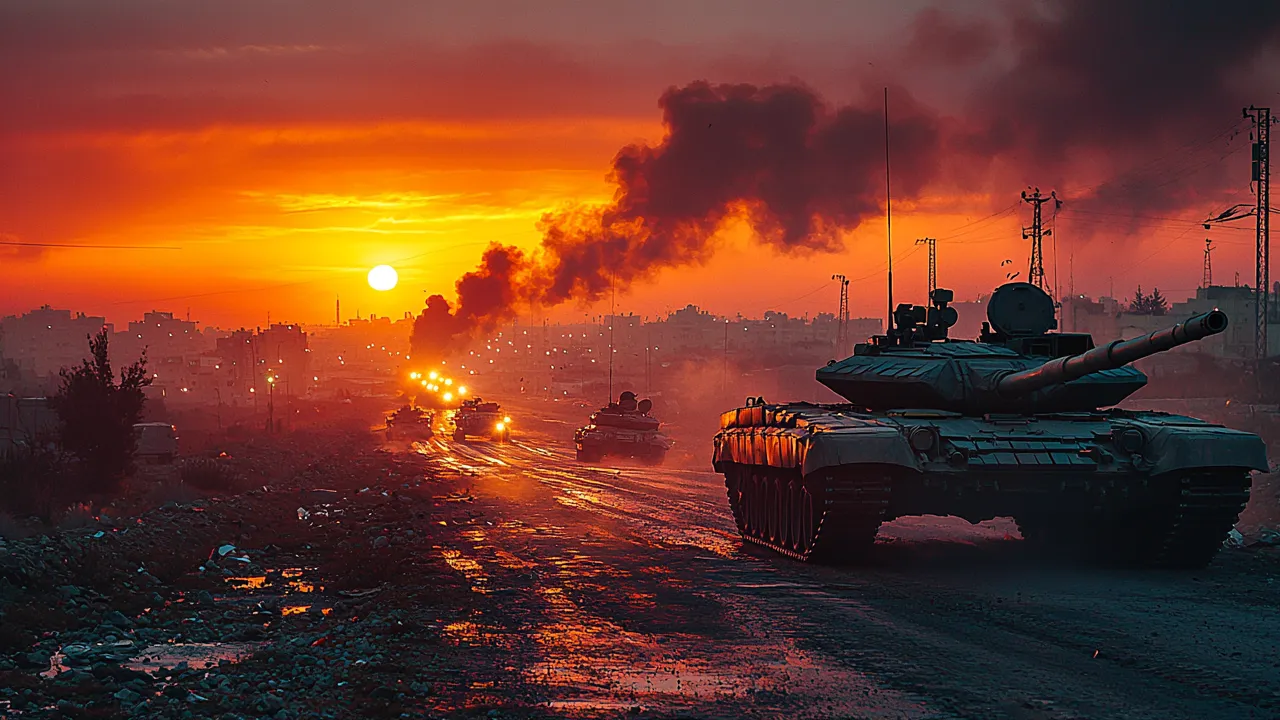
A major military escalation is taking shape in the Middle East. Limited ground military operations have been launched against Hezbollah in southern Lebanon, at a time when tensions are rising in parallel with Iran. On the ground, these actions mark a change in the nature of the conflict, shifting from long-range exchanges to a direct military presence in an already contested border area.
This development matters because the stability of an entire region is at stake. Southern Lebanon and the border it shares with Israel form a long-standing fault line, where local actors, armed movements and regional powers intersect. Iran's involvement, given its close ties to Hezbollah, adds a strategic dimension: a localized confrontation can quickly draw in outside actors and spread beyond the Lebanese theater alone.
The event is part of a long-running rivalry in which every military move is read through opposing frameworks. For some actors, it is a security operation in response to an armed threat; for others, it is an intervention that endangers the regional balance and international law. These contradictory readings fuel uncertainty about real intentions and about how far the escalation could go.
Several grey areas remain. The exact scope of the operations, their duration and the degree of involvement of the various parties remain disputed across sources, as does the likelihood of the conflict widening. What is agreed upon is how sensitive the moment is: an escalation whose human and geopolitical consequences will depend on the decisions taken in the days ahead.
Explore every perspective on this subject across 12 countries.
Compare viewpoints and see where they diverge.
published on
countries
sources
articles
gap