Common ground and differences in coverage across the media analysed.
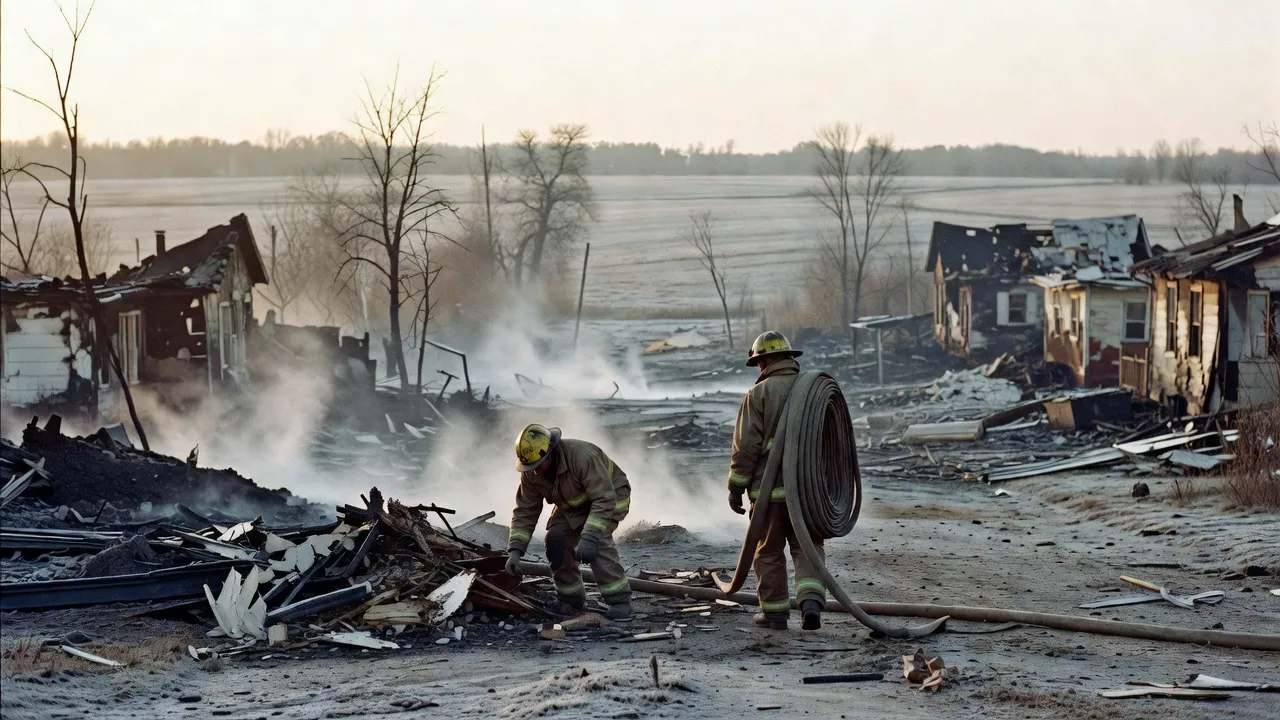
A Russian drone struck a warehouse in Myla, in the Bucha district west of Kyiv, on the night of Friday, August 28, to Saturday, August 29, causing a chain explosion of stored ammunition and a fire that spread to dozens of nearby homes.
The human toll stands at at least 37 dead, making it the deadliest strike of the year in Ukraine, with several hundred people evacuated that same night.
Ukrainian authorities acknowledge that the site stored ammunition (shells, mines, drones) intended for the military and have launched a criminal investigation into official negligence regarding its location near civilian housing.
Kyiv describes the ammunition storage site as poorly located near residential areas and opens a negligence investigation, while Moscow frames it as a legitimate logistical hub storing dual-use goods, without mentioning civilian casualties.
Some media outlets focus on Ukraine's admission of negligence in storing ammunition near residential areas, while others, notably Russian sources, only discuss the military legitimacy of the target without addressing its location.
This grouping describes the publications analysed, not the position of these countries’ populations or of their governments.
What the coverage of each country leaves aside, while others put it forward.
France
Canada
Russia
Preview: 3 of 7 media perspectives. Syntheses of the media analysed — not direct quotations. Method & limitations
Kyiv identifies two responsibilities in the Myla tragedy: the Russian strike that triggered the explosion, and the placement of the ammunition depot amidst residential areas, which is now the subject of a separate criminal investigation.
3 sources · View sources
Moscow is putting the controversy to rest by clarifying the nature of the target: a logistics depot in Kiev storing dual-use goods, not a strike on civilians.
2 sources · View sources
Paris questions both Ukrainian negligence and the Russian strike in the Myla drama, where the targeted warehouse was recognized by Kiev itself as a military depot installed too close to residential areas.
5 sources · View sources
DOMINANT ANGLE
Kyiv identifies two responsibilities in the Myla tragedy: the Russian strike that triggered the explosion, and the placement of the ammunition depot amidst residential areas, which is now the subject of a separate criminal investigation.
ANALYSIS
Kyiv, August 31, 2026.
DOMINANT ANGLE
Moscow is putting the controversy to rest by clarifying the nature of the target: a logistics depot in Kiev storing dual-use goods, not a strike on civilians.
ANALYSIS
Moscow, August 31, 2026.
DOMINANT ANGLE
Paris questions both Ukrainian negligence and the Russian strike in the Myla drama, where the targeted warehouse was recognized by Kiev itself as a military depot installed too close to residential areas.
ANALYSIS
Paris, August 31, 2026.
DOMINANT ANGLE
The United States government takes note of the Myla strike as less of a military feat and more of an admission: one made by Kyiv itself, of negligence in storing ammunition near civilian housing.
ANALYSIS
Washington, August 31, 2026.
DOMINANT ANGLE
Ottawa is examining Kyiv's admission of a deadly strike that reveals negligence in the storage of ammunition near residential areas.
ANALYSIS
Ottawa, August 31, 2026.
DOMINANT ANGLE
Canberra views the Myla strike as part of Russia's three-day aerial escalation over Kyiv, rather than isolating the incident as a separate event.
ANALYSIS
Canberra, August 31, 2026.
DOMINANT ANGLE
Islamabad takes note of the Myla strike, focusing less on the deadly toll than on Kyiv's own admission: a stored arms depot near residential areas, criminal proceedings opened for negligence, and Moscow claiming a legitimate military target on its part.
ANALYSIS
Islamabad, August 31, 2026.
Explore every perspective on this subject across 7 countries.
Compare viewpoints and see where they diverge.
published on
countries
sources
articles
gap
On the night of Friday, August 28, to Saturday, August 29, 2026, a Russian drone struck a warehouse located in Myla, in the Bucha district, west of Kyiv, where Ukrainian authorities say the site stored shells, mines, and drones intended for the Ukrainian military, causing an explosion that detonated the ammunition and a fire that spread to dozens of nearby homes.
The toll is not stabilized: Ukrainian authorities announce 37 dead, while CBC News, Kyiv Post, and Korean press already report 38.
The Russian Ministry of Defense claims a "logistical hub" storing dual-use goods, with no human casualties.
Kyiv has opened a criminal investigation into negligence over the placement of the depot near residential areas.
An ammunition depot had exploded on July 6 in Vyshniv, in a comparable residential area.
The strike comes amid three days of nearly continuous bombing of the capital and its surrounding area.
From 37 (Australia) to 38 (United States). 1 country gives none. · see the detail
From 370 (Australia) to 400 (Ukraine). 1 country gives none. ·
More divergent than 31% of recent comparable stories (reference: 91 recent stories measured with the same method).