Common ground and differences in coverage across the media analysed.
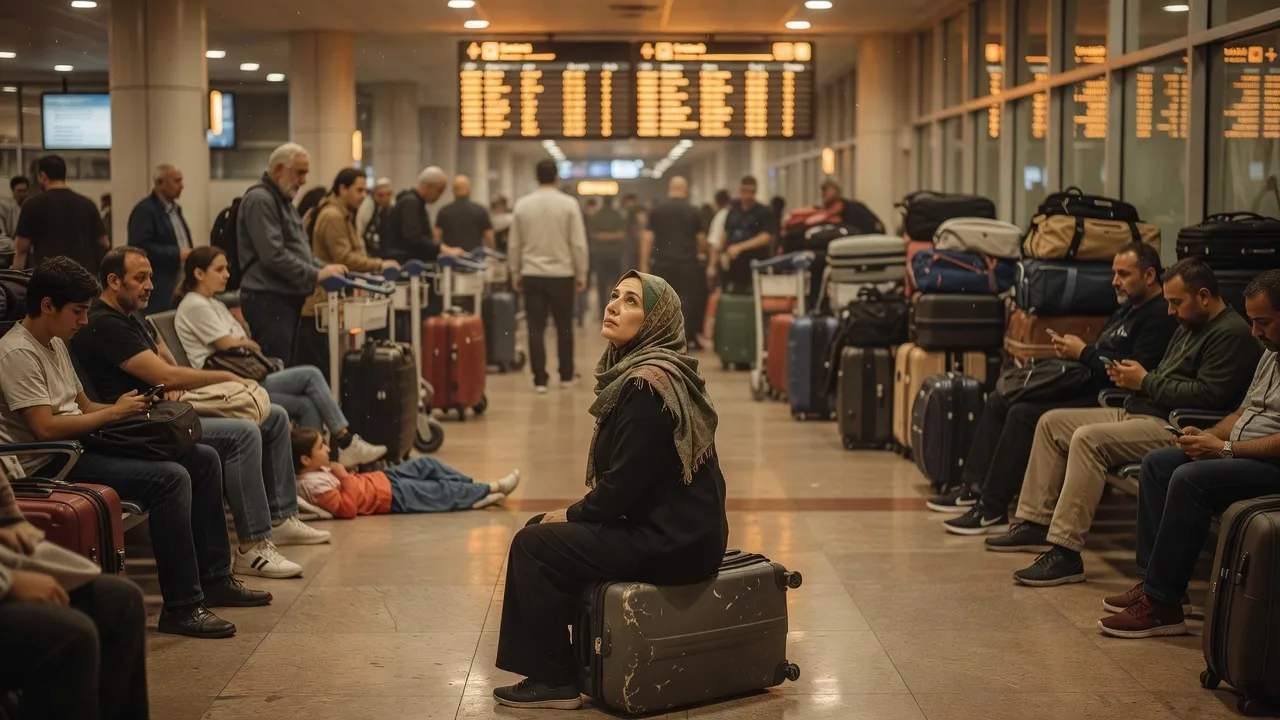
The eruption of Anak Krakatau in the Sunda Strait led to the closure of eight Indonesian airports, including Jakarta's Soekarno-Hatta international airport, resulting in the cancellation or delay of hundreds of flights.
Indonesian authorities (volcanology agency and disaster management agency BNPB) explicitly ruled out any immediate tsunami risk, while recalling the 2018 eruption that killed at least 429-430 people.
Columns of volcanic ash, reaching approximately 15 000 metres in altitude according to several sources, drifted over the provinces of Lampung (Sumatra) and Banten (Java).
The total number of flights affected and passengers stranded varies greatly depending on the media and the time the report was released: some cite national cumulative totals as of Monday (up to 964, or around 1,500-1,600 flights and 170,000 passengers), while others are limited to a Sunday snapshot at Soekarno-Hatta (around 200 to 500 flights and 22,000 to 150,000 passengers).
Several national perspectives measure the crisis primarily in terms of their own airlines, travelers, or direct connections to Indonesia, while Indonesian coverage relies almost exclusively on ministry and agency statements, with few individual testimonies.
Some accounts devote significant space to the historical context of the volcano (1883, 2018) and its explicit denial for the current episode, while others only mention it briefly, focusing on current air logistics.
This grouping describes the publications analysed, not the position of these countries’ populations or of their governments.
What the coverage of each country leaves aside, while others put it forward.
Australia
Malaysia
Vietnam
Preview: 3 of 15 media perspectives. Syntheses of the media analysed — not direct quotations. Method & limitations
Paris is closely watching the air chaos caused by Anak Krakatoa, where the estimated numbers of flights and affected passengers vary significantly from one Indonesian source to another.
4 sources · View sources
Turkey puts the eruption of Anak Krakatau back in the global volcanic memory, while relaying the assurance of Indonesian authorities that no tsunami is to be feared in the immediate future.
2 sources · View sources
Jakarta is first tallying the aerial cost of the Anak Krakatau eruption, before measuring its geological dimension.
2 sources · View sources
DOMINANT ANGLE
Paris is closely watching the air chaos caused by Anak Krakatoa, where the estimated numbers of flights and affected passengers vary significantly from one Indonesian source to another.
ANALYSIS
Paris, September 7, 2026.
DOMINANT ANGLE
Turkey puts the eruption of Anak Krakatau back in the global volcanic memory, while relaying the assurance of Indonesian authorities that no tsunami is to be feared in the immediate future.
ANALYSIS
Ankara, September 7, 2026.
DOMINANT ANGLE
Jakarta is first tallying the aerial cost of the Anak Krakatau eruption, before measuring its geological dimension.
ANALYSIS
Jakarta, September 7, 2026.
DOMINANT ANGLE
Canberra is first assessing the impact on its own companies: four Qantas flights cancelled, six Perth-Jakarta routes disrupted, but Bali has been spared.
ANALYSIS
Canberra, September 7, 2026.
DOMINANT ANGLE
Kuala Lumpur is gauging the crisis by its own air traffic: cancelled flights, the airport transformed into a backup stop, and hundreds of travellers stranded on the Malaysian side.
ANALYSIS
Kuala Lumpur, Monday, September 7, 2026.
DOMINANT ANGLE
Ottawa first notes the figure of air chaos: 150,000 passengers stranded in Jakarta, before relaying Indonesia's denial of an imminent tsunami risk.
ANALYSIS
Ottawa, September 7, 2026.
DOMINANT ANGLE
Kathmandu is primarily concerned with the individual plight of stranded travelers rather than a macroeconomic assessment, with local media simply relaying Reuters and AFP dispatches on the Anak Krakatau eruption without providing their own reporting.
ANALYSIS
Katmandou, September 7, 2026.
DOMINANT ANGLE
Buenos Aires is dissecting the Indonesian air chaos through official figures that its own media outlets are reporting, sometimes in a contradictory manner.
ANALYSIS
Buenos Aires, September 7, 2026.
DOMINANT ANGLE
Berlin is gauging the crisis primarily by the paralyzed international air traffic, with cancelled flights to Europe and conflicting tallies depending on the source.
ANALYSIS
Berlin, September 7, 2026.
DOMINANT ANGLE
Bangladesh is particularly concerned about the air travel disruption caused by the eruption: 964 flights were disrupted in Jakarta, eight airports were closed, and up to 170,000 passengers were prevented from traveling, according to the Indonesian Ministry of Transportation.
ANALYSIS
Dacca, September 7, 2026.
DOMINANT ANGLE
The United States is first assessing the extent of the air chaos in Jakarta: Singapore Airlines and its subsidiary Scoot are cancelling their flights, and a column of ash is being tracked by satellite imagery all the way to the Indian Ocean.
ANALYSIS
Washington, September 7, 2026.
DOMINANT ANGLE
Tokyo gauges the eruption of Anak Krakatau first in terms of its own severed air links with Indonesia, before viewing it as a distant volcanic event.
ANALYSIS
Tokyo, September 7, 2026.
DOMINANT ANGLE
Hanoi is first tallying the direct cost for its own airlines, between cancelled flights and stranded passengers in Jakarta.
ANALYSIS
Hanoï, 7 September 2026.
DOMINANT ANGLE
Stockholm is gauging the crisis in light of its own bloody history — 1883, 2018 — while also closely following the program of Crown Princess Victoria, who is currently in Indonesia at the time of the eruption.
ANALYSIS
Stockholm, September 7, 2026.
DOMINANT ANGLE
Budapest is primarily concerned with the extent of the airborne chaos triggered by Anak Krakatau, measuring the event in terms of hundreds of thousands of stranded passengers rather than the immediate volcanic threat.
ANALYSIS
Budapest, September 7, 2026.
Explore every perspective on this subject across 15 countries.
Compare viewpoints and see where they diverge.
published on
countries
sources
articles
gap
The eruption of the Anak Krakatau volcano, in the Sunda Strait between Java and Sumatra, began on Friday, September 4, at 23:07 local time and ended on Sunday, September 6, at 00:04, according to the Indonesian Geological Agency. The ash drifted over the provinces of Lampung and Banten, resulting in the closure of eight Indonesian airports, including Soekarno-Hatta International Airport in Jakarta. Transportation Minister Dudy Purwagandhi opened five backup airports 24/7, in Majalengka, Semarang, Surabaya, Yogyakarta, and Solo. According to the Transportation Ministry, cited on Monday, September 7, by CNN Indonesia, 964 flights were affected at Jakarta's airport.
The volcano has returned to a strombolian state: surveillance continues, and authorities rule out any risk of an imminent tsunami.
The PVMBG rules out a tsunami: the rebuilt structure since 2018 remains too small to collapse.
The BNPB plans artificial rain to bring down the ashes, planes ready at Pondok Cabe.
An eruption of Anak Krakatau triggered a tsunami that killed at least 430 people in 2018.
Singapore Airlines and its subsidiary Scoot cancelled several flights to Jakarta as of Sunday.
From 202 (Turkey) to 964 (Indonesia). 7 countries give none. · see the detail
More divergent than 24% of recent comparable stories (reference: 97 recent stories measured with the same method).