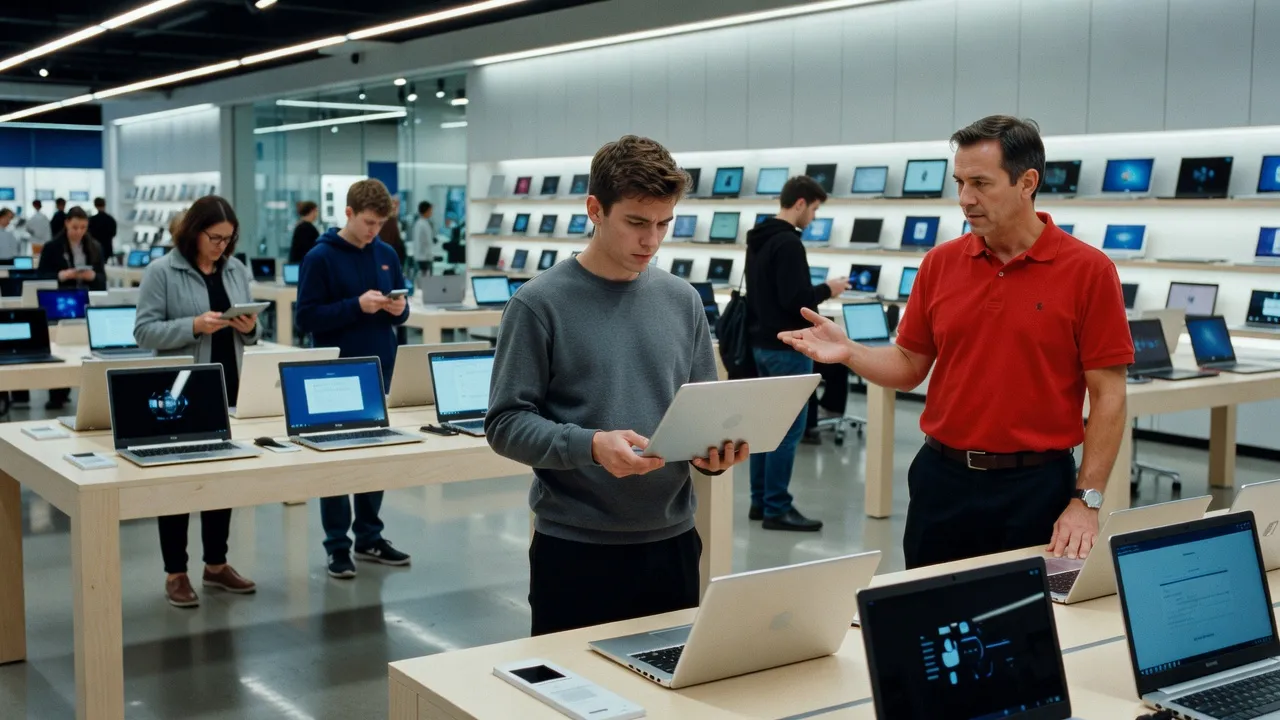
Apple announced price increases of up to 20 to 25 percent on its MacBook and iPad lines, while sparing the iPhone. It is the first time the company has passed the rising cost of memory and storage chips directly on to its customers. The cause is broadly agreed upon: the relentless build-out of data centers dedicated to artificial intelligence is absorbing these components, tightening supply and driving up the cost of consumer hardware. The announcement coincided with a roughly 5 to 6 percent drop in the share price and sustained attention to the role of departing chief executive Tim Cook. Microsoft followed a similar path by raising the price of its Xbox console.
The episode is framed as the first tangible sign that the AI boom is spilling over into consumers' wallets. Behind the price of a laptop lies the geopolitics of semiconductors, a strategic resource whose production remains concentrated among a handful of players. The increase thus reopens the question of the structural vulnerability of global supply chains.
Readings of the event diverge. Some actors see it primarily as a macroeconomic and stock-market signal about the viability of the AI cycle, one that the supply chain will eventually absorb. Others stress the concrete impact of local retail prices, seen as an added barrier to technology access for middle classes already under pressure. Yet another reading places the increase within a narrative of the relative decline of the technological West.
Several angles remain lightly covered depending on the viewpoint: the amplified effect of price hikes on emerging markets through tariffs, or the real reach of the increase where the affected products are barely distributed. What stays uncertain is the scale and duration of the phenomenon, and the industry's capacity to restore balance between AI demand and component supply.