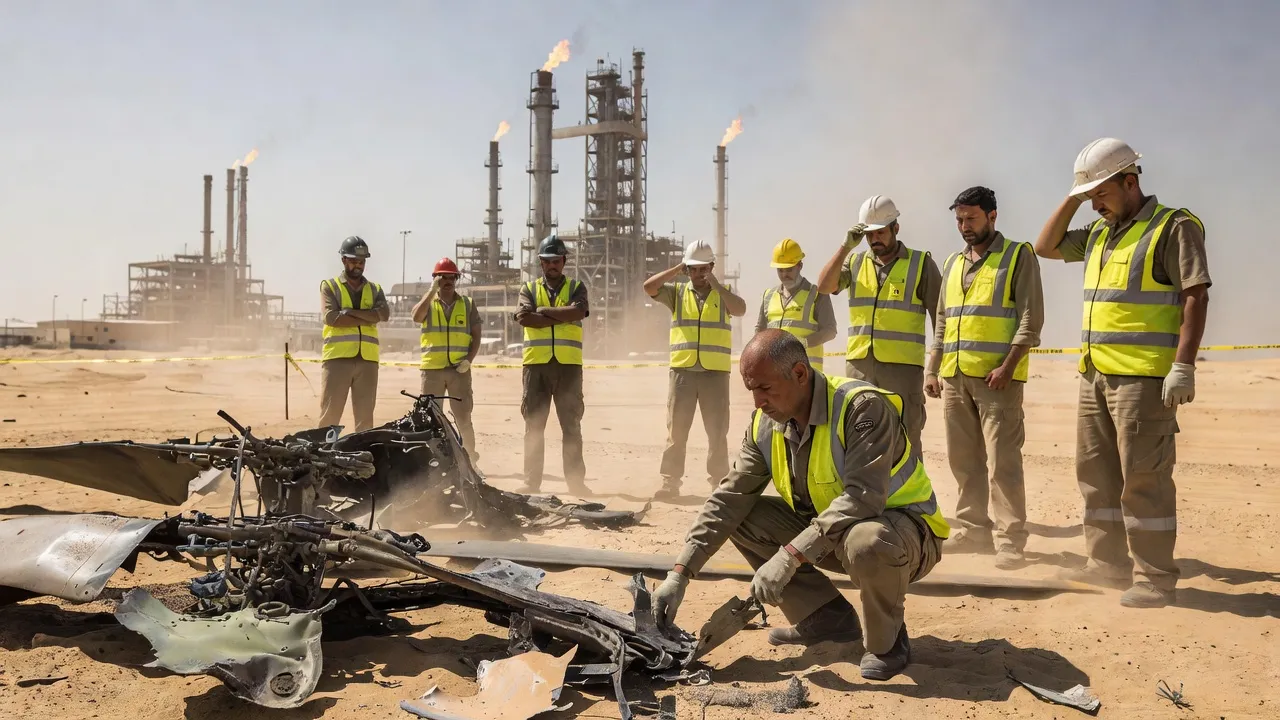
On 28 June 2026, around 6 a.m. local time, a helicopter operated by the oil company Saudi Aramco crashed at Ras Tanura, on Saudi Arabia's eastern coast. All fourteen people on board, all of Saudi nationality, were killed. The authorities opened an investigation to determine the causes of the accident and stated that, at this stage, they had no element linking the crash to a hostile attack.
The location is significant. Ras Tanura is home to one of the largest refineries in the Middle East, with a capacity of 550,000 barrels per day, and forms a central node in Aramco's oil exports. Its terminal had only just resumed crude loadings on Friday 26 June, after nearly four months of interruption tied to the armed tensions between the United States and Iran in the Strait of Hormuz.
That four-month conflict had paralysed Hormuz and forced Saudi Arabia to redirect part of its exports through the East-West pipeline toward the Red Sea. A ceasefire negotiated in Islamabad had allowed a partial resumption of operations, just two days before the accident. The weekend of 28 June remained tense, however: a tanker struck in the strait, American strikes on Iranian targets and mutual accusations of truce violations between Washington and Tehran.
The causes of the crash remain undetermined. Some actors raise the hypothesis of a non-accidental act, linked to ongoing operations in the area, while others stick to the official version that rules out any attack. Interpretations also diverge over the origin of the regional tensions and the durability of the ceasefire, with the accident occurring during a hurried resumption that exposes infrastructure and personnel to heightened operational risks.