
GERMANY
STATE1 source
Single source
German technical contribution and methodical celebration without emotionDominant angle identified — does not reflect unanimity of this country’s media
EXPLORE THIS STORY
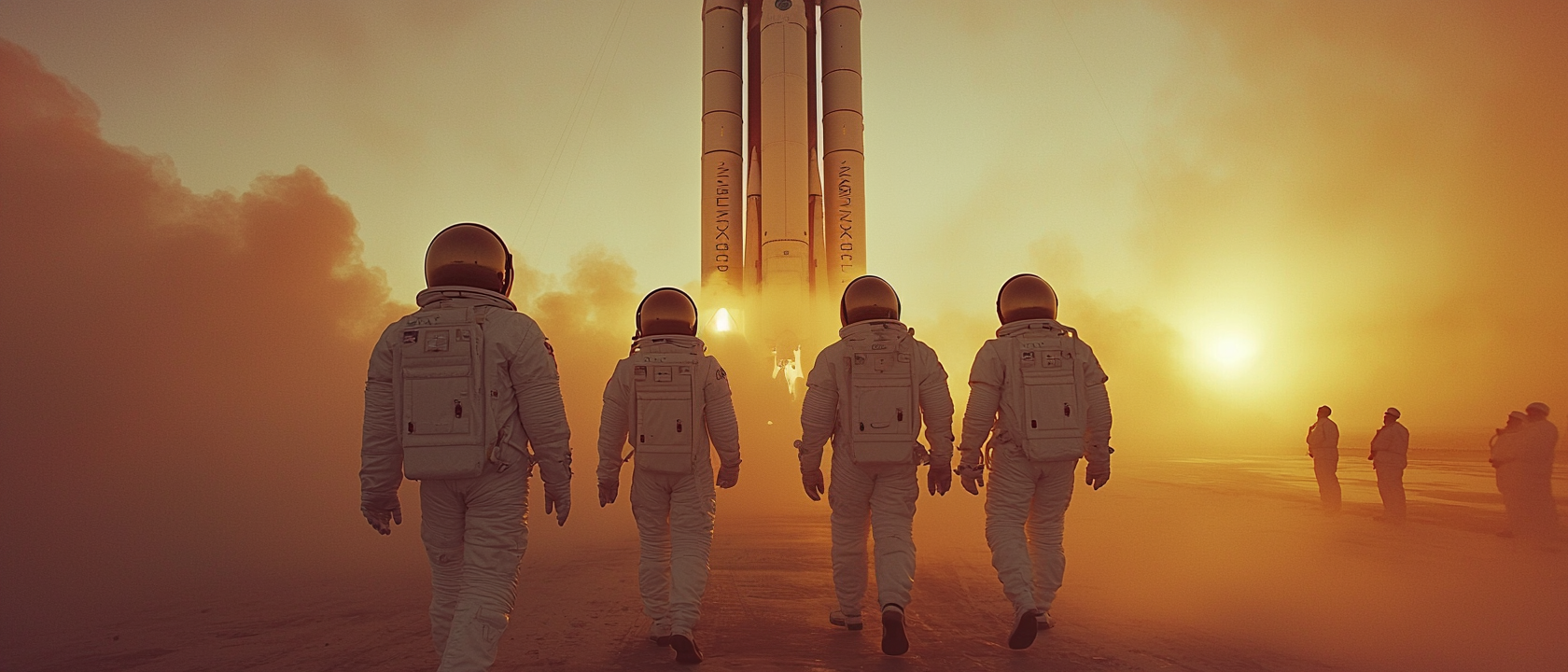
Four astronauts are heading to the Moon for the first time since 1972 — while their country bombs Iran.
Four astronauts left Earth orbit aboard the Artemis II mission, the first crewed flight beyond Earth orbit since Apollo 17 in 1972. The event is recognized as a historic achievement by every country commenting on it, despite their differing readings.
The mission takes place amid a space competition between several programs: the one led by the United States, a planned lunar station bringing together China and Russia, and India's growing ambitions. Europe, for its part, takes part through its space agency and industry without being aboard the capsule, which makes negotiations over its future access a debated issue.
Actors do not assign the same meaning to the event. Some see it above all as a human success to celebrate; others use it as a benchmark to measure their own rapidly accelerating national programs; still others focus on the terms of their participation. Negotiations between European and American space agencies are thus described at times as a matter of strategic dependence, at times as a mere technical contribution.
One notable point of divergence concerns the link with the ongoing military conflict against Iran, simultaneous with the launch. The vast majority of coverage treats the two subjects separately, while one actor explicitly draws a connection between the space mission and the war. Several angles also remain little addressed depending on the country, notably the direct competition between rival lunar programs, which some leave unmentioned.

« Humanization of space achievement and distance from a country with terrestrial priorities »

« Technology hub observes the mission as an opportunity for positioning »
More divergent than 100% of analyzed stories.








