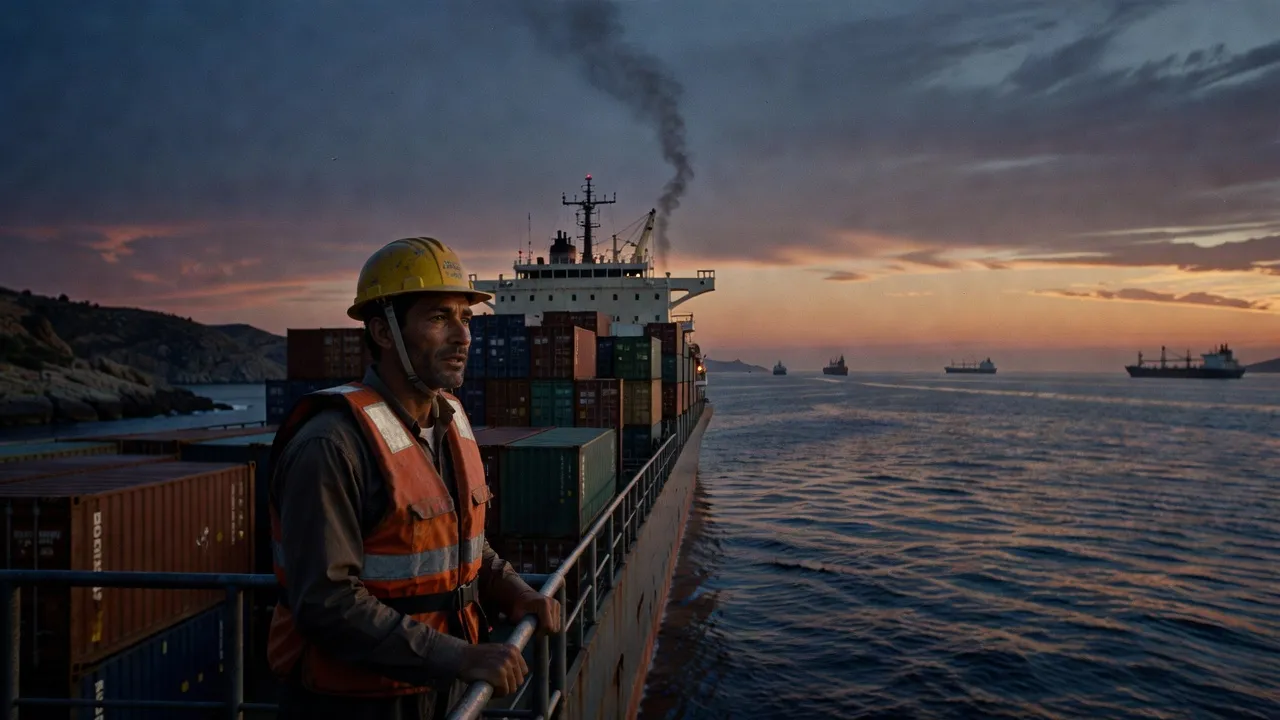
A cargo ship was hit by a projectile off the coast of Oman, in the Strait of Hormuz. In response, the International Maritime Organization suspended the evacuation of roughly 11,000 sailors, which was already under way. Soon after, Iran indicated that only routes it approves could be used in the area. On these facts, the various actors agree.
The event comes a week after a memorandum meant to halt hostilities for sixty days between Iran on one side and the United States and Israel on the other. The Strait of Hormuz, through which a major share of seaborne oil and gas passes, concentrates the tensions: Iran claims sovereign control there and the right to impose routes, while the UN and Oman seek to organize an alternative passage corridor. The incident is widely presented as an early test of this still-fragile de-escalation.
Attributing the attack, by contrast, divides opinion. The United States and Israel firmly blame Iran and its Revolutionary Guard Corps. Tehran refers to a projectile "of unknown origin" and stresses its sovereignty over the strait. Other actors, including Qatar and Russia, use cautious language — "incident," a "suspected" attack — and call for not rushing to conclusions.
Priorities differ as well. Some emphasize Iranian responsibility and threat; others focus on the concrete consequences: the fate of the 11,000 stranded sailors, the state of traffic, and insurance costs. Beyond the ship itself, what remains in suspense is the very durability of the deal reached only a week earlier.