Common ground and differences in coverage across the media analysed.
The Fourth Criminal Chamber in Damascus has sentenced Bashar al-Assad to death in absentia for war crimes and crimes against humanity, along with his brother Maher al-Assad and seven other former officials.
Atef Najib, Assad's cousin and former head of political security in Deraa, is the only defendant tried in person — arrested in January 2025 — and sentenced to death for his role in the 2011 crackdown.
Bashar al-Assad has been living in the Moscow region since December 2024, where he was granted political asylum by Russia, which has not extradited him.
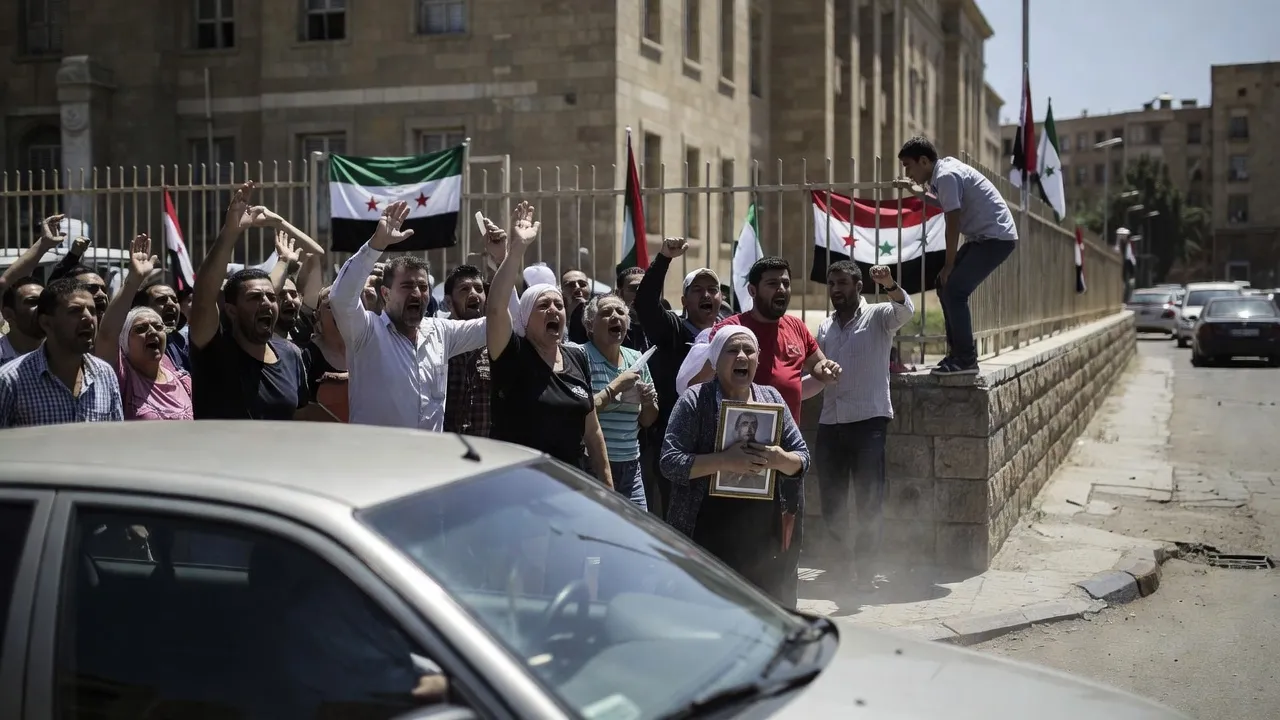
Some coverage presents the verdict as justice finally being served, carried by the celebrations and takbirs relayed in the strongholds of the Syrian revolution, while others see it as symbolic politics without real impact as long as the accused remains out of reach.
The majority of outlets explicitly link the unenforceability of the verdict to the asylum granted by Moscow and an extradition request that has gone unanswered, while Russian media reports the conviction without ever mentioning this issue or international pressure on Russia.
Most coverage remains focused on the judicial proceedings of the trial, while Israeli media resituates the verdict in the history of the alliance between Assad's Syria and Iran, which is hostile to Israel, placing regional analysis at the forefront.
This grouping describes the publications analysed, not the position of these countries’ populations or of their governments.
What the coverage of each country leaves aside, while others put it forward.
Russia
Germany
Israel
Preview: 3 of 18 media perspectives. Syntheses of the media analysed — not direct quotations. Method & limitations
Doha amplifies the voice of Syrians celebrating the verdict, from takbirs in Deraa to jubilant images in Idlib, the historic stronghold of the revolution.
3 sources · View sources
Moscow is separating the verdict from Damascus from the asylum status granted to Bashar al-Assad, who has remained in Russia despite the sentence.
2 sources · View sources
Jerusalem traces the Assad dynasty and its alliance with Tehran, which has been hostile to the Hebrew state for a quarter of a century.
2 sources · View sources
DOMINANT ANGLE
Doha amplifies the voice of Syrians celebrating the verdict, from takbirs in Deraa to jubilant images in Idlib, the historic stronghold of the revolution.
ANALYSIS
Doha, August 12, 2026.
DOMINANT ANGLE
Moscow is separating the verdict from Damascus from the asylum status granted to Bashar al-Assad, who has remained in Russia despite the sentence.
ANALYSIS
Moscow, August 12, 2026.
DOMINANT ANGLE
Jerusalem traces the Assad dynasty and its alliance with Tehran, which has been hostile to the Hebrew state for a quarter of a century.
ANALYSIS
Jerusalem, August 12, 2026.
DOMINANT ANGLE
Berlin is separating the symbolic significance of the Damascus verdict from its actual impact, walking a fine line between a cautious call for transitional justice and expressed skepticism about its rigor.
ANALYSIS
Berlin, August 12, 2026.
DOMINANT ANGLE
Pretoria is weighing the judicial implications of the Damascus verdict, which marks the first conviction of the Syrian transition and a sentence with no hold on a defendant shielded by Moscow.
ANALYSIS
Pretoria, August 12, 2026.
DOMINANT ANGLE
France is closely watching the trial in Damascus as the first test of Syria's transitional justice, where the appearance of the sole defendant in attendance, Atef Najib, contrasts with the absence of Bashar al-Assad, shielded by Moscow.
ANALYSIS
Paris, August 12, 2026.
DOMINANT ANGLE
The United States is drawing parallels between the verdict in Damascus and its own federal justice system, where a former jailer from the Assad era was recently convicted of torture - a sign, according to American media, that accountability is crossing Syrian borders.
ANALYSIS
The United States is witnessing a significant development in the Syrian conflict, as American news outlets report on the condemnation of former Syrian President Bashar Assad and his brother Maher.
DOMINANT ANGLE
London views the first conviction of the Assad clan as a landmark judicial ruling, while emphasizing it remains toothless as long as Moscow shields those convicted.
ANALYSIS
London, August 12, 2026.
DOMINANT ANGLE
Islamabad is first considering the judicial scope of the Damascus verdict: the first convictions against the former Syrian power, but an in-absentia sentence that Moscow can render ineffective.
ANALYSIS
Islamabad, August 12, 2026.
DOMINANT ANGLE
Brasília is deciphering the verdict from Damascus through a simple question: why was Bashar al-Assad sentenced to death, and for what specific crimes?
ANALYSIS
Brasília, August 12, 2026.
DOMINANT ANGLE
Canberra is closely watching the verdict from Damascus as a test of Syria's transitional justice, with no illusions about its practical effects given Russia's backing of Assad.
ANALYSIS
Canberra, August 12, 2026.
DOMINANT ANGLE
Caracas is gauging the impact of a ruling that will likely never be enforced as long as Moscow shields Assad
ANALYSIS
Caracas, August 12, 2026.
DOMINANT ANGLE
Singapore is eyeing a verdict from afar: a death sentence with little practical impact as long as Assad remains shielded in Moscow.
ANALYSIS
Singapore, August 12, 2026.
DOMINANT ANGLE
Lisbon condemns the situation in Syria as "unacceptable" and calls for a peaceful and inclusive transition, without taking a stance on the verdict itself
ANALYSIS
Lisbon, August 12, 2026.
DOMINANT ANGLE
Nigeria's capital, Abuja, views the Damascus verdict as the first test of Syrian transitional justice, while noting that the sentence remains without practical effect as long as Assad remains out of reach in Moscow.
ANALYSIS
Abuja, August 12, 2026.
DOMINANT ANGLE
Rome is assessing the limited impact of a death sentence that will not be enforced through extradition as long as Bashar al-Assad remains shielded by Moscow.
ANALYSIS
Rome, August 12, 2026.
DOMINANT ANGLE
Dhaka takes note of the Damascus verdict, less for its actual impact — the accused remaining out of reach in Moscow — than for the mechanics of a transitional justice system that for the first time targets the inner circle of Syria's former government.
ANALYSIS
Dhaka, August 12, 2026.
DOMINANT ANGLE
Buenos Aires sees in the Damascus verdict an echo of its own trials for crimes against humanity, but notes that a conviction in absentia remains without possible enforcement.
ANALYSIS
Buenos Aires, August 12, 2026.
Explore every perspective on this subject across 18 countries.
Compare viewpoints and see where they diverge.
published on
countries
sources
articles
gap
Damascus's Fourth Criminal Chamber sentenced Bashar al-Assad to death in absentia on Tuesday 11 August 2026 for premeditated murder, the intentional killing of children under 15 and torture leading to death, classed as war crimes and crimes against humanity. His brother Maher al-Assad and seven other former regime officials were sentenced in the same ruling. Only his cousin Atef Najib, former security chief in Deraa, appeared in person and received the same sentence. Assad fled Damascus in December 2024 and has since lived in the Moscow area, where Russia has not extradited him.
Measured with the previous method (distance between texts), on a different scale.