Common ground and differences in coverage across the media analysed.
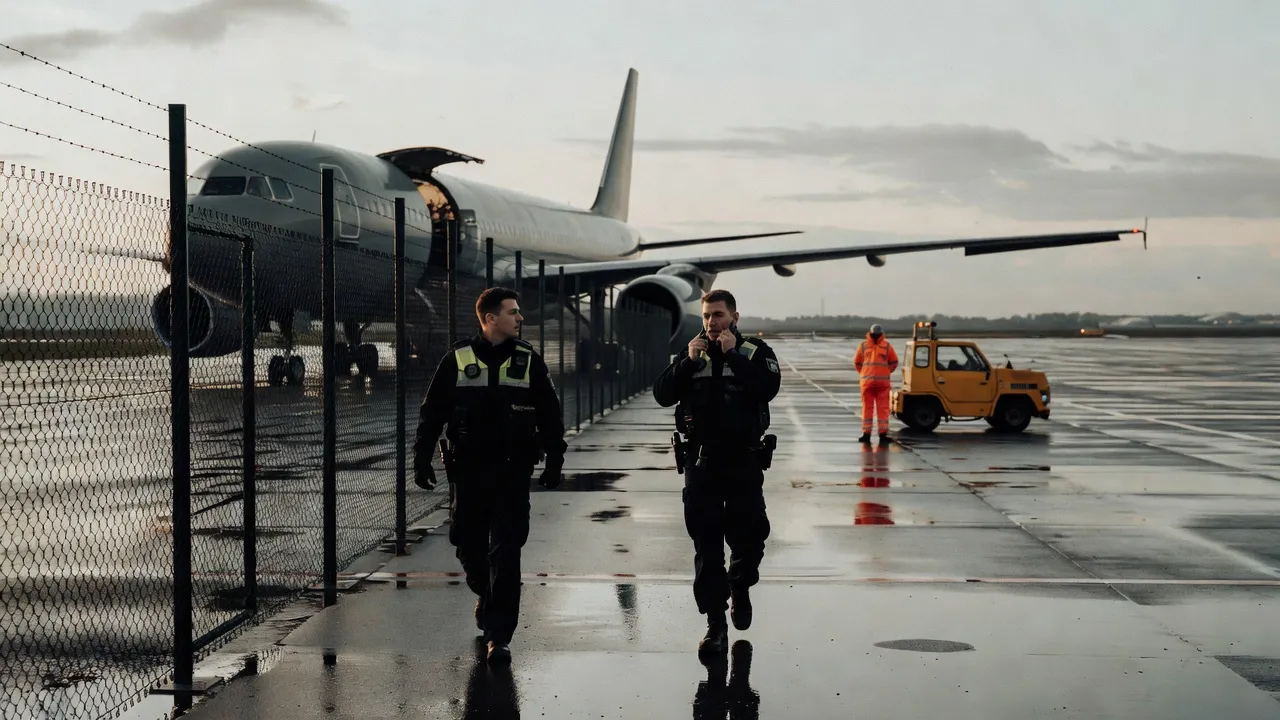
An explosive-laden drone was discovered on the night of August 4-5 at Leipzig/Halle Airport, near a Ukrainian Antonov cargo plane.
The device did not explode: the detonator was faulty.
On September 1, German Interior Minister Alexander Dobrindt formally attributed the attack to Russia and announced diplomatic sanctions, including the closure of the last Russian consulate (Bonn) and the termination of the lease of the Russian House in Berlin.
Western countries in the corpus treat the attribution to Russia as established based on material evidence and intelligence presented by Berlin, while Moscow frames it as a political accusation without evidence.
Coverage aligned with this reading
Coverage that diverges
Berlin and its allies present the announced sanctions as a proportionate response to a Russian hybrid campaign, while Moscow presents these same measures as unprecedented escalation that would warrant a Russian response.
Coverage aligned with this reading
Coverage that diverges
Russian media suggests that Berlin would use the incident to divert attention from its political difficulties ahead of regional elections, a reading relayed in Nigeria but absent from German, French, British, and American accounts.
Coverage aligned with this reading
Coverage that diverges
This grouping describes the publications analysed, not the position of these countries’ populations or of their governments.
What the coverage of each country leaves aside, while others put it forward.
Russia
United States
United Kingdom
Preview: 3 of 8 media perspectives. Syntheses of the media analysed — not direct quotations. Method & limitations
Berlin breaks its three-week silence: Germany formally designates Moscow as responsible for the attempted attack on Leipzig, and Germany imposes its toughest sanctions on Russia since 2022.
4 sources · View sources
Moscow denounces a "fabricated" accusation and promises a response in kind to what it describes as an unprecedented escalation, while pointing out the lack of any material evidence produced by Berlin.
2 sources · View sources
Kyiv takes away from the Leipzig incident proof that Russia's hybrid war directly targets the logistical chains that fuel Ukraine's defense effort, long before any diplomatic dispute between Berlin and Moscow.
3 sources · View sources
DOMINANT ANGLE
Berlin breaks its three-week silence: Germany formally designates Moscow as responsible for the attempted attack on Leipzig, and Germany imposes its toughest sanctions on Russia since 2022.
ANALYSIS
Berlin, Tuesday, September 1, 2026.
DOMINANT ANGLE
Moscow denounces a "fabricated" accusation and promises a response in kind to what it describes as an unprecedented escalation, while pointing out the lack of any material evidence produced by Berlin.
ANALYSIS
Moscow, September 2, 2026.
DOMINANT ANGLE
Kyiv takes away from the Leipzig incident proof that Russia's hybrid war directly targets the logistical chains that fuel Ukraine's defense effort, long before any diplomatic dispute between Berlin and Moscow.
ANALYSIS
Kyiv, September 2, 2026.
DOMINANT ANGLE
France fully backs the accusation brought by Berlin against Moscow and is turning the Leipzig incident into a test of European solidarity, calling for new sanctions rather than a bilateral German-Russian dispute.
ANALYSIS
Paris, September 2, 2026.
DOMINANT ANGLE
London fully backs the German accusation against Moscow, seeing it as confirmation of a long-term hybrid campaign targeting the entire Atlantic Alliance.
ANALYSIS
London, September 2, 2026.
DOMINANT ANGLE
The United States government backs the German version and sees NATO's solidarity as proof of a united transatlantic front in the face of Moscow.
ANALYSIS
Washington, September 2, 2026.
DOMINANT ANGLE
Nigeria's capital, Abuja, is gauging the crisis based on the Western solidarity it has sparked, with German sanctions, British support, and a verbal response from Putin, rather than the technical details of the drone itself.
ANALYSIS
Nigeria's capital, Abuja, is closely following the escalating tensions between Russia and Western countries.
DOMINANT ANGLE
Brussels fully supports the German accusation and in turn summons the Russian ambassador, while refusing to let the term "hybrid" serve as a euphemism for aggression.
ANALYSIS
Brussels, September 2, 2026.
Explore every perspective on this subject across 8 countries.
Compare viewpoints and see where they diverge.
published on
countries
sources
articles
gap
On Tuesday, September 1, 2026, German Interior Minister Alexander Dobrindt announced that Russia is being held responsible for a foiled drone attack attempt discovered on the night of August 4-5 at Leipzig/Halle Airport, near Ukrainian cargo planes. The explosive-laden device failed to detonate due to a faulty detonator. In response, Germany announced the closure of its last Russian consulate in Bonn, the termination of the lease for the "Russian House" in Berlin, and the summoning of Russian Ambassador Sergei Nechayev. Vladimir Putin, speaking from Bishkek, described these sanctions as a "grave mistake" and the German evidence as "fabricated".
No arrests have been made; Moscow denies involvement and promises a "mirror" response to German sanctions.
Chancellor Friedrich Merz reportedly wanted an earlier statement than the one chosen by Minister Dobrindt.
Berlin announces it also wants to increase pressure on the Russian "ghost fleet" of oil tankers.
The United Kingdom, NATO, the EU, and Sweden are showing their support for Berlin; Stockholm has also summoned the Russian ambassador.
Three regional elections are being held in eastern Germany this month, including Saxony-Anhalt.