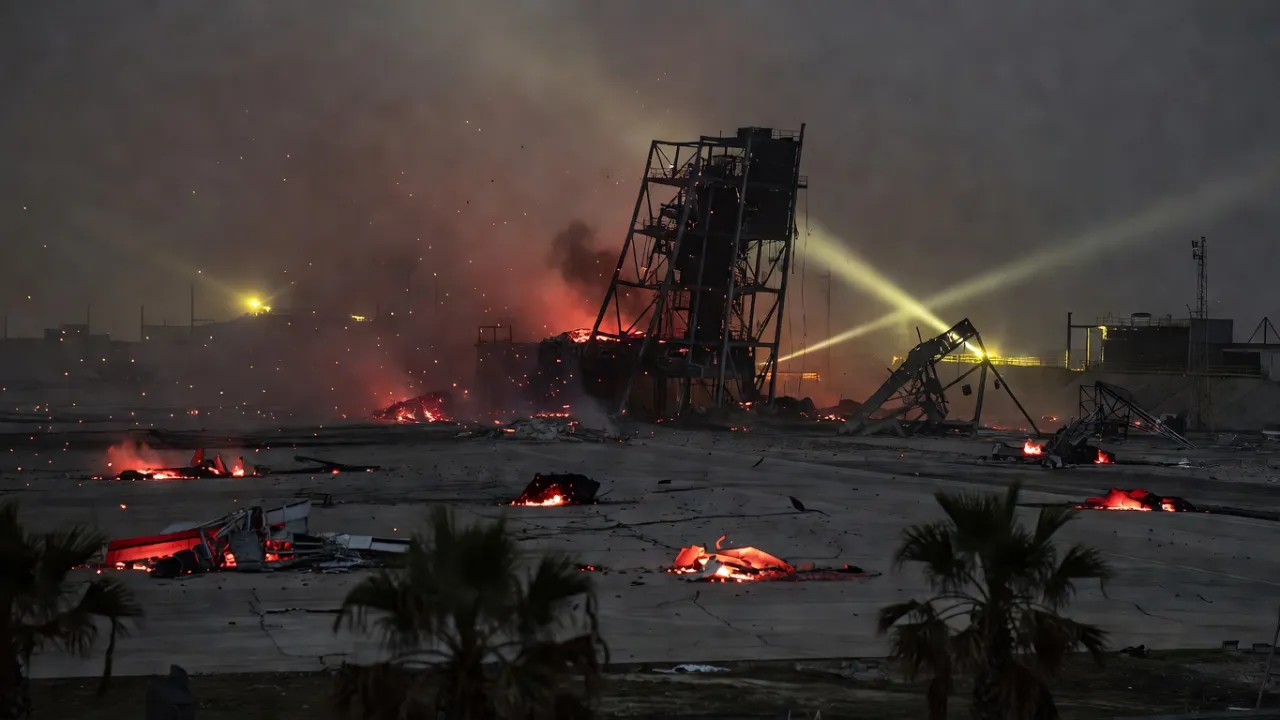
On 31 May 2026, Blue Origin's heavy-lift New Glenn rocket exploded during launch at Cape Canaveral, destroying the vehicle along with its payload, a classified satellite contracted by the US Space Force. No injuries were reported, but the damage to the launch pad 36A infrastructure implies a reconstruction estimated at no less than fifteen months before any resumption. The event is unanimously described as a major industrial setback for Jeff Bezos's company.
Beyond the accident itself, the incident touches several sensitive areas. NASA's Artemis lunar programme is directly weakened, as Blue Origin supplies the Blue Moon lander intended for crewed missions. The destruction of a military payload also gives the event a national-security dimension that goes beyond a mere technical failure.
The backdrop is one of intensified space competition. The Artemis architecture relies on two private suppliers, SpaceX and Blue Origin, without the institutional redundancy of state agencies. Blue Origin's temporary sidelining mechanically strengthens SpaceX, already holder of numerous Pentagon contracts, and raises the question of a launch market concentrated around a single player.
The broader significance of the incident remains disputed. Some actors read it as an internal industrial problem to be corrected within the technological alliance, while others interpret it as a sign of structural fragility in the privatised space model. Several countries argue for greater launch autonomy, while others see the event as a window of opportunity for their own national space programmes.