Common ground and differences in coverage across the media analysed.
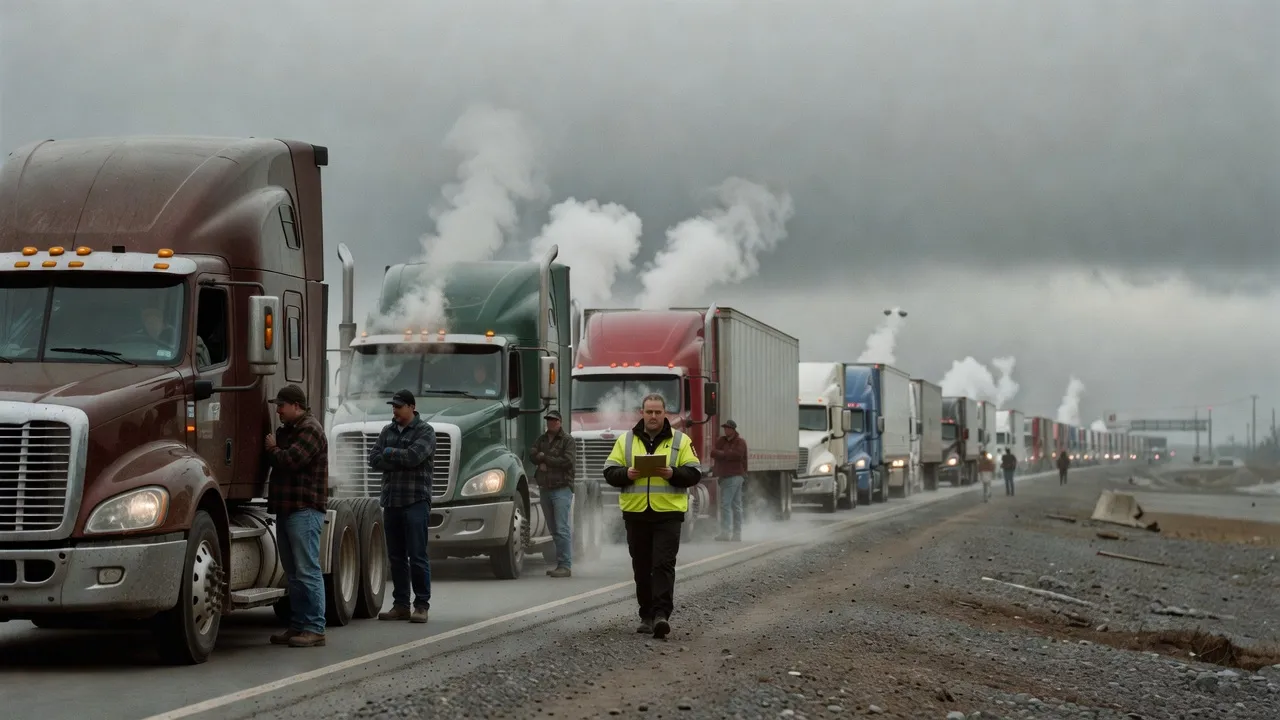
US tariffs of 50% on Canadian exports took effect on August 22, 2026, after bilateral negotiations failed the previous evening.
Donald Trump announced, via Truth Social, the doubling to 50% of tariffs on Canadian cars, trucks, auto parts, and steel, effective January 1, 2027.
Mark Carney promised retaliatory tariffs of 'dollar for dollar' on US products, taking effect on September 8, 2026.

Accounts differ on who is responsible for the failed negotiations: Washington attributes it to last-minute Canadian demands on an almost finalized agreement, while Ottawa claims the Americans were asking for too much and offering too little.
Coverage aligned with this reading
Coverage that diverges
The US frames the starting point of the conflict as Canada's restrictions on alcohol, automobiles, and dairy products adopted last year, as well as demands related to Canada's French-language protections; in contrast, Canadian and French coverage centers the narrative on new US tariffs.
Coverage aligned with this reading
This grouping describes the publications analysed, not the position of these countries’ populations or of their governments.
What the coverage of each country leaves aside, while others put it forward.
Spain
Nigeria
United States
Preview: 3 of 12 media perspectives. Syntheses of the media analysed — not direct quotations. Method & limitations
London is gauging the fallout from a trade war between G7 allies, seeing a warning sign for its own tariff relations with Washington.
3 sources · View sources
Canberra views the Canadian-US crisis as a textbook case for any mid-sized power dealing with the US, as Australia negotiates its own tariff disputes with the United States.
3 sources · View sources
Brasília sees the Canadian standoff as a reflection of its own tariff dispute with Washington, as Lula still pursues a three-pronged approach of negotiation, recourse to the WTO, and preparation of a retaliatory measure.
4 sources · View sources
DOMINANT ANGLE
London is gauging the fallout from a trade war between G7 allies, seeing a warning sign for its own tariff relations with Washington.
ANALYSIS
London, August 25, 2026.
DOMINANT ANGLE
Canberra views the Canadian-US crisis as a textbook case for any mid-sized power dealing with the US, as Australia negotiates its own tariff disputes with the United States.
ANALYSIS
Canberra, August 25, 2026.
DOMINANT ANGLE
Brasília sees the Canadian standoff as a reflection of its own tariff dispute with Washington, as Lula still pursues a three-pronged approach of negotiation, recourse to the WTO, and preparation of a retaliatory measure.
ANALYSIS
Brasília, August 25, 2026.
DOMINANT ANGLE
Ottawa is bracing for a prolonged trade war, with the Canadian government led by Carney preparing the economy for potential fallout, even if it means facing retaliatory measures from Trump on the automotive sector.
ANALYSIS
Ottawa, August 25, 2026.
DOMINANT ANGLE
Nigeria is watching the North American tariff escalation with caution, as Washington and Ottawa are turning a trade dispute into an open confrontation.
ANALYSIS
Lagos, August 25, 2026.
DOMINANT ANGLE
Beijing takes away from this Canada-US escalation a lesson already learned: massive customs tariffs as a means of pressure, even towards a historical ally.
ANALYSIS
Beijing, August 25, 2026.
DOMINANT ANGLE
Spain's capital, Madrid, sees the North American tariff escalation as a troubling precedent for the European automotive industry, which is already under threat.
ANALYSIS
Madrid, August 25, 2026.
DOMINANT ANGLE
Paris sees an escalation with no visible exit between two historic partners, where the US is multiplying tariff threats in the face of an increasingly inflexible Ottawa.
ANALYSIS
Paris, August 25, 2026.
DOMINANT ANGLE
Mexico City views the Canada-US showdown as a real-world test of what the US government might demand from its own North American treaty partner.
ANALYSIS
Mexico, August 25, 2026.
DOMINANT ANGLE
Kuala Lumpur sees the tariff escalation between Ottawa and Washington as a warning sign for its own exports, caught between Canada's firm stance and the US's straightforward warning.
ANALYSIS
Kuala Lumpur, August 25, 2026.
DOMINANT ANGLE
The United States government blames the failure of negotiations on Ottawa, while taking a tougher stance on trade, even threatening to double tariffs on Canadian automobiles.
ANALYSIS
The United States government is taking a firm stance on the escalating trade tensions, with the Trump administration placing blame on Ottawa.
DOMINANT ANGLE
Caracas sees the North American tariff escalation as a further sign of the fragility of the trade alliances that the US imposes on its neighbors.
ANALYSIS
Caracas, August 25, 2026.
Explore every perspective on this subject across 12 countries.
Compare viewpoints and see where they diverge.
published on
countries
sources
articles
gap
On August 22, 2026, US tariffs of 50% took effect on over 500 Canadian products after trade talks between Ottawa and Washington failed on Friday, prompting Prime Minister Mark Carney to announce retaliatory tariffs of "dollar for dollar" starting September 8, targeting US steel, dairy products, appliances, and electronics.
Canada's retaliatory tariffs are not yet in effect, set to start on September 8, whereas the US increase on autos is scheduled for January 2027
Honey, taxed at 50%, affects an industry that exports over half of its production to the United States.
Ottawa is preparing an expanded employment insurance and business loans inspired by Covid-era aid.
A Canadian parts manufacturer warns that a tariff on its parts would be passed on to the US automotive assembly itself.
Doug Ford threatens to cut off electricity and critical minerals to the United States and triple certain prices.
Measured with the previous method (distance between texts), on a different scale.