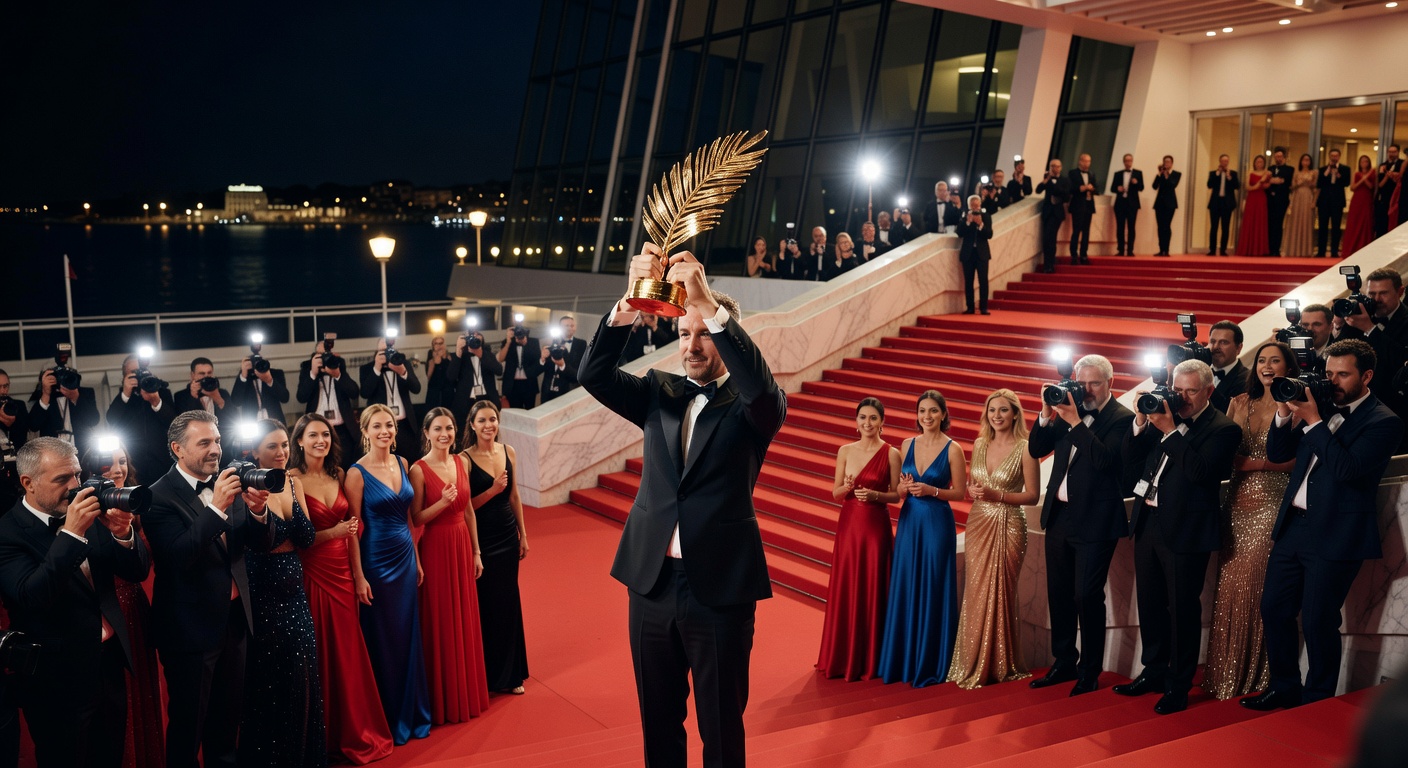
Romanian director Cristian Mungiu won the Palme d'Or at the 79th Cannes Film Festival for "Fjord." With this prize, he becomes the tenth filmmaker in the festival's history to receive it twice, nineteen years after "4 Months, 3 Weeks and 2 Days" was honored in 2007. The film follows a Romanian-Norwegian family confronted by Norwegian social services after injuries are discovered on a child, and explores the line between tolerance and fundamentalism.
In his speech, Mungiu described contemporary societies as "fractured and radicalized" and presented the film as a stand against all forms of fundamentalism. The 2026 awards were dominated by non-English-language cinema, with no American winner in the main competition. The Grand Jury Prize went to exiled Russian director Andrei Zvyagintsev for "Minotaur"; from the stage, he addressed Vladimir Putin directly, calling for an end to the killing.
The ceremony took place against the backdrop of several active armed conflicts, including the war in Ukraine, which weighed on the mood of the closing event. The presence of a dissident filmmaker illustrates the festival's enduring role as an international platform, while the prominence of Central and Eastern European cinema reflects its growing assertion at major global gatherings.
Several readings coexist. Some actors interpret the awards primarily through their own national honors, while others see a collective recognition of European auteur cinema. The exact scope of "Fjord"'s haul is also debated: one count cites five separate awards beyond the Palme d'Or itself, while other accounts mention only the main prize. Still contested are the effect of automatic eligibility for the 2027 Oscars and the place, within the story of the ceremony, of tensions over creative freedom raised in France.