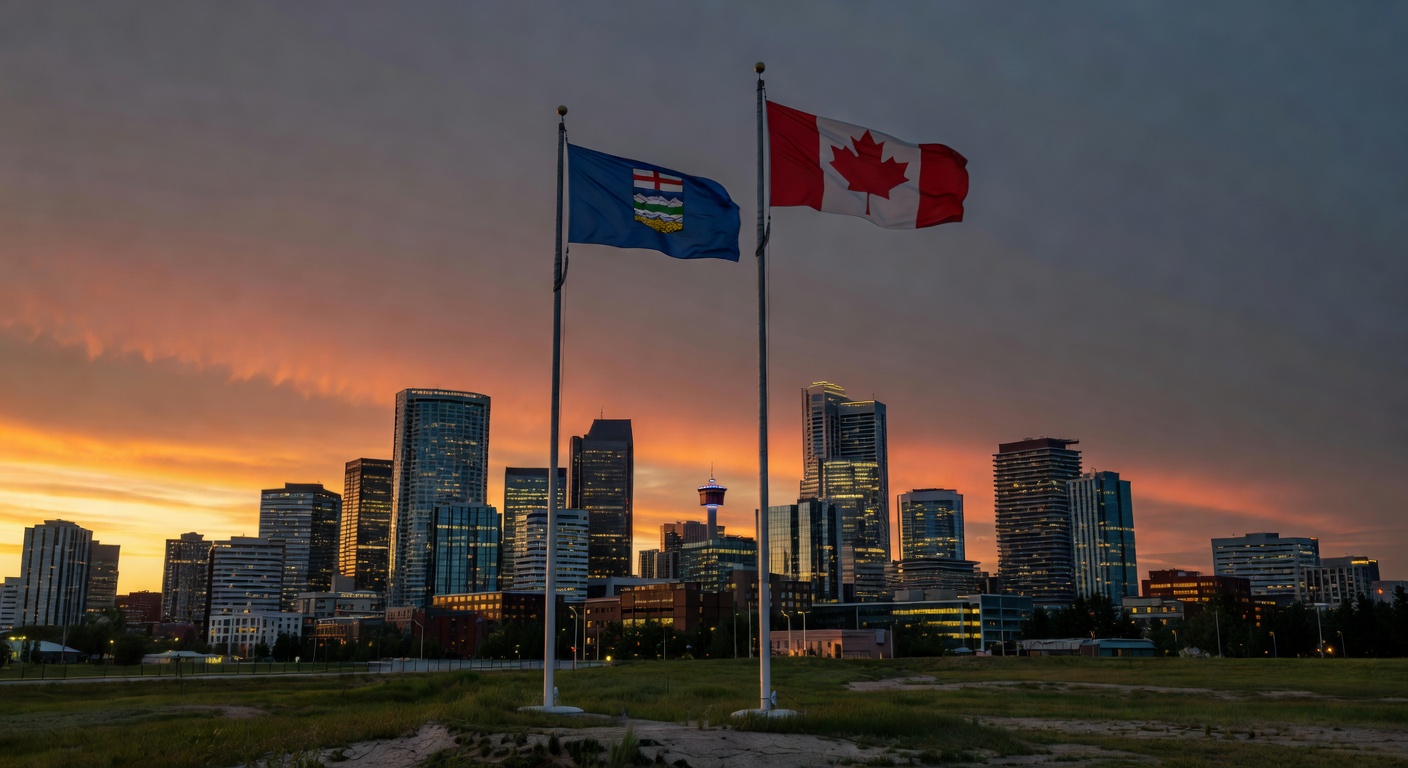
On 22 May 2026, Canadian Prime Minister Mark Carney described Alberta as a province « essential » to the country's economy, responding to the announcement of a referendum in the oil-rich province. The vote, set for 19 October 2026, will be non-binding: the question is not about direct secession, but about whether to launch a legal process that could later lead to a binding vote on separation.
The backdrop is shaped by long-standing grievances. For decades, part of Alberta has objected to the distribution of oil revenues and to federal climate policies seen as unfavourable to the West, fuelling a sense of alienation. The crisis also unfolds amid trade tensions with the Trump administration that weigh on Ottawa's position. Carney is seeking to shore up national unity, as shown by a recent agreement with Edmonton on a pipeline to the Pacific coast and the partial rollback of earlier climate measures.
Several safeguards frame the process. The Clarity Act of 2000 requires a « clear » majority on a « clear » question and multilateral negotiations before any secession, making rapid independence highly improbable. An initial petition of more than 300,000 signatures was also struck down by an Alberta court for failing to consult Indigenous peoples.
Several points remain disputed or uncertain. Provincial Premier Danielle Smith says she personally opposes separation, yet she called the referendum while refusing to comply with the court ruling. A counter-petition favouring staying in Canada gathered more than 400,000 signatures, surpassing the separatist one. The actual weight of Indigenous rights, a key legal trigger, remains thinly addressed.