
Common ground and differences in coverage across the media analysed.
The transatlantic alliance faces its most serious crisis in decades amid Trump administration pressure on NATO and Iran policy
King Charles III's speech is historic—no reigning monarch has delivered such an address to Congress in this context of tension
The visit was diplomatically designed to bypass damaged governmental channels strained by Trump-Starmer tensions
The United Kingdom and United States frame the visit as a moment of historical consolidation; Singapore views it as an elaborate communications operation; Russia characterizes it as a public relations exercise
Kyiv amplifies Charles's call for 'unwavering resolve' as a counterweight to Trump; Moscow downplays the speech's significance; Washington appropriates the message; Paris sees the limits of royal soft power in the face of Trump
Trump associates Charles with his hardline stance on Iranian nuclear policy without the king's explicit endorsement; British media expresses frustration; Italian media documents the association
Preview: 3 of 13 media perspectives. Syntheses of the media analysed — not direct quotations. Method & limitations
London deploys the Crown as a last resort to shore up the transatlantic alliance in the face of Trump
2 sources · View sources
Ottawa sees the British Crown as the only diplomatic channel that Trump cannot ignore or humiliate
1 source · View sources
Islamabad observes with interest a monarch who reminds America of its own constitutional tradition
2 sources · View sources
DOMINANT ANGLE
London deploys the Crown as a last resort to shore up the transatlantic alliance in the face of Trump
ANALYSIS
London has played its highest card: sending the King.
DOMINANT ANGLE
Ottawa sees the British Crown as the only diplomatic channel that Trump cannot ignore or humiliate
ANALYSIS
Ottawa is viewing King Charles III's address through the lens of a country that has no other monarch to send to Washington.
DOMINANT ANGLE
Islamabad observes with interest a monarch who reminds America of its own constitutional tradition
ANALYSIS
Islamabad is following King Charles III's address with the particular attention of a country deeply familiar with British colonial history and its paradoxes.
DOMINANT ANGLE
New Delhi watches the royal visit as a test of Western cohesion that reshapes the Asian balance of power
ANALYSIS
New Delhi is monitoring King Charles III's Washington visit with the calculated interest of an emerging power that benefits from Western fractures whilst fearing their instability.
DOMINANT ANGLE
Canberra reads explicit AUKUS mention in the royal address as strategic reassurance for its Indo-Pacific pivot
ANALYSIS
Canberra did not miss the moment.
DOMINANT ANGLE
Washington receives royal message on Western unity amid partisan applause and Trump-era indifference
ANALYSIS
Washington gave the King of England what it does best: spectacle.
DOMINANT ANGLE
Kyiv welcomes King Charles III's reference to Ukraine in his Congressional address as a coded rebuke to Trump's wavering stance
ANALYSIS
For Ukraine, King Charles III's address to the US Congress carried particular resonance.
DOMINANT ANGLE
Singapore reads the royal visit as a sophisticated charm operation aimed at restoring the Anglo-American alliance without unsettling an unpredictable Trump
ANALYSIS
Singapore, a privileged observer of power dynamics among great powers, covered King Charles III's visit with the analytical sharpness characteristic of the Straits Times.
DOMINANT ANGLE
Moscow covers the royal visit with ironic distance, viewing it as a communications operation designed to mask fractures within the Western alliance
ANALYSIS
Russian state media covered King Charles III's Washington visit with the irony that characterises their coverage of Atlantic alliance events.
DOMINANT ANGLE
Paris reads the royal address as a pro-democracy plea against Trump's unilateralism
ANALYSIS
France received King Charles III's speech with particular attention to a single passage: his remarks on checks and balances.
DOMINANT ANGLE
Doha reads the royal visit as a display of Western cohesion masking the war on Iran
ANALYSIS
Doha watches the royal procession in Washington with the critical distance of a regional actor directly experiencing the consequences of operations against Iran.
DOMINANT ANGLE
Beijing views the display of Anglo-American unity as confirmation of its thesis about Western structural tensions
ANALYSIS
Beijing is following King Charles III's Washington visit with the measured interest of a strategist watching his analysis unfold.
DOMINANT ANGLE
Rome sees the royal visit as a moment of reconfiguration within the Atlantic alliance, where Europe attempts to exert influence on Washington through British soft power
ANALYSIS
Italian press covered King Charles III's visit to Washington with the perspective of a country observing major Atlantic dynamics from its Mediterranean position.
Explore every perspective on this subject across 13 countries.
Compare viewpoints and see where they diverge.
published on
countries
sources
articles
gap
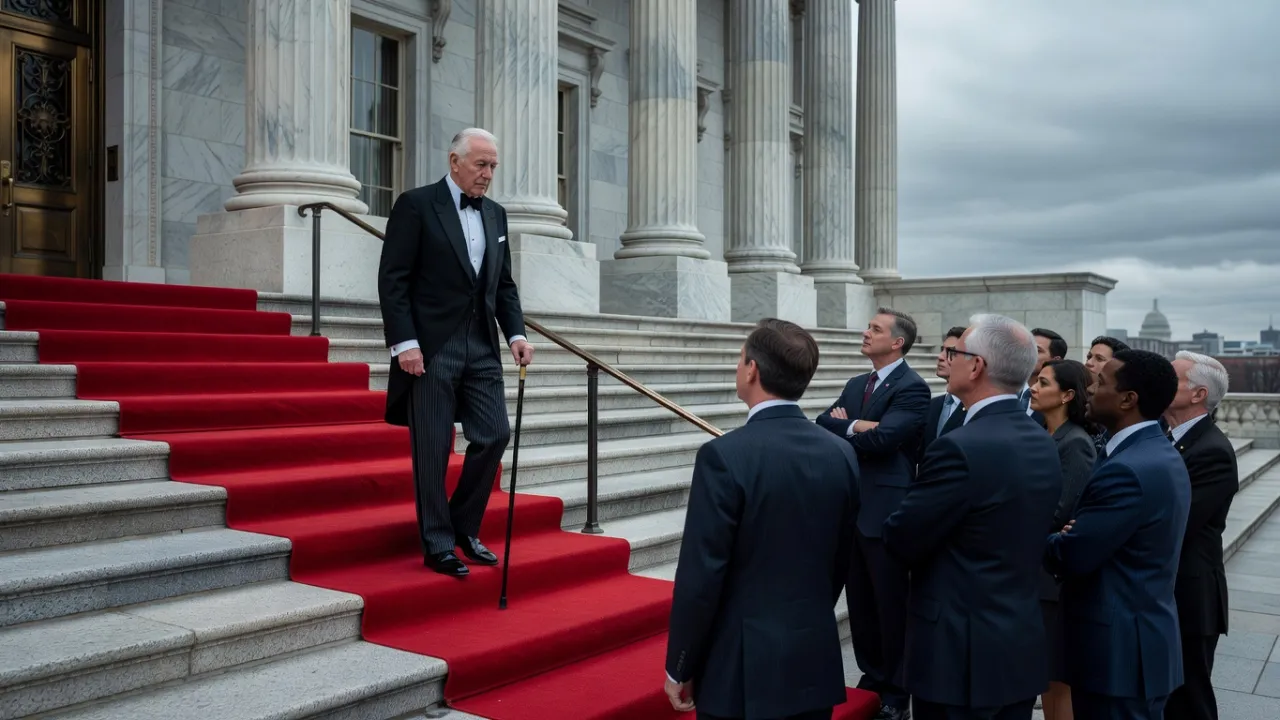
For the first time since 1991, a reigning British monarch addressed the United States Congress. Before the assembled lawmakers, Charles III recalled the foundations of the Western democratic order — separation of powers, the Atlantic alliance, support for Ukraine — in a speech met with a standing ovation. No reigning sovereign had delivered such an address to Congress amid tensions this acute. The event was diplomatically arranged to bypass governmental channels strained by frictions between London and Washington.
The visit comes as the transatlantic alliance is widely seen to be facing its most serious crisis in decades. Three issues overlap: an open disagreement over the line to take toward Iran, doubts about the American commitment within NATO, and support for Ukraine that some describe as now conditional on concessions. Against this backdrop, the royal address functioned as a stress test for the alliance.
The actors involved draw opposing readings. For some, the visit consolidates a historic partnership and affirms democratic values; for others, it amounts above all to a carefully staged communications operation. On Ukraine, some amplify the call for resolve as a strong signal, while others play down its reach.
One point remains disputed: the reference to Iran. The message was publicly linked to a hardline stance on the nuclear issue without that link being explicitly endorsed by the speaker, which has fed divergent interpretations.
In the end, the applause came and the images circulated, but none of the underlying divergences — Iran, NATO, Ukraine — was resolved by the visit.
Measured with the previous method (distance between texts), on a different scale.