Common ground and differences in coverage across the media analysed.
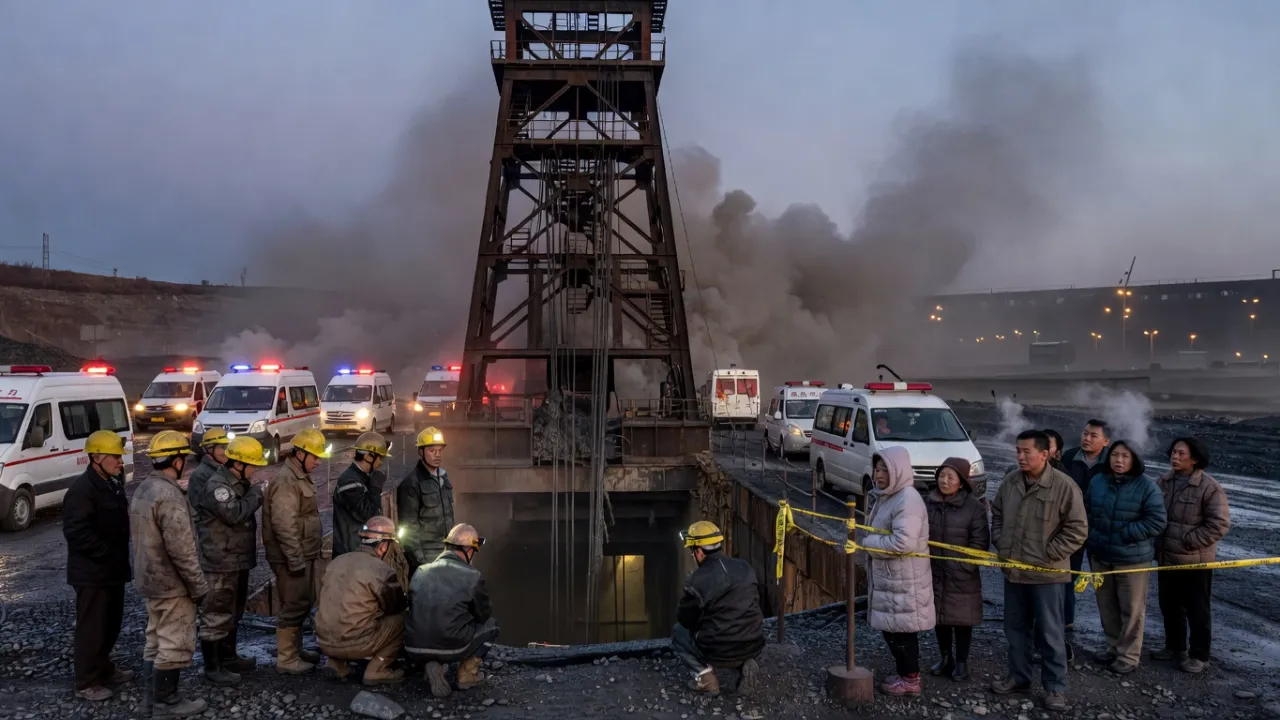
The May 23, 2026 explosion at the Liushenyu mine (Shanxi, Tongzhou Group) killed at least 90 people — 247 miners were underground at the time of the incident — making it the worst mining disaster in China since the Heilongjiang accident in 2009 (108 deaths).
Chinese authorities acknowledged 'serious legal violations' by the operator; executives of the Shanxi Tongzhou Group were placed in detention the following day.
Xi Jinping publicly ordered 'maximum efforts' for rescue operations and a thorough investigation to identify those responsible.
The Indian press places Narendra Modi's condolences to Xi Jinping at the top of its coverage, interpreting the event through the lens of bilateral relations. No other perspective mentions the reaction of foreign governments.
Coverage aligned with this reading
Coverage that diverges
The American, British, and Chinese perspectives explicitly highlight the contrast between the initially announced casualty toll (4 then 8 deaths) and the final figure (90), questioning the reliability of the initial official communications. The French and Indian perspectives report the fact without problematizing it.
Coverage aligned with this reading
The Japanese perspective is the only one to explicitly articulate the contradiction between Beijing's stated energy transition ambitions and the maintenance of record coal production, questioning the coherence of the official narrative on industrial modernization.
Coverage aligned with this reading
Coverage that diverges
This grouping describes the publications analysed, not the position of these countries’ populations or of their governments.
What the coverage of each country leaves aside, while others put it forward.
China
India
France
Preview: 3 of 6 media perspectives. Syntheses of the media analysed — not direct quotations. Method & limitations
Beijing responds swiftly to serious violations, detentions and suspended mines—yet the state response masks underlying tensions between security imperatives and coal production demands.
1 source · View sources
Washington reads the Shanxi disaster as a revealing indicator of structural contradictions: Xi Jinping's China pushes coal production to record levels in the name of energy security, at the cost of intensified pressure on inadequately protected miners.
3 sources · View sources
France weighs the tension between Xi Jinping's energy security imperative and the persistent human cost of coal dependency, following an explosion that killed at least 82 miners in Shanxi province.
1 source · View sources
DOMINANT ANGLE
Beijing responds swiftly to serious violations, detentions and suspended mines—yet the state response masks underlying tensions between security imperatives and coal production demands.
ANALYSIS
Beijing mobilized a calculated and swift response to the catastrophe that struck the Liushenyu mine in Qinyuan County, Shanxi Province, on the evening of Friday, May 23.
DOMINANT ANGLE
Washington reads the Shanxi disaster as a revealing indicator of structural contradictions: Xi Jinping's China pushes coal production to record levels in the name of energy security, at the cost of intensified pressure on inadequately protected miners.
ANALYSIS
Washington, May 23, 2026.
DOMINANT ANGLE
France weighs the tension between Xi Jinping's energy security imperative and the persistent human cost of coal dependency, following an explosion that killed at least 82 miners in Shanxi province.
ANALYSIS
Paris, May 27, 2026.
DOMINANT ANGLE
London examines the stark gap between Beijing's stated mining safety commitments and on-the-ground reality, as the Shanxi disaster lays bare the contradictions of a regime racing to boost coal production while claiming to protect its miners.
ANALYSIS
London, May 23, 2026.
DOMINANT ANGLE
Tokyo weighs Xi Jinping's energy security agenda against the reality of labor conditions in Chinese coal mines, as a disaster exposes persistent and grave safety violations.
ANALYSIS
Tokyo, May 24, 2026.
DOMINANT ANGLE
New Delhi gauges the scope of the Chinese mining catastrophe through the lens of diplomatic solidarity, while situating the tragedy within the long pattern of deadly accidents that mark Beijing's coal industry history.
ANALYSIS
New Delhi closely monitored the catastrophe that struck the Liushenyu coal mine in Shanxi Province on Friday, May 23, 2026.
Explore every perspective on this subject across 6 countries.
Compare viewpoints and see where they diverge.
published on
countries
sources
articles
gap
On 23 May 2026, a firedamp explosion struck the Liushenyu coal mine in Shanxi province, operated by the Tongzhou group. At least 90 people died: 247 miners were underground at the time. It is the deadliest mining disaster in China since the 2009 Heilongjiang accident, which killed 108.
Authorities acknowledged serious legal violations by the operator, and executives of the group were placed in detention the following day. Xi Jinping publicly ordered all-out rescue efforts and a thorough investigation to identify those responsible.
The accident throws an underlying tension into relief. Shanxi alone produces nearly a third of the country's coal, 1.3 billion tonnes in 2025. This productive pressure is part of the energy-independence strategy Beijing has asserted since the 2021 crisis. While China has sharply reduced mining deaths over two decades through tighter regulation, serious accidents remain recurrent, exposing the limits of effective enforcement.
Several points remain disputed. Some actors stress the gap between the initial official toll — 4, then 8 dead — and the final figure, questioning the reliability of early communications. Others probe the consistency between Beijing's stated climate ambitions and its record coal output. The event also comes as China-India relations are normalising, with a gesture of condolences from New Delhi read as a sign of openness.
Measured with the previous method (distance between texts), on a different scale.