Common ground and differences in coverage across the media analysed.
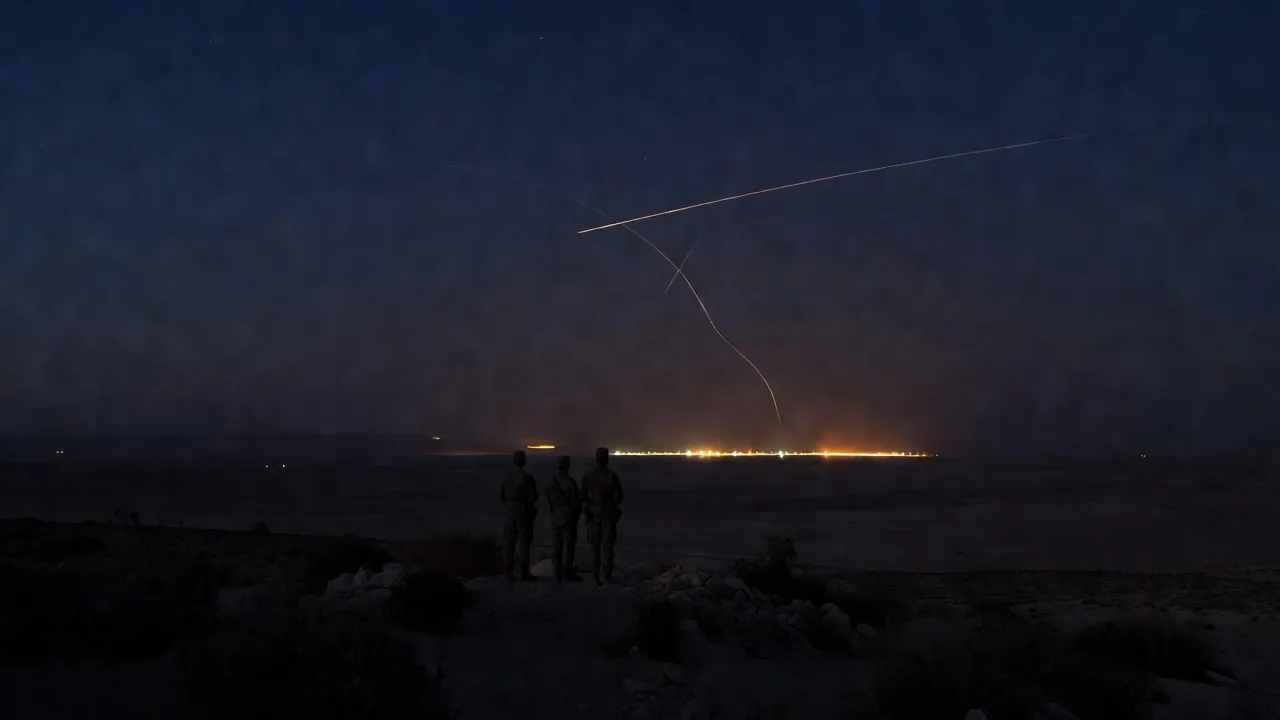
CENTCOM announced it had destroyed five Iranian oil tankers on Tuesday, September 8, in retaliation for two attempts by the Islamic Revolutionary Guard to target a US warship with ballistic missiles, without injuring any Americans.
Jordan claims to have intercepted 18 of the 20 Iranian ballistic missiles fired at the US base in Al-Azraq, the other two falling in uninhabited areas, with no casualties.
The Islamic Revolutionary Guard claimed on Wednesday, September 9, to have struck US ships and oil tankers in the Strait of Hormuz — a count presented as not independently verified.
The majority of perspectives place the five American strikes in the Gulf of Oman and near Kharg Island, with the ships named (Kaviz, Charminar, Horizon 1, Riesco, Derya); Swedish press, relaying Iranian state media, also mentions explosions near the southern port of Jask.
Coverage aligned with this reading
Coverage that diverges
Several perspectives report, with a video from CENTCOM, that the tanker M/T Riesco sank; others describe the five ships as simply 'destroyed' without confirming a sinking.
Coverage aligned with this reading
The Revolutionary Guards claim to have damaged two American destroyers (DDG-119, DDG-53); some perspectives relay this claim without reservation, while French press reports CENTCOM's denial, calling the statement 'completely false'.
This grouping describes the publications analysed, not the position of these countries’ populations or of their governments.
What the coverage of each country leaves aside, while others put it forward.
Iran
South Africa
Russia
Preview: 3 of 29 media perspectives. Syntheses of the media analysed — not direct quotations. Method & limitations
Jakarta sees the escalation as a strictly symmetrical process, where each side strikes ships or tankers without crossing the threshold that would trigger all-out war by late February.
2 sources · View sources
Singapore is feeling the oil shockwave from the direct confrontation between Washington and Tehran, with the barrel nearing $100 and the US's Asian allies on high alert near the Strait of Hormuz.
2 sources · View sources
London weighs the surge in the barrel as much as the military strikes, and reads the outcome of the Iran-United States war through the lens of the American electoral calendar rather than mediation.
3 sources · View sources
DOMINANT ANGLE
Jakarta sees the escalation as a strictly symmetrical process, where each side strikes ships or tankers without crossing the threshold that would trigger all-out war by late February.
ANALYSIS
Jakarta, September 10, 2026.
DOMINANT ANGLE
Singapore is feeling the oil shockwave from the direct confrontation between Washington and Tehran, with the barrel nearing $100 and the US's Asian allies on high alert near the Strait of Hormuz.
ANALYSIS
Singapour, September 10, 2026.
DOMINANT ANGLE
London weighs the surge in the barrel as much as the military strikes, and reads the outcome of the Iran-United States war through the lens of the American electoral calendar rather than mediation.
ANALYSIS
London, September 10, 2026.
DOMINANT ANGLE
The United States is framing this surge as a two-pronged campaign, both economic and military, where each tanker destroyed serves to financially isolate Iran as much as it does to respond to the attacks on its ships.
ANALYSIS
Washington, September 10, 2026.
DOMINANT ANGLE
South Africa is first feeling the impact of the oil shock rather than the military machinery, with Brent crude exceeding $100 and Chinese purchases also driving up African crude prices.
ANALYSIS
Pretoria, September 10, 2026.
DOMINANT ANGLE
Budapest measures the crisis in dollars per barrel, not in kilometres from the Strait of Hormuz: for a landlocked country, the key issue is the price of Brent.
ANALYSIS
Budapest, September 10, 2026.
DOMINANT ANGLE
Canberra is gauging the Gulf crisis in terms of its own stock market, between the expected downturn of the ASX and the barrel passing back above $100.
ANALYSIS
Canberra, September 10, 2026.
DOMINANT ANGLE
Dhaka is putting a price on the escalation in dollars per barrel, fearing the consequences for its energy bill and its expatriate workers in the Gulf of a Brent that has exceeded $100.
ANALYSIS
Dacca, September 10, 2026.
DOMINANT ANGLE
Brussels is mainly measuring what it costs today to be an ally of Washington, through the South Korean dilemma surrounding the Strait of Ormuz
ANALYSIS
Brussels, September 10, 2026.
DOMINANT ANGLE
Brasília is detailing the technical mechanics of the naval showdown between Washington and Tehran, highlighting the capture of a US underwater drone rather than the tally of destroyed tankers.
ANALYSIS
Brasília, September 10, 2026.
DOMINANT ANGLE
Ottawa is calculating the cost of an oil price escalation that exceeds $100 per barrel, amid destroyed oil tankers, missiles on an allied base in Jordan, and pressure on the US midterm elections.
ANALYSIS
Ottawa, September 10, 2026.
DOMINANT ANGLE
Beijing first gauges the price of a barrel in this direct exchange between Washington and Tehran, as China remains the top buyer of Iranian crude that American strikes aim to deplete.
ANALYSIS
Beijing, September 10, 2026.
DOMINANT ANGLE
Berlin is examining the escalation of September 8 and 9 through the lens of maritime law: Washington is ordering crews to abandon their tankers before destroying them, Tehran is citing a "forbidden zone" in the Gulf of Oman to justify its own strikes.
ANALYSIS
Berlin, September 10, 2026.
DOMINANT ANGLE
Madrid is measuring the impact on its energy bill as the barrel approaches $100 and the Iranian threat extends to Gulf ports.
ANALYSIS
Madrid, September 10, 2026.
DOMINANT ANGLE
Paris is deciphering a calibrated escalation, where Washington is targeting tankers and Tehran a Jordanian base, without either side crossing the threshold of a direct strike against each other.
ANALYSIS
Paris, September 10, 2026.
DOMINANT ANGLE
Jerusalem sees the exchange of blows on September 8 and 9 as a direct extension of its own war, which began on February 28 with the operation that killed Khamenei, and is particularly mindful of the signs of fracture that are emerging in Tehran.
ANALYSIS
Jérusalem, September 10, 2026.
DOMINANT ANGLE
New Delhi is gauging the escalation in terms of the barrel and traffic in the Strait of Hormuz, two indicators that directly impact the country's energy bill.
ANALYSIS
New Delhi, September 10, 2026.
DOMINANT ANGLE
Baghdad is already calculating the bill: nearly a third of Iraq's oil revenues are evaporating in the tolls Tehran imposes on the Strait of Hormuz, as an oil tanker carrying Iraqi fuel burns in the country's territorial waters.
ANALYSIS
Bagdad, Thursday, September 10, 2026.
DOMINANT ANGLE
Tehran cites its right to self-defense to justify its strikes on Al-Azraq and in the Strait of Hormuz, and denounces the American attacks on its tankers as a blatant violation of the United Nations Charter.
ANALYSIS
Tehran, September 10, 2026.
DOMINANT ANGLE
Rome views the escalation between Washington and Tehran as a calibrated exchange, blow for blow, where each side designates its targets and warns before striking, without ever claiming victims.
ANALYSIS
Rome, September 10, 2026.
DOMINANT ANGLE
Seoul is facing a dilemma that neither Washington nor Tehran is allowing it to defer: joining operations in the Strait of Hormuz risks exposing South Korea to "serious" Iranian consequences, refusing to do so risks weakening the alliance with the United States.
ANALYSIS
Seoul, September 10, 2026.
DOMINANT ANGLE
Mexico City gauges the war by its maritime traffic curves and barrel prices, more than by the unverifiable military tallies put forward by each of the two sides.
ANALYSIS
Mexico, September 10, 2026.
DOMINANT ANGLE
Abuja is weighing a two-edged budget calculation in the $100 barrel, between boosted oil revenues due to the escalation and the increasing bill for imported fuel as Washington and Tehran clash at sea.
ANALYSIS
Lagos, September 10, 2026.
DOMINANT ANGLE
Kathmandu gauges the oil war by the fate of civilian crews caught in the crossfire, from Filipino sailors drowned in the Strait of Hormuz to ships ordered to be abandoned in Kuwait and Bahrain.
ANALYSIS
Katmandou, Thursday, September 10, 2026.
DOMINANT ANGLE
Islamabad is gauging the oil shock based on its own import bill, as the maritime exclusion zone announced by Iran extends to the area off Chabahar, in close proximity to its coast and the port of Gwadar.
ANALYSIS
Islamabad, September 10, 2026.
DOMINANT ANGLE
Doha is counting on active mediation and pushing for an unconditional reopening of the Strait of Ormuz, which it deems urgent ahead of a "global industrial catastrophe".
ANALYSIS
Doha, September 10, 2026.
DOMINANT ANGLE
Moscow highlights the price paid by Washington's allies: Jordan, Kuwait, and Bahrain find themselves on the front lines of a naval war they did not choose, simply because they host American bases or forces.
ANALYSIS
Moscow, September 10, 2026.
DOMINANT ANGLE
Riyadhh is gauging the surge in oil prices and the risk that Iranian threats against Kuwait and Bahrain could further close off the Strait of Hormuz, a vital artery for its own oil exports.
ANALYSIS
Riyadh, September 10, 2026.
DOMINANT ANGLE
Stockholm weighs the war in barrels more than in missiles, measuring how the closure of the Strait of Hormuz by Tehran and the American naval blockade have shaped a strangely stable oil market after six months of conflict.
ANALYSIS
Stockholm, September 10, 2026.
Explore every perspective on this subject across 29 countries.
Compare viewpoints and see where they diverge.
published on
countries
sources
articles
gap
On Tuesday, September 8, 2026, the US Central Command (CENTCOM) announced it had destroyed five Iranian oil tankers in response to two ballistic missile strikes by the Islamic Revolutionary Guard Corps against a US warship. Iran retaliated by firing twenty ballistic missiles at the US base in Al-Azraq, Jordan; Jordanian defenses intercepted eighteen. On Wednesday, September 9, the Islamic Revolutionary Guard Corps announced it had attacked US ships and oil tankers in the Strait of Hormuz. The Brent barrel exceeded $100, a level not reached since July.
The counts of ships targeted in the Strait of Hormuz come exclusively from Washington and Tehran's statements, without independent confirmation.
Tehran claims to have captured a US underwater drone, Dive-LD, valued at 2.5 million dollars, in the strait.
The Revolutionary Guard Navy orders crews anchored in Kuwait and Bahrain to evacuate their tankers.
Iran says it has fired this ballistic missile, presented as having improved guidance and maneuverability.
The Straits Times· outside the analysed corpusMore divergent than 56% of recent comparable stories (reference: 91 recent stories measured with the same method).