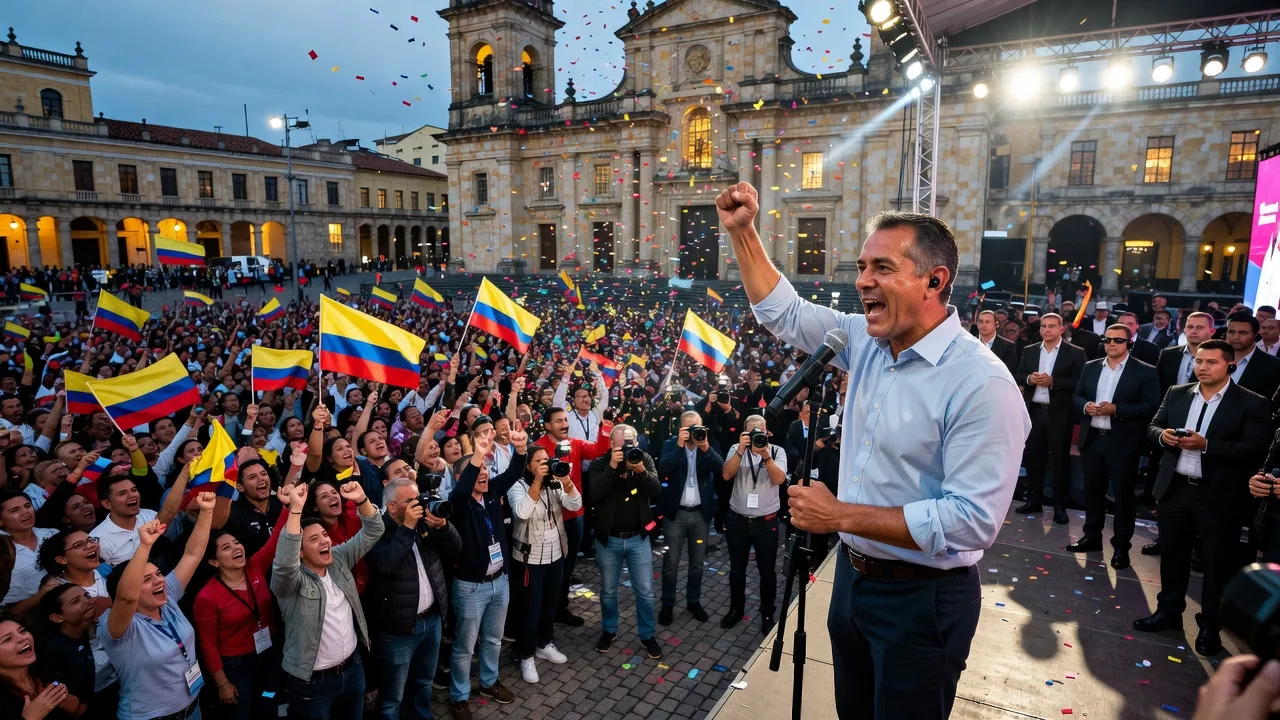
The 21-22 June 2026 runoff of Colombia's presidential election ended in victory for Abelardo de la Espriella, credited with roughly 49.66% of the vote against 48.70% for Iván Cepeda — a margin of barely 250,000 ballots out of more than 26 million voters. It was the closest contest in the country's electoral history, marked by a record turnout of about 63%. The inauguration is set for 7 August 2026, the day commemorating the Battle of Boyacá, ending four years of Gustavo Petro's progressive government.
Donald Trump had publicly backed de la Espriella during the campaign and welcomed his win as soon as preliminary results were announced; Secretary of State Marco Rubio contacted the president-elect even before the official validation. For his part, Iván Cepeda refused to recognize the provisional figures and said he would challenge some 33,000 polling stations pending the final count.
The outcome fits within a cycle of conservative shifts across Latin America, where several countries have changed direction since 2023. South America's second most populous country, bordering Venezuela and Panama, Colombia holds a strategic place in narcotics flows and maintains long and complex ties with Washington. The announcement of deeper military cooperation and the break with Petro's "total peace" policy could reshape regional balances.
Several points remain disputed. The president-elect's profile — a naturalized U.S. citizen and registered Republican voter in the United States — fuels disagreement over the line between diplomatic alignment and sovereignty: some actors see a worrying interference, others an ordinary diplomatic fact. The reliability of the process also divides observers, between those who deem a reversal unlikely and those who give weight to the challenges. With 676,000 null or blank ballots, exceeding the final margin, the vote reveals a deeply polarized society.