Common ground and differences in coverage across the media analysed.
Colombian president-elect Abelardo De La Espriella announces the closure of 14 embassies and approximately fifteen consulates effective upon his inauguration on August 7, 2026
The formal and complete diplomatic break concerns only Cuba and Nicaragua, citing a refusal of any link with dictatorships
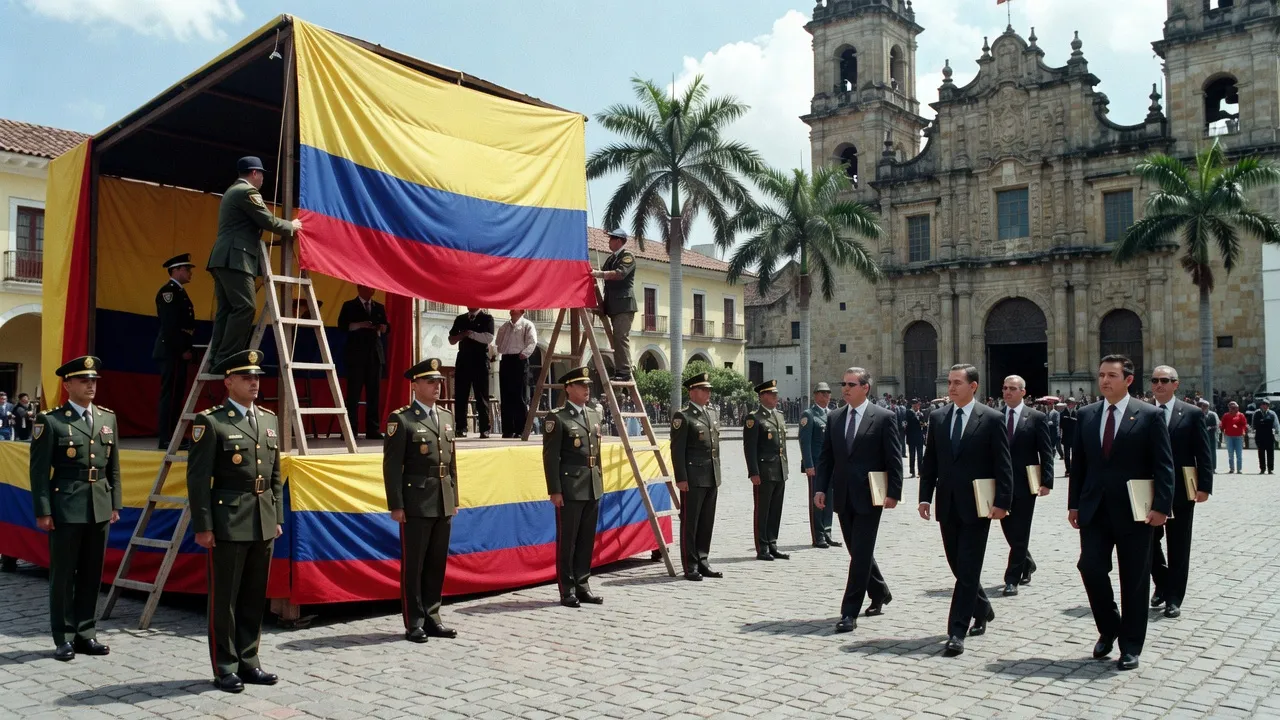
The inauguration ceremony on August 7, initially planned in Popayan, has been moved to Cali for logistical and security reasons
Argentine and Chilean press associate the break with a regional ideological shift (anti-dictatorship doctrine carried by Javier Milei, reorientation toward Israel), while Colombian, Ecuadorian and Peruvian press prioritize institutional and logistical framing without partisan interpretation.
Argentina reads the break as confirmation of a regional anti-dictatorship alignment alongside Washington, whereas Venezuela perceives it with concern as a disavowal of the Bolivarian alliance at its border.
Ecuador emphasizes immediate bilateral economic interest (electricity tariff agreement with Bogota) rather than the diplomatic scope of the break, whereas Argentina and Venezuela frame it as a major geopolitical regional key.
This grouping describes the publications analysed, not the position of these countries’ populations or of their governments.
What the coverage of each country leaves aside, while others put it forward.
Colombia
Peru
Venezuela
Preview: 3 of 6 media perspectives. Syntheses of the media analysed — not direct quotations. Method & limitations
Bogota assesses the scope of the transition ahead for president-elect Abelardo De La Espriella, caught between accelerated diplomatic realignment and persistent controversy over the venue of his inauguration.
7 sources · View sources
Santiago reads De La Espriella's diplomatic overhaul as the opening salvo of a far-right reorientation: closing embassies to Cuba, Nicaragua, and other nations while reopening ties to Jerusalem.
3 sources · View sources
Quito weighs Colombia's diplomatic shift through a practical lens: the bilateral electricity tariff agreement becomes the key lens through which Ecuador assesses the incoming administration.
3 sources · View sources
DOMINANT ANGLE
Bogota assesses the scope of the transition ahead for president-elect Abelardo De La Espriella, caught between accelerated diplomatic realignment and persistent controversy over the venue of his inauguration.
ANALYSIS
Bogota, July 28, 2026.
DOMINANT ANGLE
Santiago reads De La Espriella's diplomatic overhaul as the opening salvo of a far-right reorientation: closing embassies to Cuba, Nicaragua, and other nations while reopening ties to Jerusalem.
ANALYSIS
Santiago, July 28, 2026.
DOMINANT ANGLE
Quito weighs Colombia's diplomatic shift through a practical lens: the bilateral electricity tariff agreement becomes the key lens through which Ecuador assesses the incoming administration.
ANALYSIS
Quito, July 28, 2026.
DOMINANT ANGLE
Lima observes the regional implications of Colombia's incoming president's announced diplomatic break with Cuba and Nicaragua, ten days before an inauguration already shadowed by logistical and political tensions.
ANALYSIS
Lima, July 28, 2026.
DOMINANT ANGLE
Caracas monitors the announced break by Colombian president-elect Abelardo De La Espriella with Cuba and Nicaragua, read as a disavowal of the Bolivarian axis at the border.
ANALYSIS
Caracas, July 28, 2026.
DOMINANT ANGLE
Buenos Aires welcomes De La Espriella's diplomatic break with Cuba and Nicaragua as regional vindication of Javier Milei's anti-tyranny doctrine, while monitoring Medellín's potential role in the Trump-backed Shield of the Americas as a strategic arena for alignment with Washington.
ANALYSIS
Buenos Aires, July 28, 2026.
Explore every perspective on this subject across 6 countries.
Compare viewpoints and see where they diverge.
published on
countries
sources
articles
gap
On July 26, 2026, Colombian president-elect Abelardo De La Espriella announced the closure of 14 embassies and around fifteen consulates worldwide. Only diplomatic relations with Cuba and Nicaragua are fully severed; the other closures, including Haiti, South Africa, Malaysia and several European and African countries, do not entail breaking diplomatic ties. De La Espriella, who succeeds Gustavo Petro, takes office on August 7, 2026, in a ceremony moved from Popayan to Cali because of activity at the Purace volcano. He also announced the reopening of Colombia's embassy in Israel, located in Jerusalem.
Measured with the previous method (distance between texts), on a different scale.