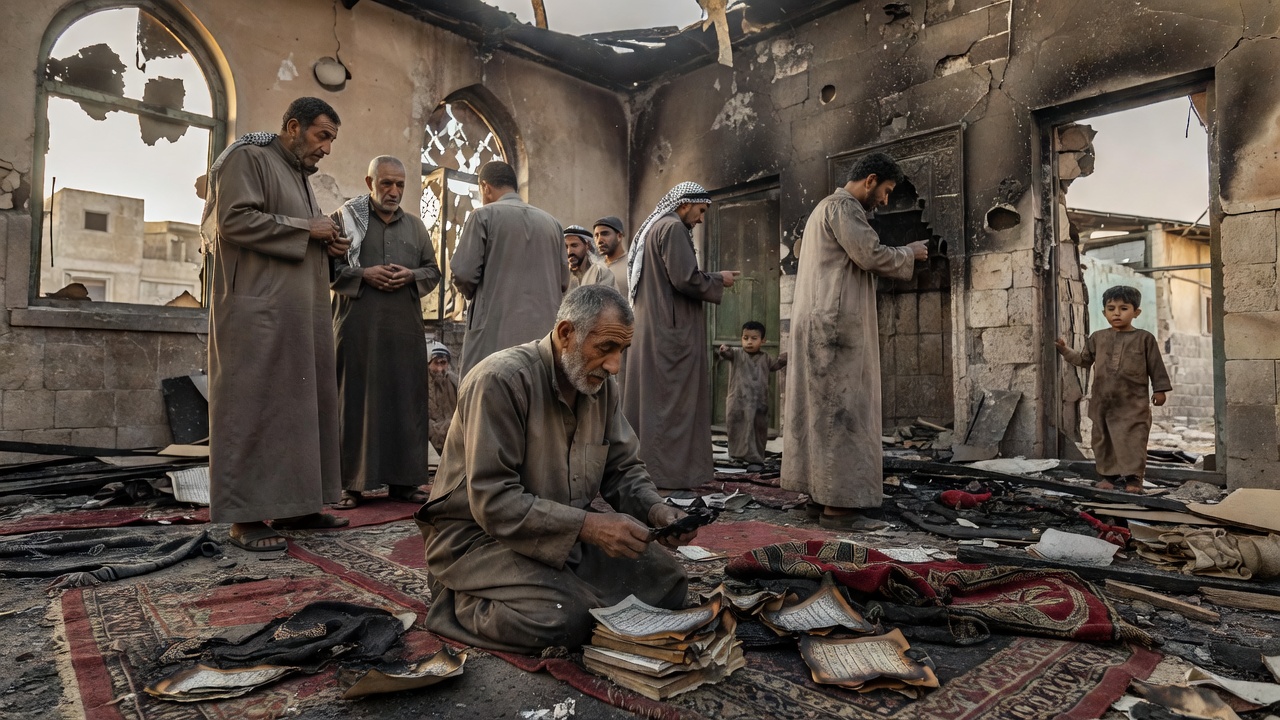
ISRAELI SETTLERS TORCH TWO WEST BANK MOSQUES AMID SURGE IN VIOLENCE
July 27, 2026·6 COUNTRIES
6countries·14sources·23articles
Middle East (3)
Asia (2)
Oceania (1)
Middle East
Asia
Oceania
EXPLORE THIS STORY
SHARE THIS COMPARISON
Show your friends how the world sees the same news differently.
Overnight from 25 to 26 July 2026, Israeli settlers set fire to two mosques in the occupied West Bank and attacked villages, a day after a deadly clash (six killed). The army carried out a wave of arrests. The escalation of settler violence drew Arab and international condemnation, against the backdrop of an Israeli election campaign.
🇨🇳 China vs 🇮🇱 Israel
FRAMING GAP
86/100HIGH
Perspectives diverge strongly
Here are the main framing differences identified between media coverages.
ANALYSIS BY COUNTRY
 CHINAincl. 1 state outlet
DOMINANT ANGLE
Beijing frames Israel's escalating violence in occupied West Bank, amid burning mosques, military closure of Nablus, and tight Israeli election calendar.
Dominant angle identified — does not reflect unanimity of this country’s media
KEY POINTS
- •Four Palestinians and two Israeli soldiers were killed Friday near Tal village, southwest of Nablus, followed by two mosques burning on Sunday.
- •Israeli military detained at least 80 Palestinians in one night, bringing arrests in West Bank to over 3,600 since the year's start, according to Palestinian Prisoners Club.
- •Prime Minister Netanyahu, campaigning for October 27 elections, announced reinforcement of military units, increased checkpoints, and new agricultural settlements in West Bank.
BIASES
Security-focused framing: emphasis on arrest statistics and Israeli military operation through CGTN and SCMP sources.Preference for Palestinian official voices: Nablus governor and NGO cited, limited direct response from settlers or Israeli government beyond official statement.Limited international reaction coverage: available articles do not mention UN, European, or Arab countries' positions on the mosque burnings.
 ISRAEL
DOMINANT ANGLE
Israel's press splinters over settler violence in the West Bank following a deadly attack on Israelis—one camp condemns what they frame as a breakdown of law and order, while the other reads the incidents through a security lens shaped by prior Palestinian attacks.
Dominant angle identified — does not reflect unanimity of this country’s media
KEY POINTS
- •A mosque burned in Kusra bore the inscription 'revenge for Benayahu,' referring to Benayahu Melet, who was killed along with Major Yuval Ezra near Gilad Farm.
- •Haaretz quotes a reserve officer saying the military 'simply watches' settler violence due to insufficient personnel, and reports graffiti such as 'Jewish blood is not permissible.'
- •The Jerusalem Post reports the arrest of a 39-year-old man for online incitement and General Avi Bluth's temporary ban on Palestinian workers' access to Israeli settlements.
BIASES
Security-framing bias: Jerusalem Post articles consistently situate the mosque burnings within the context of prior Palestinian attacks on Israelis.Editorial-line preference: Haaretz emphasizes government accountability and executive responsibility over sequential security narratives.Limited Palestinian voice: Direct testimony from residents of affected villages appears only through institutional intermediaries, not as primary sources.
CHINAincl. 1 state outletDOMINANT ANGLE
Beijing frames Israel's escalating violence in occupied West Bank, amid burning mosques, military closure of Nablus, and tight Israeli election calendar.
Dominant angle identified — does not reflect unanimity of this country’s media
KEY POINTS
- •Four Palestinians and two Israeli soldiers were killed Friday near Tal village, southwest of Nablus, followed by two mosques burning on Sunday.
- •Israeli military detained at least 80 Palestinians in one night, bringing arrests in West Bank to over 3,600 since the year's start, according to Palestinian Prisoners Club.
- •Prime Minister Netanyahu, campaigning for October 27 elections, announced reinforcement of military units, increased checkpoints, and new agricultural settlements in West Bank.
BIASES
Security-focused framing: emphasis on arrest statistics and Israeli military operation through CGTN and SCMP sources.Preference for Palestinian official voices: Nablus governor and NGO cited, limited direct response from settlers or Israeli government beyond official statement.Limited international reaction coverage: available articles do not mention UN, European, or Arab countries' positions on the mosque burnings.
ISRAELDOMINANT ANGLE
Israel's press splinters over settler violence in the West Bank following a deadly attack on Israelis—one camp condemns what they frame as a breakdown of law and order, while the other reads the incidents through a security lens shaped by prior Palestinian attacks.
Dominant angle identified — does not reflect unanimity of this country’s media
KEY POINTS
- •A mosque burned in Kusra bore the inscription 'revenge for Benayahu,' referring to Benayahu Melet, who was killed along with Major Yuval Ezra near Gilad Farm.
- •Haaretz quotes a reserve officer saying the military 'simply watches' settler violence due to insufficient personnel, and reports graffiti such as 'Jewish blood is not permissible.'
- •The Jerusalem Post reports the arrest of a 39-year-old man for online incitement and General Avi Bluth's temporary ban on Palestinian workers' access to Israeli settlements.
BIASES
Security-framing bias: Jerusalem Post articles consistently situate the mosque burnings within the context of prior Palestinian attacks on Israelis.Editorial-line preference: Haaretz emphasizes government accountability and executive responsibility over sequential security narratives.Limited Palestinian voice: Direct testimony from residents of affected villages appears only through institutional intermediaries, not as primary sources.