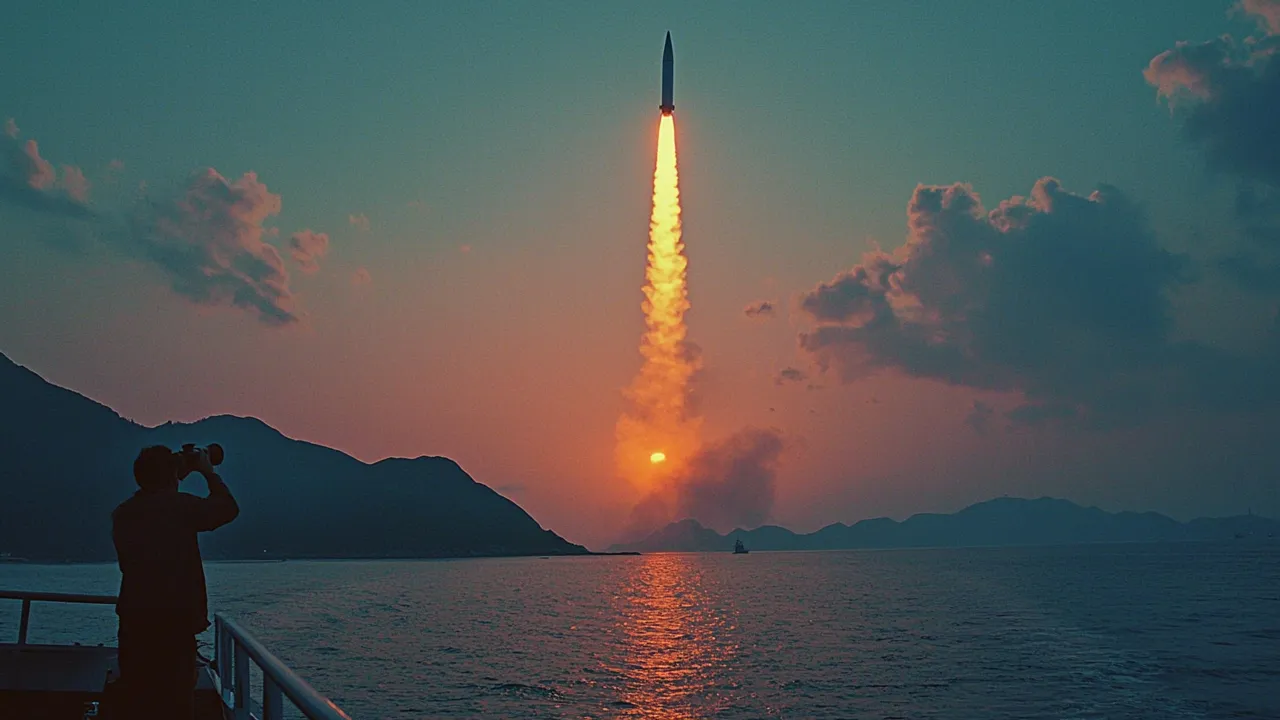
North Korea has carried out a ground test of a solid-fuel rocket engine, a test personally supervised by Kim Jong-un. All the sources covering the event confirm this, along with the stated range: such an engine is designed to power a missile capable of reaching the continental United States. The timing of the test also draws attention, as it comes while a conflict is under way in Iran.
A solid-fuel engine matters strategically: compared with liquid fuels, it allows a missile to be prepared and launched far more quickly, shortening the warning time for the countries in range. The test is therefore read as a technical step toward a more mobile intercontinental strike capability that is harder to anticipate.
The context explains why the test resonates so strongly. Washington's attention is committed on several fronts at once — Iran and the war in Ukraine — at the very moment Pyongyang reasserts its presence. For countries in the region, especially those only minutes of flight time away, geographic proximity radically changes the nature of the perceived threat.
Readings of the event diverge. Some actors see a direct and immediate threat calling for a response, others interpret it rather as a signal within a broader geopolitical game, and still others simply document the facts. One question remains open and is assessed differently from one actor to another: will this engine test be followed by a full ICBM launch? No one settles it, and the uncertainty concerns both the timetable and the levers that might shape what comes next.