2026 World Cup under high tension: Somali referee denied entry, Mexico protests, Iranian tribute
June 10, 2026·8 COUNTRIES
8countries·23sources·27articles
Americas (3)
Europe (2)
Other (1)
Oceania (1)
Asia (1)
Americas
Europe
Other
Oceania
Asia
EXPLORE THIS STORY
Context
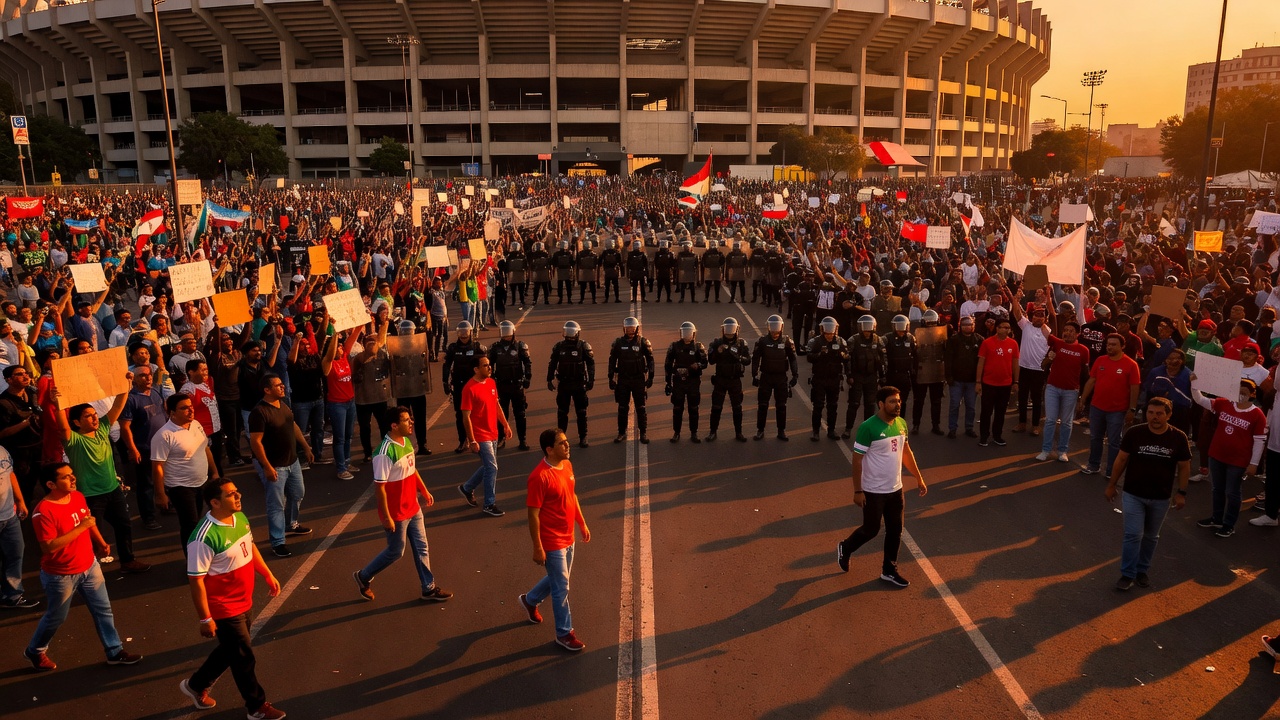
Two days before kickoff, the 2026 World Cup opens in a tense climate. FIFA confirmed that Somali referee Omar Artan was denied entry on arrival at Miami International Airport. At the same time, the tournament is unfolding against a backdrop of multiple tensions: an active conflict between Iran and the United States, US visa restrictions, and social protests in Mexico.
This is the first 48-team edition, the largest in football history, co-hosted by the United States, Canada and Mexico. It comes amid heightened international tensions and restrictive US immigration policies. The US organizing committee is headed by Andrew Giuliani. For a tournament of this scale, the coexistence of sporting and political dimensions is unprecedented.
Readings diverge sharply. The United States and several of its allies defend the sovereign right to refuse entry on security grounds, while countries of the Global South, African and Islamic states see selective discrimination and the use of the tournament as diplomatic leverage.
FIFA's role is also contested: some argue it applied its rules, others fault it for shifting responsibility onto the host states by stressing that visa decisions belong to them. The tribute paid by Iranian players to the victims of US strikes is read by some as a gesture of national dignity, by others as politics intruding on sport. Visa status for Morocco and Algeria remained uncertain.