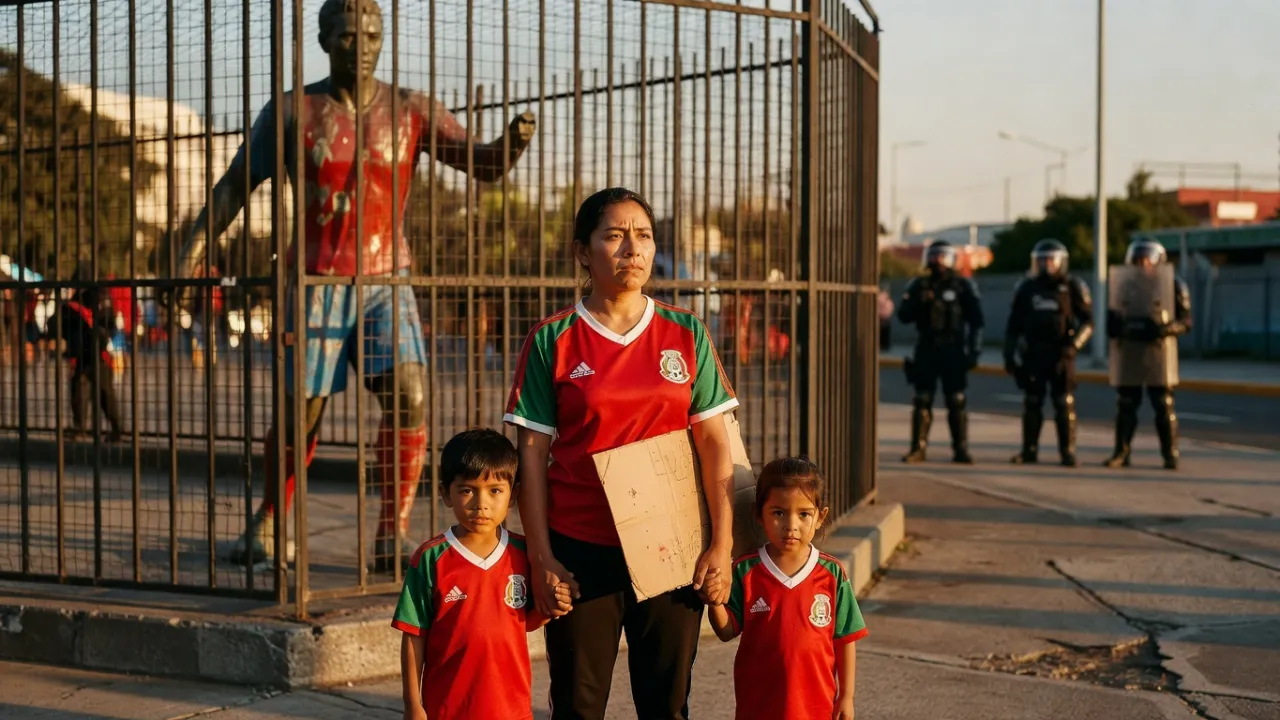
Six days before kickoff, the 2026 World Cup opens across its three host nations — the United States, Canada and Mexico — amid unprecedented tensions. FIFA has banned fans from bringing reusable water bottles into the sixteen stadiums, while tickets have resold for up to fifty times their face value under dynamic pricing tied to demand.
The event is now the target of a criminal investigation opened by the attorneys general of New York and New Jersey, who are challenging the organization's pricing practices. An NGO has also filed a class action against FIFA's president ahead of the tournament's start. It is the first time U.S. jurisdictional authorities have questioned the commercial methods of an international sports body in this way.
In Mexico City, protests are intensifying: statues of players have been vandalized and barriers were partially removed from the Zócalo after local merchants mobilized. The city has become the focal point of tensions over the competition's economic model, billed as the most heavily covered sporting event in history and, at the same time, the most contested for its commercial design.
The actors diverge on how much criticism is warranted. Some describe FIFA as a predatory institution that captures profits at fans' expense; others view it as a neutral sports operator or a strategic partner to be handled with care. The debate also extends to Mexico City, seen by some as a legitimate actor exercising its right to protest, and by others as a security risk to be managed. The facts themselves are agreed upon; it is their interpretation that sets the perspectives apart.