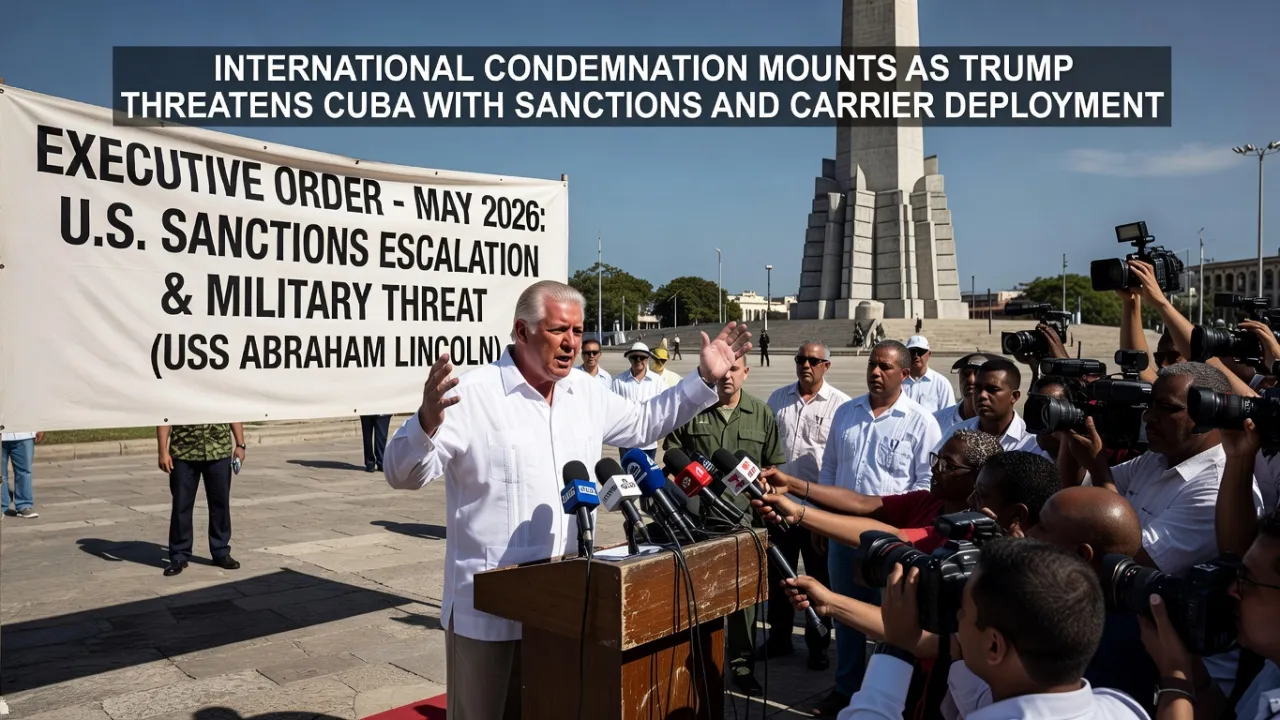
On May 1, 2026, a U.S. presidential decree broadened sanctions against Cuba. The text targets not only officials in Cuba's energy, defense and finance sectors, but also foreign banks that cooperate with Havana. Cuba reacted immediately, calling the measures "illegal" and "abusive," and describing them as "collective punishment."
The next day, at a private dinner in Florida, the U.S. president said the United States could take control of Cuba "almost immediately," referring to the aircraft carrier Abraham Lincoln as being "on its way back from Iran." Cuban authorities denounced what they called a "dangerous and unprecedented level" of military aggression threats.
This episode is part of a maximum-pressure policy that intensified after Maduro was removed in Venezuela in January 2026. Cuba, already weakened by a U.S. oil blockade since the start of the year, now faces rhetoric of intervention. Some observers see a distant echo of the 1962 missile crisis, but in a radically different context: the island no longer enjoys the military backing it had then, and Russia is absorbed by its own crises.
Several points remain disputed. Washington presents the sanctions as a response to human rights violations and corruption, and figures close to the president describe the talk of a military takeover as a "joke." Many governments, including close allies, instead challenge the extraterritorial reach of the measures, which hit non-U.S. banks for legal dealings with Cuba, and treat the intervention statements as a serious escalation, recalling a pattern of threats followed by action in Venezuela and Iran. The real effect of the sanctions on Cuba's population, already strained by economic crisis, is likewise contested.