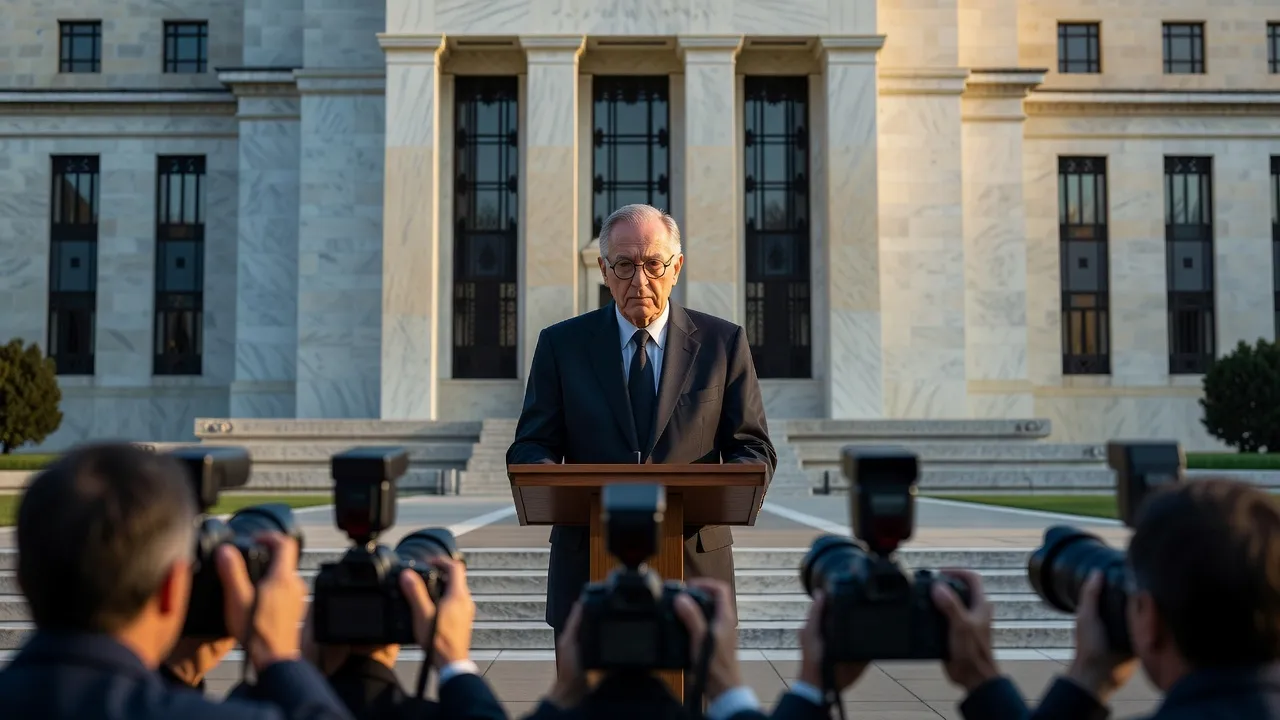
Alan Greenspan died on 22 June 2026 at his home in Washington, aged 100, from complications linked to Parkinson's disease. He had chaired the US Federal Reserve from 1987 to 2006 — nearly twenty years, under four successive presidents: Reagan, George H.W. Bush, Clinton and then George W. Bush — an institutional tenure without equal at the head of the Fed.
His record is universally described as ambivalent. The long stretch of American growth in the 1990s earned him the nickname "maestro." His December 1996 warning against the markets' "irrational exuberance" remains his most quoted phrase. Yet his policy of deregulation and low interest rates is faulted in the conditions that led to the 2008 global financial crisis. In 2008, before Congress, Greenspan himself acknowledged a "flaw" in his assumption that markets self-regulate — an admission widely retained as a decisive moment in his career.
His time at the Fed coincided with the end of the Cold War, financial globalization and the internet revolution, three forces that extended the central bank's influence far beyond US borders. Criticism of deregulation and prolonged low rates fed into the Basel III reforms and the enduring debate over central bank independence.
The exact extent of his responsibility for the 2008 crisis remains disputed: some actors separate structural factors from personal choices, while others point to direct responsibility. The weight of Ayn Rand's philosophy in his thinking, the effect of that doctrine on peripheral economies, and the notion of the "Greenspan put" — the belief that the Fed would always step in to cushion shocks — are emphasized unevenly depending on the actor.
Explore every perspective on this subject across 11 countries.
Compare viewpoints and see where they diverge.
published on
countries
sources
articles
gap







