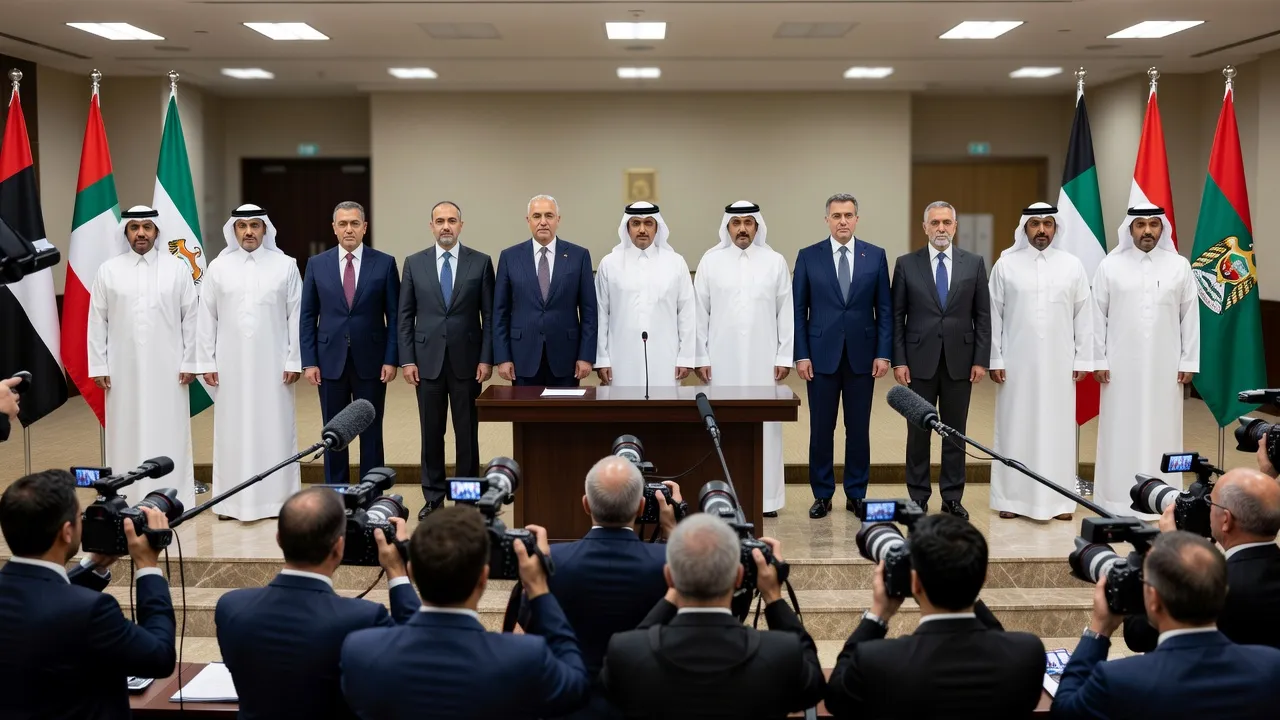
Explore every perspective on this subject across 7 countries.
Compare viewpoints and see where they diverge.
In late June 2026, a series of incidents reignited tensions in the Gulf. A tanker was struck by a projectile in the Strait of Hormuz, damaging the ship's bridge without casualties among the crew. At the same time, drones targeted facilities in Bahrain, home to the headquarters of the US Fifth Fleet. Bahrain's ministry denounced a violation of its sovereignty, and the Gulf Cooperation Council expressed its support for Manama.
Washington announced strikes on Iranian missile depots, drones and coastal radars, presented as a response to attacks on commercial shipping. These exchanges came just days after a memorandum of understanding signed in mid-June, which provided for a sixty-day ceasefire and the opening of negotiations.
The stakes go beyond the incident: roughly 20% of the world's oil exports pass through the Strait of Hormuz, and the Bahrain base places the Gulf monarchies on the front line. The agreement signed in June lacked a robust verification mechanism, and several files — missiles, the Lebanese issue, nuclear inspections — remained outside its scope or unresolved.
Several points remain disputed. Both sides accuse each other of breaching the truce first. Some actors consider the agreement still viable despite the crisis, while others see structural flaws in it, notably the declared exclusion of Iranian missiles. The initial responsibility for the escalation and Iran's regional reach are also read in divergent ways.
published on
countries
sources
articles
gap






