
Common ground and differences in coverage across the media analysed.
The WHO declared the Ebola epidemic in the DRC a Public Health Emergency of International Concern (PHEIC) on May 17, 2026, the organization's highest alert level.
The circulating Bundibugyo strain has no approved vaccine or treatment, distinguishing this outbreak from previous epidemics covered by the anti-Zaire vaccine.
The official toll stands between 139 and 159 suspected deaths and approximately 600 to 670 cases, but the WHO and CEPI estimate that the true number of cases is very likely significantly higher.
British and American press establish a direct link between massive reductions in US foreign aid and delayed epidemic detection, while other countries address the epidemic without questioning Western funding sources.
Coverage aligned with this reading
Coverage that diverges
France, Qatar, Japan, and Egypt emphasize security fragmentation (M23, armed groups) as the primary obstacle to health response, while Australia, South Korea, and Brazil give it only marginal mention.
India and Brazil frame the epidemic primarily through the postponement of the India-Africa summit, relegating the humanitarian situation in the DRC to secondary importance, while other countries place the health crisis at the center of their coverage.
Coverage that diverges
This grouping describes the publications analysed, not the position of these countries’ populations or of their governments.
What the coverage of each country leaves aside, while others put it forward.
India
Brazil
Australia
Preview: 3 of 11 media perspectives. Syntheses of the media analysed — not direct quotations. Method & limitations
Brasília sees this Ebola outbreak in the Democratic Republic of the Congo as a major international alert signal, illustrated by the postponement of the India-Africa summit and the World Health Organization's declaration of emergency.
1 source · View sources
Beijing focuses on the resurgence of Ebola in DRC, a health crisis framed by the Chinese press as tensions between international medical protocols and local community resistances.
1 source · View sources
Cairo places the Ebola epidemic in the DRC under the prism of deep structural failures: extreme poverty, armed rebellion, and entrenched cultural practices form a terrain where the virus thrives despite repeated warnings from the WHO.
1 source · View sources
DOMINANT ANGLE
Brasília sees this Ebola outbreak in the Democratic Republic of the Congo as a major international alert signal, illustrated by the postponement of the India-Africa summit and the World Health Organization's declaration of emergency.
ANALYSIS
Brasília, May 21, 2026.
DOMINANT ANGLE
Beijing focuses on the resurgence of Ebola in DRC, a health crisis framed by the Chinese press as tensions between international medical protocols and local community resistances.
ANALYSIS
Beijing, May 22, 2026.
DOMINANT ANGLE
Cairo places the Ebola epidemic in the DRC under the prism of deep structural failures: extreme poverty, armed rebellion, and entrenched cultural practices form a terrain where the virus thrives despite repeated warnings from the WHO.
ANALYSIS
Cairo, May 21, 2026.
DOMINANT ANGLE
Paris highlights the Ebola crisis in the DRC at the intersection of health and geopolitics: the threat is not only viral, but also structural, fueled by armed conflicts that make a response almost impossible in some areas.
ANALYSIS
Paris, May 21, 2026.
DOMINANT ANGLE
New Delhi places the Ebola crisis in DRC under diplomatic prism: the postponement of the Fourth India-Africa Summit, scheduled from May 28 to 31, signals the direct impact of the epidemic on India's foreign policy.
ANALYSIS
New Delhi, May 21, 2026.
DOMINANT ANGLE
Tokyo follows closely the geographical expansion of the Ebola epidemic in the DRC, particularly the spread to rebel-controlled areas and the confirmation of cases in neighboring Uganda, raising questions about global preparedness in the face of a vaccine-less strain.
ANALYSIS
Tokyo, May 21, 2026.
DOMINANT ANGLE
Seoul views the Ebola outbreak in DRC through the lens of regional risk of spread and operational challenges faced by healthcare teams on the ground.
ANALYSIS
Seoul, May 22, 2026.
DOMINANT ANGLE
Doha places the Ebola crisis in the DRC at the crossroads of two simultaneous failures: the disintegration of security in eastern Congo, under the control of M23 rebels, and the deterioration of international aid, particularly from the United States, which deprives first responders of basic supplies.
ANALYSIS
Doha, May 21, 2026.
DOMINANT ANGLE
Singapore views the Ebola outbreak in the DRC as a rapidly deteriorating public health crisis, highlighting the international disorder of the response as much as the underestimated scale of the virus.
ANALYSIS
Singapore, May 21, 2026.
DOMINANT ANGLE
London highlights US budget cuts in global health as a exacerbating factor of the Ebola outbreak in the Congo, while documenting local populations' defiance through the burning of the Rwampara treatment center.
ANALYSIS
London, May 21, 2026.
DOMINANT ANGLE
Washington places the cuts in foreign aid under the Trump administration at the center of the story, presenting the reduction of American funding as a factor that delayed the detection of the Ebola epidemic in the DRC and weakened the capacity to respond on the ground.
ANALYSIS
Washington, May 21, 2026.
Explore every perspective on this subject across 11 countries.
Compare viewpoints and see where they diverge.
published on
countries
sources
articles
gap
On 17 May 2026, the WHO declared the Ebola outbreak striking the eastern Democratic Republic of Congo a public health emergency of international concern, its highest level of alert. The strain involved, known as Bundibugyo, has no approved vaccine or treatment, which sets this flare-up apart from earlier outbreaks covered by the anti-Zaire vaccine. The official toll stands at 139 to 159 suspected deaths and close to 600 to 670 cases, with the WHO estimating that the real number is very likely higher.
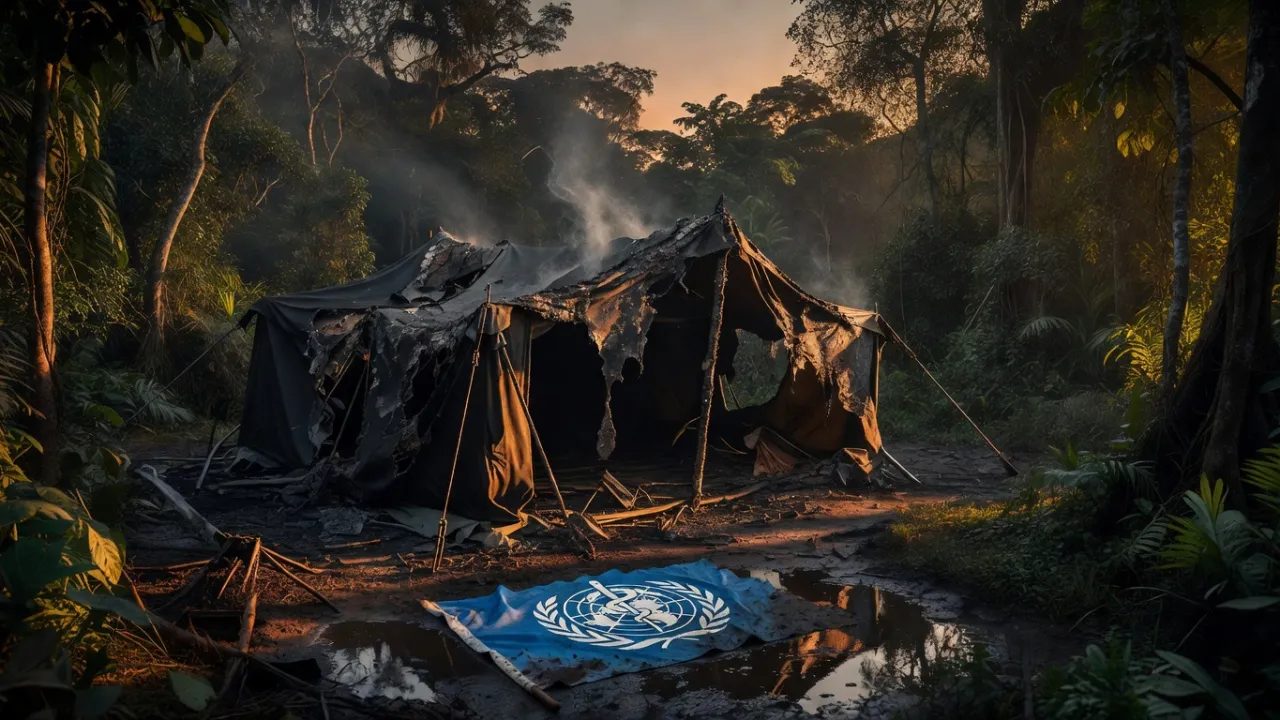
In Ituri province, the epicentre of the outbreak, the Rwampara treatment centre was set on fire by young people prevented from retrieving the body of a deceased relative. The incident highlights the tension between safe-burial protocols and local funeral practices, against a backdrop of long-standing distrust toward outside health measures. Two confirmed cases in Uganda further signalled a cross-border spread and a regional risk assessed as high.
The crisis unfolds amid accumulated fragility. Ituri and South Kivu, now affected, have for years been caught in armed conflicts involving numerous groups, including the Congo River Alliance-M23, which hampers teams' access and case tracing. The emergency declaration also had diplomatic effects, including the postponement of the fourth India-Africa summit planned in New Delhi.
Several points remain disputed. Some actors directly link the cut in US foreign aid — down from 1.4 billion dollars in 2024 to less than 21 million in 2026 — to the delayed detection, while others address the outbreak without implicating donors. Estimates of the toll also diverge, with some stressing a structural undercount that others do not flag.
Measured with the previous method (distance between texts), on a different scale.