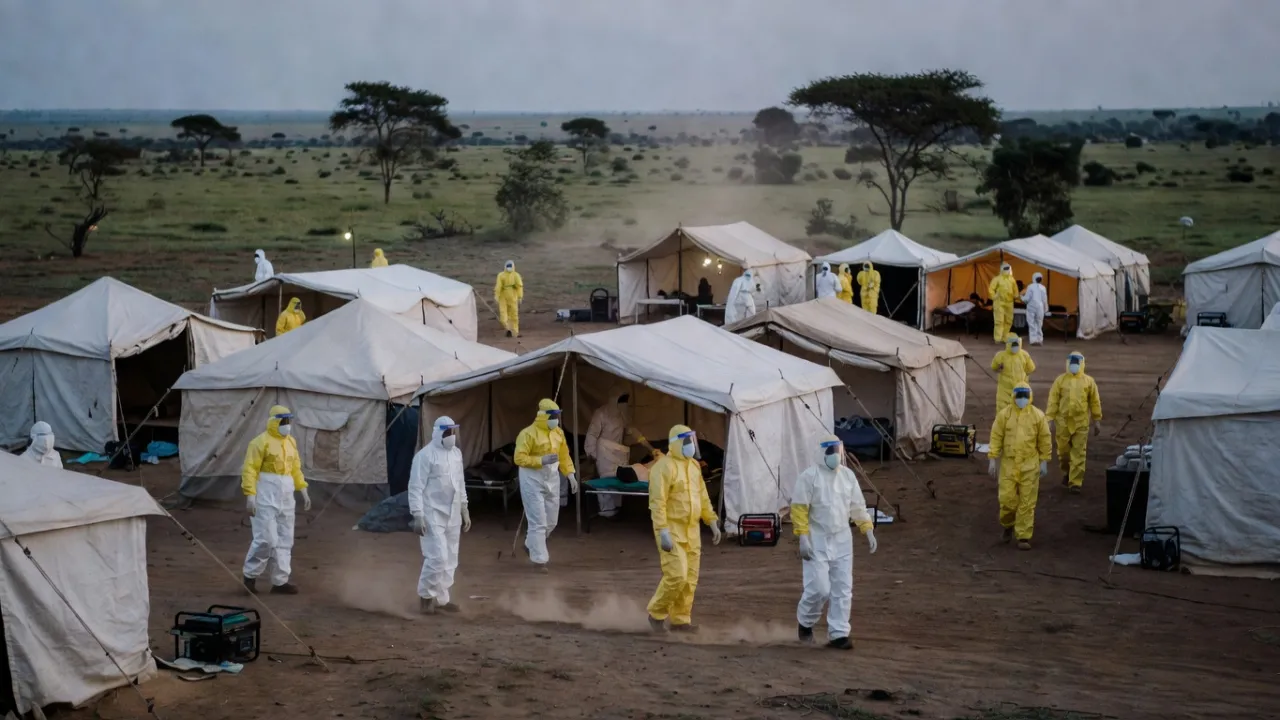
A new Ebola outbreak has been confirmed in Ituri province, in the Democratic Republic of Congo. As of 16 May 2026, authorities reported at least 246 suspected cases and 80 deaths, a toll raised to 88 dead later that day according to Africa CDC. The strain involved, identified as Bundibugyo by Kinshasa's National Institute of Biomedical Research in eight of the thirteen samples analysed, currently has no approved vaccine or specific treatment.
The disease has crossed borders: a 59-year-old Congolese national died in Kampala, Uganda, the first confirmed fatal case outside Congolese territory since the outbreak began. In response, the WHO released 500,000 dollars from its contingency fund and dispatched teams to the field, while Africa CDC convened an emergency meeting bringing together the DRC, Uganda, South Sudan and their partners.
This seventeenth Ebola epidemic in the DRC since 1976 unfolds on fragile ground. Ituri, under military administration since 2021, faces active armed groups, an undersized health infrastructure and intense population flows tied to artisanal gold mining. These conflicts and movements are widely recognised as factors worsening the health response, and the spillover into Uganda echoes the border porosity already seen during the 2018-2020 outbreak.
Readings of the crisis differ. Some actors stress the high lethality and the absence of a vaccine, while others adopt a more factual register. One point remains disputed: the role of recent cuts in humanitarian funding, framed by some observers as weakening early detection, but rarely taken up elsewhere.