What the comparison reveals
Common ground and differences in coverage across the media analysed.
What the media report in common
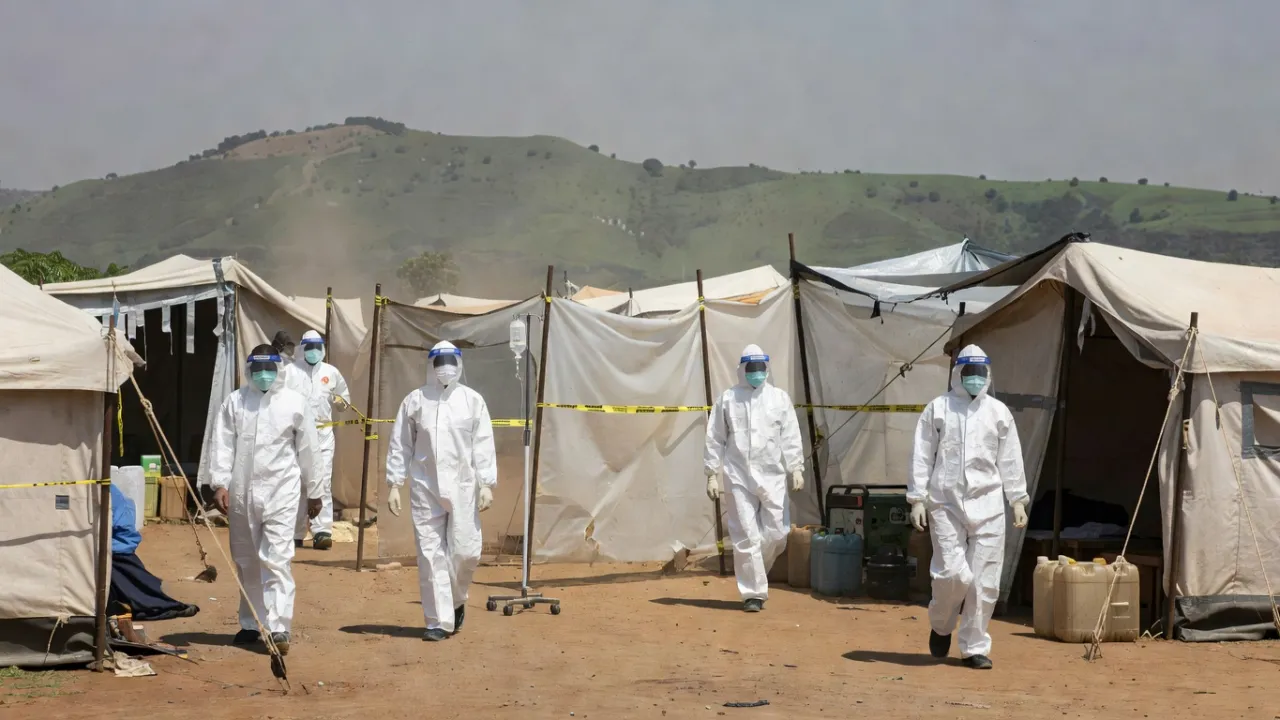
The Ebola outbreak in the DRC exceeded 900 suspected cases as of May 24, 2026, with over 100 confirmed cases in the laboratory according to the WHO and the Congolese Ministry of Health.
The Bundibugyo strain responsible for this 17th Congolese epidemic has no approved vaccine and no licensed treatment, making the response dependent solely on isolation and contact tracing measures.
Armed violence in Ituri Province severely hampers health teams: treatment centers have been burned and medical staff have been forced to flee, paralyzing contact tracing efforts.
Where media coverage diverges
International aid cuts
Some perspectives place reductions in humanitarian funding at the center of explaining the health system collapse, while others mention them marginally or do not address them.
How each country reads it
Preview: 3 of 7 media perspectives. Syntheses of the media analysed — not direct quotations.
Paris assesses the scale of a looming health catastrophe: the Ebola outbreak in the DRC combines a virus without a vaccine, destroyed infrastructure, and budget cuts that have depleted health centers of medical staff.
3 sources ·
Abuja monitors a cross-border threat and mobilizes its pharmaceutical network in response to the Ebola surge ravaging eastern DRC, where more than 900 suspected cases have been recorded.
1 source ·
Bucharest measures the scope of the 17th Ebola epidemic in the DRC through the lens of converging crises—health, humanitarian, and security—which Romanian media documents with statistical precision.
2 sources ·