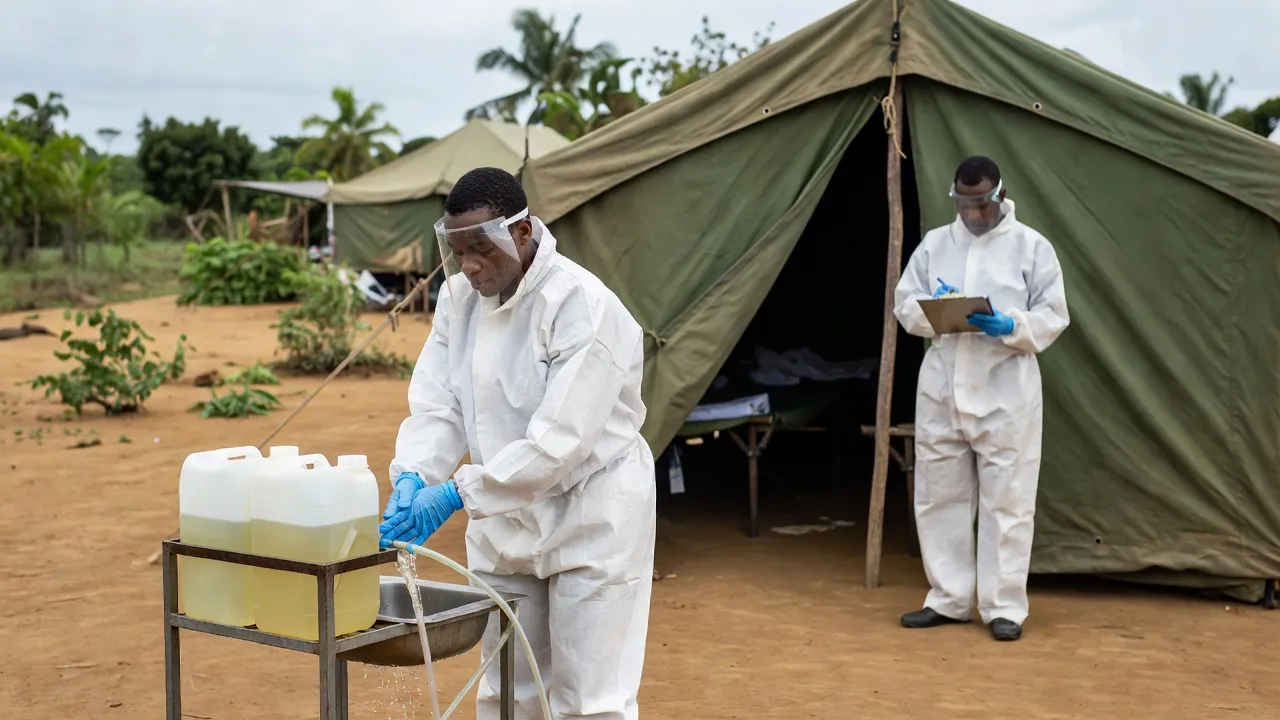
Officially declared on 15 May 2026, the Ebola outbreak in the Democratic Republic of Congo has crossed the threshold of 1,000 confirmed cases and surpassed 250 deaths. The WHO describes it as the African outbreak that reached this level fastest within its first month, and classified it as a public health emergency of international concern as early as 17 May. Authorities acknowledge that official figures likely underestimate the real number of cases.
The strain involved, Bundibugyo, has no licensed vaccine and no approved treatment. This sets the current crisis apart from earlier Zaire-strain outbreaks, for which therapeutic tools existed, and makes the response more dependent on experimental therapies whose clinical trials are beginning in the DRC. On 24 June, a humanitarian doctor returning from the country tested positive in France, the first case detected outside the African continent since the outbreak began.
The context compounds the difficulty of the response. Persistent armed conflict in the east of the country, in Ituri and Kivu, hampers humanitarian access and drives population displacement toward camps already affected. Heavy air traffic between Central Africa and Europe explains the permeability of borders, even for travellers who are nearly asymptomatic at boarding.
Several readings of the crisis diverge. Some actors place the imported case at the centre, as a signal of international spread, while others frame it within a regional reading of health preparedness. A US-backed quarantine centre project in Kenya has crystallised a debate over health sovereignty and consultation of local populations. Also contested is the weight given to excess child mortality and to ongoing therapeutic trials, emphasised unevenly across actors.