9 perspectives, each in the voice of that country's press.
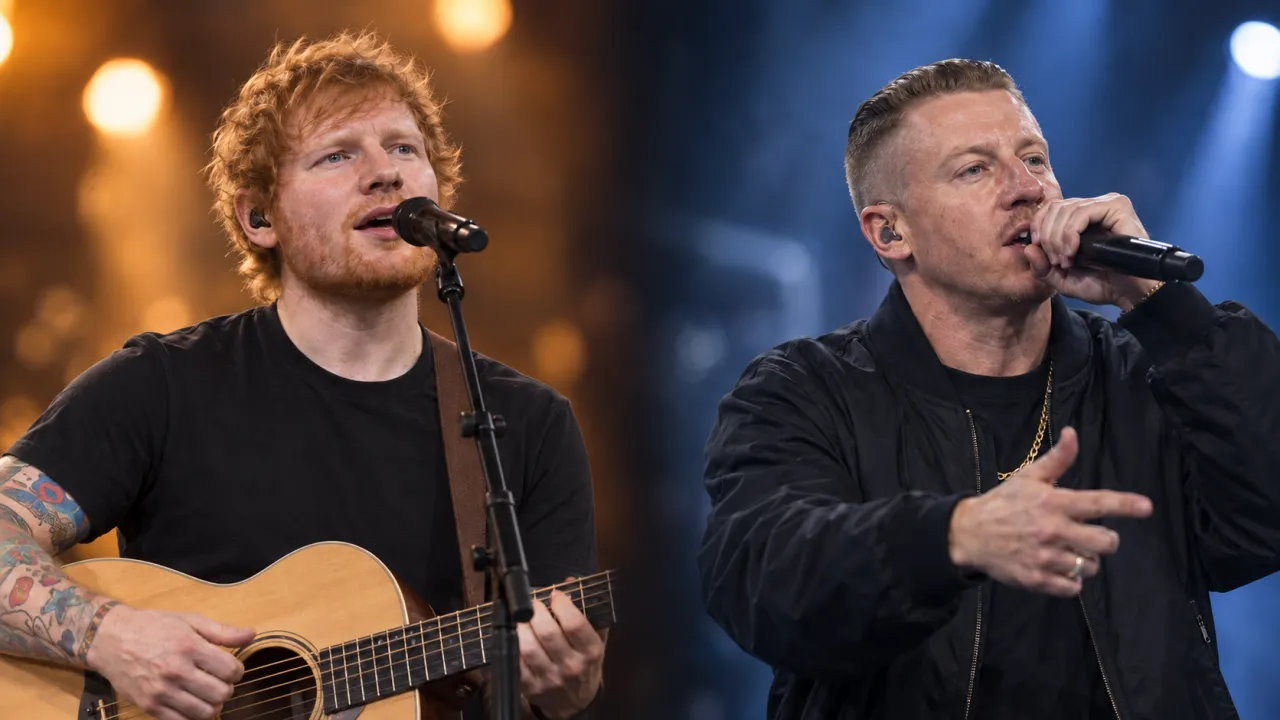
Canberra is questioning the boundary between venue programming and artists' freedom of expression, following the eviction of Macklemore and Ed Sheeran's public apologies in Philadelphia.
4 sources
Belgium first examines the balance of power between stadium owners and committed artists, seeing less of a concert and more of a real-life test of freedom of expression under security and commercial pressure.
3 sources
Santiago is deciphering Ed Sheeran's reversal on Gaza, from a claimed silence to a statement of catastrophe.
2 sources
Helsinki is particularly mindful of Sheeran's words on Gaza, more so than the commercial consequences of the matter for his tour.
2 sources
Paris sees the Sheeran-Macklemore incident as a test of artistic freedom of expression in the United States, where stadium owners have the power to ban an artist for their comments on Gaza even before they take the stage.
4 sources
Oslo is dissecting the balance of power between Ed Sheeran and stadium owners, more than the political message itself.
2 sources
Stockholm is more focused on the formula chosen by Ed Sheeran to describe Gaza - "catastrophic, unjustifiable and disproportionate" - than on the economic consequences of his tour.
2 sources
London is scrutinizing the dilemma of its best-selling star, who has been dragged into a debate on freedom of expression from the stage, with opening acts dropping out, sales plummeting, and an admission of "mistakes" in Philadelphia.
2 sources
The United States is witnessing a controversy that goes beyond music: the eviction of Macklemore from Ed Sheeran's tour has revived the American debate on pro-Palestinian speech on stage, between accusations of anti-Semitism and defense of freedom of expression.
2 sources
Common ground and differences in coverage across the media analysed.
Ed Sheeran described the situation in Gaza as 'catastrophic, unjustifiable and disproportionate' from the stage in Philadelphia on Saturday, September 19.
Macklemore was removed from the Loop tour after chanting 'Free Palestine' during a concert at the beginning of September.
Four opening acts and the band accompanying Sheeran withdrew from the tour in solidarity with Macklemore.
The perspectives respond differently to who made the decision to drop Macklemore from the tour: several attribute it to pressure from stadium owners on the organizers, while another presents it as a decision made directly by Sheeran.
Coverage aligned with this reading
The perspectives do not respond in the same way to what defines the heart of the controversy: some see it first as a test of artistic freedom of expression against the power of venues, while the US press rather reads it as a debate on the accusations of anti-Semitism targeting Macklemore's statements.
Coverage aligned with this reading
Coverage that diverges
This grouping describes the publications analysed, not the position of these countries’ populations or of their governments.
DOMINANT ANGLE
Canberra is questioning the boundary between venue programming and artists' freedom of expression, following the eviction of Macklemore and Ed Sheeran's public apologies in Philadelphia.
KEY POINTS
ANALYSIS
Canberra, 20 September 2026. The Australian press is closely following Ed Sheeran's solo return on Saturday evening (Sunday in Sydney time) at the Lincoln Financial Field in Philadelphia, his first concert since the cascade of departures of his opening acts. In front of his audience, the British singer acknowledged having "made difficult decisions" and "made mistakes", adding: "I am really, really sorry." He described the situation in Gaza as "catastrophic, unjustifiable and disproportionate", specifying that "the systemic injustice we see unfolding in the West Bank cannot be ignored".
The Age, SBS News, and ABC are reconstructing the timeline: American rapper Macklemore, the headliner of the opening acts for the Loop tour, was dropped after launching "Free Palestine" during a concert at the MetLife Stadium in New Jersey earlier this month. Stadium owners complained about these comments; magnate Robert Kraft confirmed that he had influenced his eviction. Sheeran, for his part, denied being the origin of the decision, attributing it to his tour promoter.
The Australian account emphasizes what Sheeran takes away from this: a assumed concern in front of his audience that venues may approve the content of concerts in advance. "I never wanted to be a militant musician, but this has placed me at the heart of an important and passionate debate about freedom of expression and the most complex political issue on the planet", he said, according to ABC and SBS.
Four opening acts - the Irish group Beoga who accompanied him, Irish singer Aaron Rowe, Danish group Lukas Graham, and Finneas, brother of Billie Eilish - withdrew in solidarity with Macklemore and the Palestinians. Pro-Palestinian protesters, including the Philly Palestine Coalition, had gathered in front of the stadium. Australian titles also note the commercial effect: according to the BBC cited by The Age, tickets have fallen to $32 and sales have declined for the end of the American leg, a marked contrast with Sheeran's previous tour, one of the most lucrative in history.
DOMINANT ANGLE
Belgium first examines the balance of power between stadium owners and committed artists, seeing less of a concert and more of a real-life test of freedom of expression under security and commercial pressure.
KEY POINTS
ANALYSIS
Brussels, September 20, 2026. The Belgian press first highlights the tension surrounding Ed Sheeran's concert at the Lincoln Financial Field in Philadelphia on Saturday evening — the first since rapper Macklemore's eviction from his "Loop" tour. According to La Libre and La Dernière Heure, the exclusion, confirmed on Monday "under pressure from American stadium owners", followed Macklemore's call to "free Palestine" launched at the beginning of September. This decision "earned Ed Sheeran an unprecedented wave of criticism for a musician who was previously very consensual", note the two titles, which pick up information from their Flemish colleagues at HLN.
Direct consequence: Finneas, Lukas Graham, and Aaron Rowe, scheduled as opening acts, withdrew "in support of Macklemore", as did the group that usually accompanied the British singer. He therefore had to perform alone, without any opening act — an unprecedented configuration for a stadium tour.
The ticket market has also been affected: on Ticketmaster, "some seats were being resold at -50%", reports the Belgian press, which sees two mixed logics — spectators in solidarity with Macklemore who are boycotting, and others who fear the evening's atmosphere. Pro-Palestinian demonstrations were expected around the stadium, prompting the Philadelphia police to beef up their deployment. "Our agents are in contact with his team to ensure that all appropriate security measures are taken", TMZ quoted Jasmine Reilly, spokesperson for the police department, as saying, mentioning "a significant number of agents" mobilized.
DOMINANT ANGLE
Santiago is deciphering Ed Sheeran's reversal on Gaza, from a claimed silence to a statement of catastrophe.
KEY POINTS
ANALYSIS
Santiago, September 20, 2026. The Chilean press first highlights the reversal: on Saturday evening, at the Lincoln Financial Field in Philadelphia, Ed Sheeran broke with the line he had defended four days earlier. On September 15, after the announcement of Macklemore's eviction from his American Loop tour, the British singer had published a long statement explaining why he refused to publicly comment on the war in Gaza — a stance that had earned him sharp criticism and the loss of "thousands" of subscribers, according to La Tercera. On Saturday, alone on stage, without an opening act after the other artists withdrew in support of Macklemore, Sheeran changed his tone: "What's happening in Gaza is catastrophic, unjustifiable, and disproportionate," he said.
BioBioChile details the staging of this admission. The singer took "a few minutes" at the beginning of the concert to explain himself, saying he was used to being criticized for his music, "but this time the criticism was about something much more important." He acknowledged having made "difficult decisions," committed errors, and apologized: "I'm really, really sorry." He assured that he had never wanted to be "an activist musician," while admitting to being at the center of a debate on freedom of expression and the Israeli-Palestinian conflict. He distinguished between the two aspects, condemning the attack of October 7 and the Nova festival, which he deemed "horrible," before describing the situation in Gaza as catastrophic.
DOMINANT ANGLE
Helsinki is particularly mindful of Sheeran's words on Gaza, more so than the commercial consequences of the matter for his tour.
KEY POINTS
ANALYSIS
Helsinki, September 20, 2026. Finnish media are reporting in detail on Ed Sheeran's return to the stage on Saturday evening in Philadelphia, his first appearance since rapper Macklemore was removed from the Loop tour. According to Helsingin Sanomat and Yle Uutiset, the British singer performed alone, without an opening act or backing band, all of whom had left the tour in solidarity with Macklemore and the Palestinians.
In front of the audience, Sheeran acknowledged having "made mistakes" and said he was "really, really sorry". He explained that he had always sought to avoid making any political comments, preferring that his music bring people together rather than divide them. But, he added, according to Yle, "this is a humanitarian issue, and I can no longer hide what I think about it". Citing AFP, Helsingin Sanomat reports his words on Gaza: "What is happening there is catastrophic, unjustified and disproportionate".
Yle relays a longer statement from the artist, who describes the October 2023 attack in Israel as "horrifying", while also stating that the scale of the destruction and civilian casualties, particularly among children, has "broken his heart", and that this "systematic injustice" observed in the West Bank cannot be ignored. Sheeran said he hopes his concerts will remain places where everyone can come together, regardless of their convictions.
The two newspapers recall the context: Macklemore was removed after shouting "Free Palestine" during a concert in New Jersey at the beginning of September, where he had also performed "Hind's Hall", a song supporting the Palestinians, while images of the destruction in Gaza were displayed on a giant screen. Macklemore has been defending critical positions on Israeli policy for several years. Sheeran specifies on Instagram that the decision to exclude Macklemore was not his, but that of the tour organizer, and that several venues had indicated that they would withdraw if the rapper remained on the bill.
DOMINANT ANGLE
Paris sees the Sheeran-Macklemore incident as a test of artistic freedom of expression in the United States, where stadium owners have the power to ban an artist for their comments on Gaza even before they take the stage.
KEY POINTS
ANALYSIS
Paris, September 20, 2026. The French press first raises a question of power: who decides what can be said from an American stadium stage. On Saturday evening, at the Lincoln Financial Field in Philadelphia, Ed Sheeran took the stage alone, without an opening act, for his first concert since rapper Macklemore was removed from his Loop tour. "This is not how I usually start a concert," he said, visibly moved, before acknowledging that he had "made mistakes" and saying he was "really, really sorry". He described the situation in Gaza as "catastrophic, unjustifiable and disproportionate", evoking "broken hearts" in the face of "the extent of the devastation" and "systemic injustice" in the occupied West Bank, while denouncing the "atrocious" attacks by Hamas on October 7, 2023.
The French media reconstruct the chain of events: on September 4, in New Jersey, Macklemore had performed Hind's Hall, a tribute to a Palestinian girl who was killed, and shouted "Free Palestine!". Accused by billionaire Robert Kraft, owner of stadiums and a friend of Sheeran, of having made "hateful remarks", he was removed on Monday, September 14, under pressure from these same owners. In reaction, the four artists scheduled to open - including Finneas, brother and composer of Billie Eilish - and the band that accompanies Sheeran withdrew from the tour.
DOMINANT ANGLE
Oslo is dissecting the balance of power between Ed Sheeran and stadium owners, more than the political message itself.
KEY POINTS
ANALYSIS
Oslo, September 20, 2026. The Norwegian press is more interested in the question of who, behind the scenes, decides what can be said from an American stadium stage, rather than the content of the pro-Palestinian message. Aftenposten conducted an investigation into the "power play" that preceded the removal of rapper Macklemore from Ed Sheeran's Loop tour: according to the newspaper, the musician and the tour organizer themselves confirm that the eviction occurred after pressure from the owners of the stadiums where Sheeran was to perform. The title chosen by Aftenposten directly asks the question: who really decides on Ed Sheeran's tour? The newspaper describes NFL club owners with considerable wealth, equipped with a real command center under the stadium stands, and quotes music critic Audun Molde, who wonders who, between Sheeran and the organizer and stadium owner, actually works for the other.
VG, on the other hand, focuses on Sheeran's first appearance since the controversy, on Saturday evening in Philadelphia, without an opening act - the four scheduled artists and his own band having withdrawn in solidarity. According to the AP agency, cited by VG, Sheeran spoke before playing, visibly affected: he mentioned a week of criticism about "something much more important" than his music, acknowledged having "made mistakes" and said he was "really, really sorry". He then distinguished between two tragedies: the October 7 attack and the Supernova festival attack, which he described as a horror adding to centuries of Jewish suffering, and the situation in Gaza, which he described as "catastrophic, unjustifiable and disproportionate". About fifty protesters, according to AP's estimate relayed by VG, had gathered in front of the stadium before the concert, at the call of local militant groups, under reinforced police surveillance.
DOMINANT ANGLE
Stockholm is more focused on the formula chosen by Ed Sheeran to describe Gaza - "catastrophic, unjustifiable and disproportionate" - than on the economic consequences of his tour.
KEY POINTS
ANALYSIS
Stockholm, September 20, 2026. The Swedish press is primarily focusing on the statement made by Ed Sheeran on Saturday evening, when he returned alone to the stage at Philadelphia's Lincoln Financial Field for his first concert since rapper Macklemore was removed from his "Loop" tour: the situation in Gaza is "catastrophic, unjustifiable, and disproportionate." Dagens Nyheter and Svenska Dagbladet are devoting most of their account to this admission, read from a teleprompter, in which the 35-year-old singer acknowledges having "been forced to make many difficult decisions" and says he is "so, so sorry," a week after the controversy began.
The two newspapers report that Sheeran modified the stage setup for the evening: the central platform, from which he usually performs in the middle of the audience, had disappeared. "I didn't know how the audience was going to react tonight. I didn't know if they were going to throw things at me," he admits, according to SvD — a sign, the two newspapers note, of the uncertainty surrounding the reception of the artist after a week of criticism.
The singer goes into detail about the triggering episode: Macklemore, who was removed from the opening acts by the tour organizer after shouting "Free Palestine" and performing "Hind's Hall" — a song that describes the war waged by Israel in Gaza as genocide — during Sheeran's concerts in New Jersey on September 4 and 5. All the other artists scheduled to open the show withdrew from the tour in solidarity with the rapper, leaving Sheeran to perform alone on stage that evening.
DOMINANT ANGLE
London is scrutinizing the dilemma of its best-selling star, who has been dragged into a debate on freedom of expression from the stage, with opening acts dropping out, sales plummeting, and an admission of "mistakes" in Philadelphia.
KEY POINTS
ANALYSIS
London, 20 September 2026. Ed Sheeran, Britain's best-selling star of his generation, took to the stage alone on Saturday evening at Philadelphia's Lincoln Financial Field, without any opening act, for his first concert since American rapper Macklemore was dropped from his Loop tour. According to the BBC, the singer opened the concert with an unusual statement: "I never wanted to be a militant musician, but this has placed me at the heart of an important and passionate debate about freedom of expression and the most complex political issue on the planet."
Sheeran acknowledged having "made mistakes" and apologised to fans, before describing the situation in Gaza as "catastrophic, unjustifiable and disproportionate", comments reported by both the Daily Mail and the BBC. He also referred to the 7 October attack by Hamas on the Nova festival as "horrific", before adding that what is happening in Gaza remains "a humanitarian issue" that he can no longer keep quiet about, and that "systemic injustices" in the West Bank can no longer be ignored. The BBC specifies that the decision to drop Macklemore, who had launched "Free Palestine" during a concert in New Jersey at the beginning of September, was made by the singer's promoters, not by himself.
Four artists who were scheduled to open for Sheeran, as well as the group that usually accompanied him, withdrew from the tour in solidarity with the rapper and with the Palestinians. Around the stadium, the Philadelphia police deployed a significant operation in response to pro-Palestinian protesters: one of them shouted, according to the Daily Mail, "Palestine is our demand", while placards targeted Israeli Prime Minister Benjamin Netanyahu by name. The BBC also notes that ticket prices have fallen to $32 and sales have declined for the final leg of the American part of the Loop tour.
DOMINANT ANGLE
The United States is witnessing a controversy that goes beyond music: the eviction of Macklemore from Ed Sheeran's tour has revived the American debate on pro-Palestinian speech on stage, between accusations of anti-Semitism and defense of freedom of expression.
KEY POINTS
ANALYSIS
American first, the debate played out on Saturday, September 19, 2026, in Philadelphia, where Ed Sheeran took the stage alone at Lincoln Financial Field, without an opening act, for his first concert since rapper Macklemore was dropped from his Loop tour. Before the audience, he acknowledged having "made mistakes" and said, "I'm really, really sorry. I don't want to disappoint my fans." He then directly addressed the situation in the Middle East: "What's happening in Gaza is catastrophic, unjustifiable, and disproportionate," he stated, also describing the October 7 attacks in Israel as "horrible." He added that the situation unfolding in the West Bank "cannot be ignored."
The British singer said he is concerned about seeing venues "pre-approving the content of artists," stating he never wanted to be a "militant musician" but finds himself "in the middle of a debate on freedom of expression" in the United States. The controversy began in early September when Macklemore chanted "Free Palestine" during a concert at New Jersey's MetLife Stadium, using the terms "genocide" and "apartheid" to describe Israel's actions. The stadium's owner, Robert Kraft, confirmed that he had influenced the decision of the venues and the promoter to drop the rapper from the lineup. Four opening acts, as well as the band accompanying Sheeran, withdrew from the tour in solidarity with the rapper and the Palestinians.
Explore every perspective on this subject across 9 countries.
Compare viewpoints and see where they diverge.
published on
countries
sources
articles
gap
According to an Aftenposten investigation, Macklemore's eviction was not the result of an isolated decision by Ed Sheeran: it was played out in a power struggle between the singer and the owners of the stadiums where his tour is being held, who have a command center under the stands.
The tour continues without an announced opening act; ticket sales have declined for the end of the American leg.
Aftenposten investigated the events leading up to the rapper's dismissal: according to the Norwegian daily, Ed Sheeran and the organizer of his tour confirmed that the decision was made after pressure was exerted by the owners of the stadiums where the tour is still scheduled to take place.
« Under the stands is the command center of the billionaire »
The newspaper describes NFL club owners with considerable wealth, equipped with a genuine command center under the stadium's stands. Music critic Audun Molde, quoted by Aftenposten, wonders who actually works for whom, the singer or the stadium owner.
On September 4 and 5, during Ed Sheeran's concerts at MetLife Stadium in New Jersey, Macklemore performed Hind's Hall, a song that describes the war waged by Israel in Gaza as genocide, while images of Gaza's destruction scrolled on the giant screen, according to Yle Uutiset and the Swedish press.
According to Fox News, the rapper also used the words "genocide" and "apartheid" to describe Israel's actions during these concerts. The American media outlet notes that he had already sparked controversy in 2014, for wearing a costume deemed antisemitic by part of the audience.
According to Dagens Nyheter and Svenska Dagbladet, the scene in Philadelphia no longer resembled that of previous concerts: the central platform, from which Sheeran usually performs in the middle of the audience, had disappeared. The singer confessed to fearing the crowd's reaction that evening.
« I didn't know how the audience was going to react tonight. I didn't know if they were going to throw things at me »
The evening also started late: the opening of the doors, scheduled for 17:30, was postponed to 20:00 due to the lack of an opening act, report VRT and Folha de S.Paulo. On Ticketmaster, some seats were being resold at -50%, the Belgian press reports.
In front of the stadium, about fifty protesters had gathered, according to an estimate by the AP agency relayed by VG. The Daily Mail reports that one of them chanted "Palestine is our demand", while placards specifically targeted Israeli Prime Minister Benjamin Netanyahu.
Five perspectives in this corpus, covering ten countries — Australia, Belgium, France, Norway, and the United Kingdom —, primarily situate the controversy in a power struggle between artists and venue owners, who are able to control the political content of a concert in advance. This count measures how the issue is covered in this corpus, not its reality on the ground.
The American press responds to a different question: according to Fox News, singer Pink criticized Macklemore's performance, and Taylor Swift, a close friend of Sheeran, did not take a public stance. The accusations of anti-Semitism against the rapper occupy a central place, while European and Oceanian perspectives mainly focus on the power of venues.
The billionaire stadium owner is cited as the source of the pressure that led to Macklemore's removal.
Sheeran explained there her refusal to comment on the conflict, losing thousands of subscribers according to La Tercera.
StopAntisemitism and Combat Antisemitism Movement had called for Macklemore's removal from the tour.
The Philadelphia police has mobilized "a significant number of officers", according to its spokesperson.
VRT, on the other hand, emphasizes the extent of the withdrawal — "lege zitjes en geen voorprogramma" (empty seats and no opening act) — and the circulation of half-price tickets even before the doors opened, which was delayed from 5:30 pm to 8 pm. None of the three Belgian titles consulted report, at the time of their publication on Saturday evening, what the singer actually said once on stage: their articles, all published before or during the concert, describe a climate rather than a speech. It is this climate — security-related, economic, shaped by the pressure exerted behind the scenes on the venues — that the Belgian press chooses to tell, rather than the content of the debate on the freedom of expression of committed artists.
The two newspapers note the same unease: Sheeran's concern about the idea that venues could examine the content of concerts in advance — "this should never happen in the free world," he said, emphasizing that his concerts had always been "a safe space for everyone." La Tercera situates the origin of the crisis in the pro-Palestinian comments made by Macklemore during a previous concert on the Loop tour, after which the rapper was removed from the remaining dates — a decision that led to the withdrawal of other artists in solidarity. La Tercera finally reports dozens of pro-Palestinian protesters gathered around the stadium during the concert.
Helsingin Sanomat notes that the removal of the rapper has sparked widespread criticism, which Sheeran himself has not escaped. Neither of the two articles mentions the ticket prices or the extent of sales for the end of the American tour, the focus remaining on the artist's words rather than the commercial consequences of the affair.
The press recalls the toll on the Palestinian side, with more than 73,000 dead and 174,000 injured, and notes that jurists and NGOs qualify the acts committed in Gaza as genocide. Sheeran had previously stated on Instagram that he did not want to "make his job a political platform" and defended himself against any complicity: "I am not complicit. I have my personal opinions on this devastating conflict." The Tribune recalls that he also participated in a concert in support of Ukraine and claims his Irish identity. A format broadcast by France 24 raises the broader question: should artists take a stand, or are they free to remain silent, when venues can filter in advance what is said on stage?
The Norwegian narrative thus constructs a dual focus: Sheeran's personal and hesitant words, which are extensively quoted, and the economic power structure that made Macklemore's eviction possible - two angles that question less the politics of the Middle East than the freedom of an American artist on a stage that does not entirely belong to him.
DN and SvD also quote his refusal to allow a venue to "approve in advance" the content of a concert: "This should never happen in the free world," he says, before repeating that he never wanted to mix politics and music. He nonetheless describes Gaza as "the most complicated issue in the world" and, in the same breath, mentions the October 7 attack on the Nova festival in Israel, which he describes as "appalling" and having "exacerbated centuries of Jewish pain."
The two Swedish newspapers, which are almost identical in their narrative and even in their choice of quotes, are thus prioritizing the lengthy statement and the emotion of the moment — the apology, the doubt, the fear of being booed — over the economic context of the tour, the announced police tensions around the stadium, or Macklemore's public positions, which are largely absent from the two articles.
For the British press, the episode goes beyond the tour schedule: it raises the question of how far a venue or promoter can, in advance, validate or reject the political content of a concert - a dilemma in which Sheeran, until now known for his claimed apolitical stance, now finds himself, despite himself, between public apologies and defence of his artistic freedom.
The American press is focusing on both the personal repercussions and the political substance of the issue. Fox News notes that organizations like StopAntisemitism and the Combat Antisemitism Movement called for Macklemore's removal, while singer Pink publicly criticized his performance; the article also recalls a 2014 controversy in which the rapper wore a costume deemed anti-Semitic. The same media outlet also notes the silence of Taylor Swift, a close friend of Sheeran, who has not publicly taken a stance on the issue. In Philadelphia, the police had deployed a significant presence in response to calls to protest in front of the stadium, and ticket prices had fallen to as low as $32 as sales declined for the final leg of the American part of the tour.