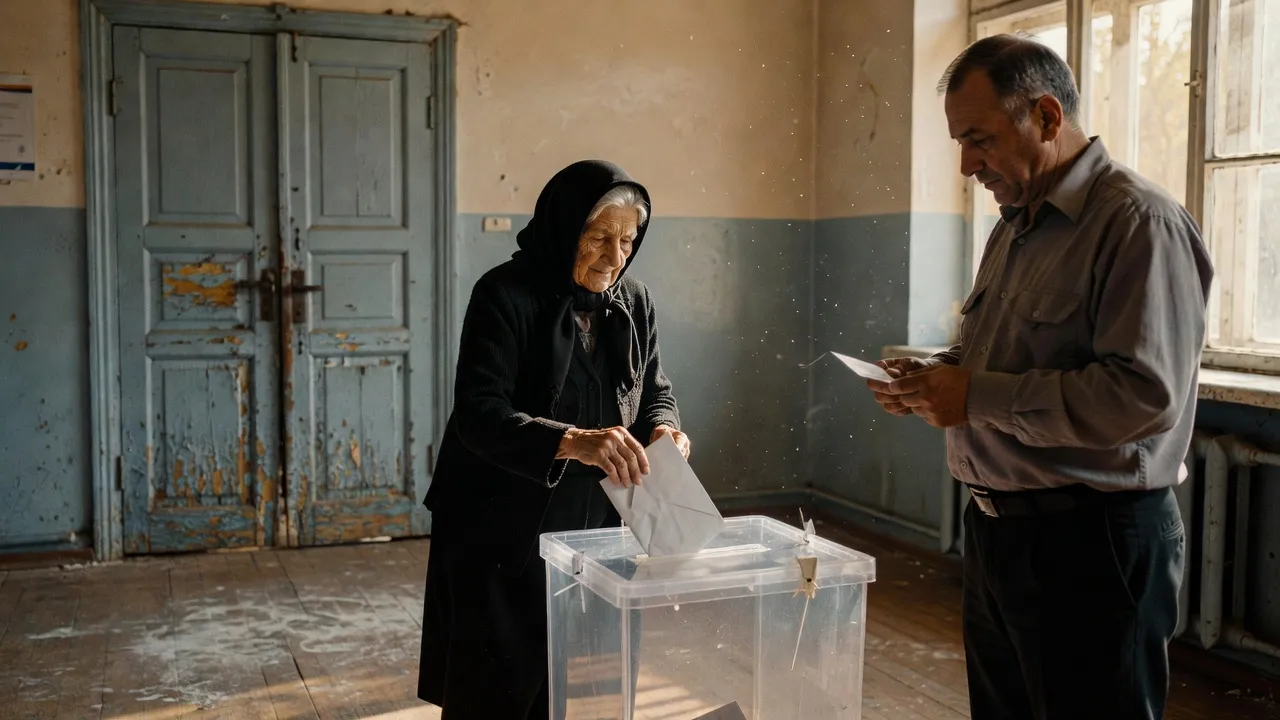
On Sunday 7 June 2026, two states of fewer than four million people, Armenia and Kosovo, held parliamentary elections on the same day, both read as a test of a shift toward the European Union against Russian influence.
In Armenia, Nikol Pashinyan's Civil Contract party came first according to every published exit poll, though with widely scattered figures, ranging from 32 % to 56.7 % depending on the pollster. The pro-Russian opposition led by Russian-Armenian billionaire Samvel Karapetyan (Armenia Forte) stood at around 17.5 %. Moscow imposed new restrictions on Armenian exports and issued veiled threats comparing Yerevan to Ukraine.
In Kosovo, Albin Kurti's Vetevendosje party won the vote with 43.1-43.2 %, down about eight points since December 2025, without an absolute majority. It was the third election in sixteen months, and turnout fell to 33 %, a figure read as a sign of democratic fatigue.
The stakes reach beyond the two countries. For Armenia: the Zangezur corridor linking Azerbaijan to Turkey, the weight of an active diaspora notably in France and Argentina, and ties with Russia. For Kosovo: a legal status still not recognised by five EU members, cooperation with Serbia, and the election of a president requiring a two-thirds majority. In the background, the European enlargement window is being tested and the appeal of the Western model no longer appears automatic.
The interpretation remains disputed. Several European capitals attribute disinformation campaigns targeting Pashinyan to Moscow, while Russia accuses French services of censoring online criticism. Kosovo's status divides in the same way: treated as a sovereign state by some, labelled "unrecognised" by others.