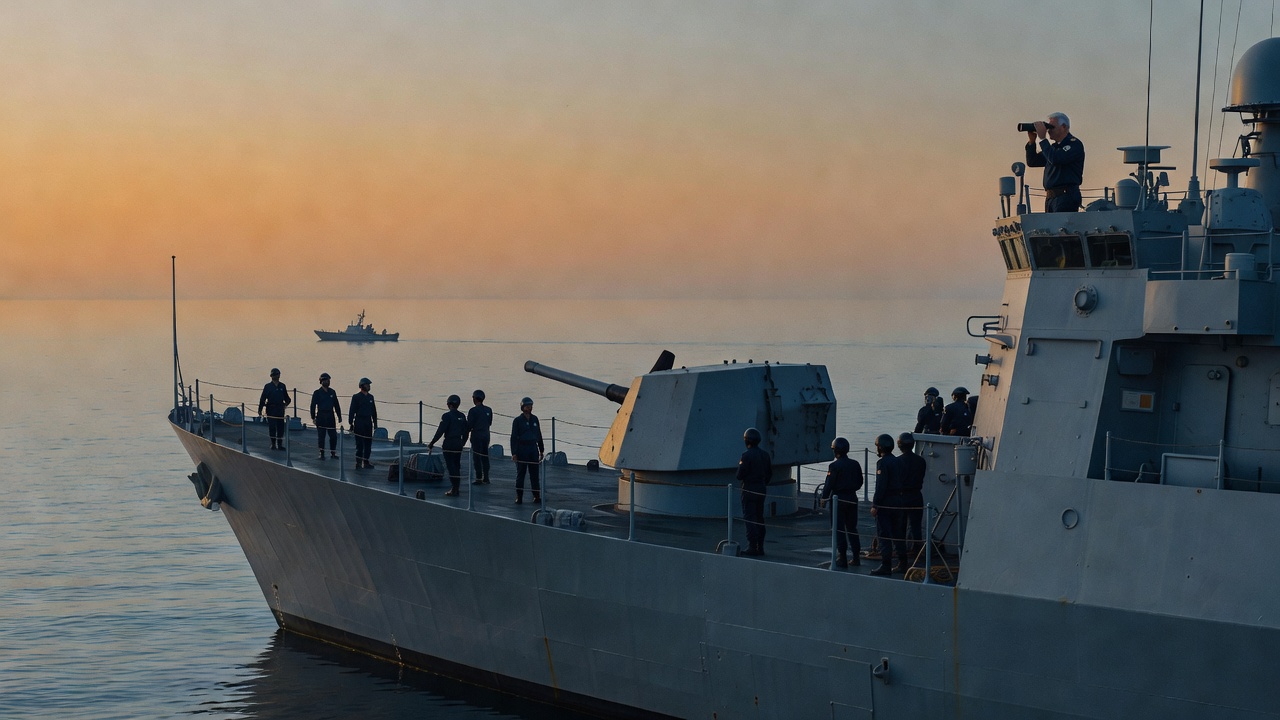
THE UNITED STATES AND IRAN HALT THEIR STRIKES: A PAUSE FOR TALKS
July 28, 2026·15 COUNTRIES
15countries·41sources·71articles
Asia (7)
Americas (2)
Middle East (2)
Oceania (1)
Europe (1)
Russia & CIS (1)
Other (1)
Asia
Americas
Middle East
Oceania
Europe
Russia & CIS
Other
EXPLORE THIS STORY
SHARE THIS COMPARISON
Show your friends how the world sees the same news differently.
After thirteen nights of U.S. bombing, Donald Trump orders a pause that Iran says it reciprocates by halting its reprisals. Tehran denies any direct negotiation despite Qatari and Pakistani mediation, while oil prices retreat and the Strait of Hormuz stays tense.
FRAMING GAP
35/100MODERATE
Notable divergences appear between perspectives
Here are the main framing differences identified between media coverages.
ANALYSIS BY COUNTRY
 AUSTRALIA
DOMINANT ANGLE
Canberra perceives a fragile lull between Washington and Tehran, where Donald Trump's displayed optimism contrasts sharply with Iran's persistent denial of any direct negotiations.
Dominant angle identified — does not reflect unanimity of this country’s media
KEY POINTS
- •A high-ranking Iranian official told Reuters, cited by PerthNow, that Tehran follows a 'tit for tat' logic: if American strikes cease, Iran will halt its operations as well
- •Thirteen consecutive nights of American strikes preceded the pause, suspended Friday evening by the Pentagon, with no reported U.S. attacks Saturday or Sunday (PerthNow)
- •Tehran denies any direct negotiations: Iran's Foreign Ministry spokesperson Esmaeil Baqaei states that 'we are engaged in no negotiations with the United States' (SBS News Australia)
BIASES
Washington-centric framing: direct quotations from Donald Trump occupy a substantial share of the narrative, overshadowing direct and extended access to Iranian voicesReliance on Reuters wires and official English-language sources, relayed without independent Iranian counterexpertiseLimited coverage of economic consequences of the issue, notably the Strait of Hormuz and oil prices, despite being identified as central stakes
 BANGLADESH
DOMINANT ANGLE
Dhaka reads a fragile pause between Washington and Tehran, where the oil reprieve masks the absence of genuine negotiations.
Dominant angle identified — does not reflect unanimity of this country’s media
KEY POINTS
- •After 13 nights of American strikes, the Pentagon suspended its campaign Friday evening; Iran froze its retaliation as long as the pause holds, according to military spokesman Mohammad Akraminia.
- •Brent fell 5.89% to $91.08 and WTI fell 5.73% to $84.19 upon announcement of the truce, according to TBS and The Daily Star.
- •Tehran officially denies any negotiations via spokesman Esmaeil Baqaei, while Trump evokes a good chance of progress and Saudi Arabia suffered a drone attack despite the lull.
BIASES
Framing centered on official American and Iranian statements with minimal independent Bangladeshi analysis of the broader implications.Preference for economic repercussions such as oil price movements over humanitarian dimensions and regional destabilization.Limited coverage of direct consequences for Bangladeshi workers and expatriates in the Gulf region.
 CANADAincl. 1 state outlet
DOMINANT ANGLE
Ottawa monitors an informal truce between Washington and Tehran, remaining cautious amid Iranian denials of direct negotiations and persistent Red Sea tensions.
Dominant angle identified — does not reflect unanimity of this country’s media
KEY POINTS
- •The de facto ceasefire has held for three days following thirteen nights of U.S. airstrikes, but Tehran denies any direct negotiations through its spokesman Esmaeil Baqaei.
- •Oil prices have fallen 6 percent since the pause announcement according to the Globe and Mail, while the Strait of Hormuz remains central to regional tensions.
- •Houthi rebels claimed missile and drone strikes against Aramco facilities at Jizan and Yanbu, broadening the conflict to the Red Sea and Saudi Arabia.
BIASES
U.S.-centric framing: statements from Mike Waltz and Donald Trump dominate the official narrative of the pause, overshadowing Iranian perspectives.Preference for Western government sources (CBC, Globe and Mail, National Post) over direct Iranian voices, limited to sparse statements from spokespersons.Insufficient coverage of the specific role of Qatari and Pakistani mediators, mentioned briefly without detail on their methods or diplomatic strategy.
 CHINAincl. 1 state outlet
DOMINANT ANGLE
Beijing reads a fragile pause between Washington and Tehran, where the maintenance of the American naval blockade confirms, according to Chinese diplomacy, the limits of a de-escalation decided without multilateral consultation.
Dominant angle identified — does not reflect unanimity of this country’s media
KEY POINTS
- •CENTCOM confirms full maintenance of the naval blockade: 12 ships redirected, 2 disabled, 2 inspected since July 25 (CGTN)
- •Iranian military spokesman Mohammad Akraminia announces suspension of retaliatory operations as long as the American pause holds (SCMP)
- •Despite the lull with Iran, Houthis intensify strikes on Saudi oil installations in Jizan and Yanbu (SCMP)
BIASES
Gulf-centered framing: strong attention to the naval blockade and the Strait of Hormuz, limited coverage of the content of the diplomatic talks themselvesPreference for American official sources (CENTCOM, Ambassador Waltz): the Iranian perspective is conveyed only through a single military spokesmanLimited coverage of direct Chinese positions or Sino-Iranian diplomatic channels on this issue, despite Beijing's interest in regional stability
 EGYPT
EGYPTDOMINANT ANGLE
Cairo weighs a fragile pause between Washington and Tehran, aware that any reversal would reignite the Gulf and the Houthi front.
Dominant angle identified — does not reflect unanimity of this country’s media
KEY POINTS
- •Tehran suspended attacks after two nights without American strikes, reciprocity confirmed by Iranian military spokesperson Amir Mohammad Akraminia.
- •War casualties now total 18 American soldiers killed and 624 wounded since February 28, according to the Pentagon's database (DCAS).
- •Saudi Arabia intercepted drones targeting its oil installations launched from Iraq, while Houthis struck supply routes toward Yanbu.
BIASES
Gulf-centric framing: Egyptian coverage emphasizes repercussions on the Gulf and regional security rather than details of Washington-Tehran negotiations.Preference for American sources (Axios, CNN) relayed without direct regional verification.Limited coverage of direct economic consequences for Egypt, despite its dependence on Suez Canal maritime traffic.
 FRANCEincl. 1 state outlet
DOMINANT ANGLE
Paris reads a fragile pause between Washington and Tehran, driven as much by American ammunition shortages as by strictly conditional Iranian retaliation.
Dominant angle identified — does not reflect unanimity of this country’s media
KEY POINTS
- •Iranian military spokesman: "Over the past two nights, the Americans have stopped their attacks... we have also suspended our operations" (RFI, 20 Minutes)
- •Donald Trump, from Air Force One, dismisses the hypothesis of ammunition shortage: "I'd like to have more... but so much has been given to Ukraine" (Le Monde)
- •Brent crude climbed above 100 dollars per barrel the previous week, before a price decline Monday driven by hopes for resumed discussions on Hormuz (France 24)
BIASES
Institutional framing: French media favor factual live coverage citing official sources (Pentagon, Iranian military, Vatican, UN) over deeper geopolitical analysisPreference for state voices (Trump, Iranian spokesman, Pope Leo XIV) at the expense of Gulf and Red Sea civilians directly affected by the strikesLimited coverage of France's own official position: none of the articles consulted mention a response from the Quai d'Orsay or Elysee on this pause
 INDIA
INDIADOMINANT ANGLE
New Delhi measures the US-Iran pause in market index points and dollar-per-barrel terms, balancing stock market relief against continued vigilance over Strait of Hormuz flows.
Dominant angle identified — does not reflect unanimity of this country’s media
KEY POINTS
- •Sensex gained 776.01 points, or 1.02%, to 76,835.78 and Nifty 50 rose 228.50 points, or 0.96%, to 23,995.95 on Monday, ending five consecutive sessions of decline.
- •Brent crude fell from over 100 dollars to 87.58 dollars per barrel, declining 4.47%, while Strait of Hormuz flows contracted to 2.9 million barrels per day from 5.9 million the previous week.
- •RBI Governor Sanjay Malhotra cited 32 billion dollars mobilized through recent foreign capital measures, as inflation has breached the central bank's tolerance band midpoint ahead of August policy decisions.
BIASES
Market-centric framing: Indian media coverage treats the US-Iran pause primarily as a stock market event rather than a diplomatic or geopolitical milestone.Heavy reliance on financial sources: quotations from brokerage analysts (Pocketful, Jefferies, ING) outnumber statements from diplomatic officials or substantive detail on negotiations.Minimal coverage of negotiation substance: scarce detail on the actual content, terms, or mechanics of the US-Iran talks within Indian press coverage examined.
 IRAN
IRANDOMINANT ANGLE
Tehran distinguishes the military pause from a ceasefire, claiming a position of strength against Washington as an intense internal debate pits hardliners against pragmatists over the prospect of negotiations.
Dominant angle identified — does not reflect unanimity of this country’s media
KEY POINTS
- •Vice-Chairman of Parliament Hamidreza Haji Babai declared that Iran will never reach an agreement with the United States
- •Mehr News, citing the Times, reports that Trump ordered the pause out of concern over depleting American Patriot missile stocks in the Middle East
- •The Iranian joint military command characterizes the American naval blockade as an extension of the conflict and rejects the term ceasefire, preferring pause or suspension
BIASES
Internal factions framing: Heavy focus on divisions between moderates and hardliners in Tehran, less attention to the unified official position claimed by the authoritiesPreference for exile opposition sources (Iran International) alongside official agency Mehr News, which contrasts critical and institutional tonesLimited coverage of international diplomatic dimensions (Qatari and Pakistani mediation) in favor of Iranian domestic political debate
 JAPAN
JAPANDOMINANT ANGLE
Tokyo measures the respite with caution: the pause in U.S.-Iranian strikes brings market relief, but does not resolve the structural vulnerability of Japan's fifty-year dependence on Middle Eastern oil.
Dominant angle identified — does not reflect unanimity of this country’s media
KEY POINTS
- •The Nikkei 225 closed on July 27 at 64,931.19 points (+0.50%), the TOPIX surging 1.37% to 4,066.07 points, with approximately 90% of Prime Market securities advancing (News On Japan)
- •Japan imports over 90% of its petroleum from the Middle East, a region accounting for 48.3% of global supply cited by analysts; economist Yasuhide Yajima cites potential energy strategy revisions over three to five years (News On Japan)
- •An Alaska crude tanker docked near Tokyo in early June, the first delivery since the U.S.-Iranian conflict began in February, following Tehran's effective closure of the Strait of Hormuz (The Mainichi / Kyodo News)
BIASES
Market-centered framing: heavy emphasis on stock indices (Nikkei, TOPIX) and trading volumes, at the expense of Japanese diplomatic or military responsesEnergy-security angle prioritized: Japanese media systematically link the truce to the nation's petroleum supply security rather than to the negotiations themselvesLimited coverage of persistent regional tensions (Houthis, Red Sea) that temper the scope of the announced pause
 PAKISTAN
DOMINANT ANGLE
Islamabad calculates the economic price of the pause: inflation, oil, and the role of mediator under the "Islamabad Memorandum" hang in the balance each night of calm observed between Washington and Tehran.
Dominant angle identified — does not reflect unanimity of this country’s media
KEY POINTS
- •Pakistani inflation had declined to 11.1 percent in June (down from a peak of 11.7 percent in May), driven upstream by a 36.8 percent increase in transportation costs tied to the conflict (Geo News).
- •Iranian military spokesman Mohammad Akraminia confirms the halt of retaliatory strikes after two nights without American bombardment (Dawn, ARY News).
- •A report cited by ARY News points to a Pakistani initiative, backed by China, to restart US-Iranian negotiations.
BIASES
Economy-centered framing: Pakistani coverage prioritizes the impact on inflation and oil prices over military considerations alone.Emphasis on Pakistan's diplomatic role: promotion of the "Islamabad Memorandum" and regional mediation, with limited detail elsewhere.Limited coverage of Israeli and Saudi perspectives: consulted sources provide little development of these regional actors' viewpoints.
 RUSSIAincl. 2 state outlets
DOMINANT ANGLE
Moscow reads Washington's pause as an admission of dual failure—military and logistical—as Tehran claims heavy casualties among US forces.
Dominant angle identified — does not reflect unanimity of this country’s media
KEY POINTS
- •Admiral Brad Cooper, CENTCOM chief, recommended halting strikes in the Strait of Hormuz, concluding designated targets had been 'largely exhausted' (Axios via RT/Sputnik)
- •The New York Times reports declining Patriot missile stocks at the Pentagon, which Donald Trump publicly denies
- •The IRGC claims over 200 US military personnel killed since July 8 as part of 'Operation Victory-2' (TASS)
BIASES
Washington-focused framing emphasizing military constraints: Russian media stress acknowledged Pentagon limitations—ammunition, exhausted targets—over Iranian strategic positioningReliance on attributed US sources (Axios, NYT) that underscore tensions between official Trump statements and internal Pentagon assessments regarding ammunition reservesLimited coverage of Oman-mediated negotiations: Russian reporting concentrates on military balance calculations rather than diplomacy and negotiation substance
 SINGAPORE
DOMINANT ANGLE
Singapore weighs the US-Iran pause first through its immediate impact on crude oil markets and maritime traffic in the Strait of Hormuz.
Dominant angle identified — does not reflect unanimity of this country’s media
KEY POINTS
- •Brent crude fell more than 8% on Monday, dropping below $89, after surpassing $100 the previous week (Channel News Asia)
- •Iran affirms it still controls the Strait of Hormuz and rejects any direct negotiations with Washington, according to spokesman Esmaeil Baqaei (Straits Times)
- •The dollar retreated against the yen and euro as markets await the Federal Reserve's July 28-29 meeting under new Chair Kevin Warsh (Channel News Asia)
BIASES
Market-centric framing: the pause is treated primarily through the lens of oil prices, the dollar, and freight flows rather than diplomatic dimensionsPreference for financial analysts and monetary institutions (Fed, trading desks) over Iranian or American political voicesMinimal attention to humanitarian consequences of the strikes and civilian impacts across the region
 SOUTH KOREA
DOMINANT ANGLE
Seoul examines the Washington-Tehran pause through its own air defense requirements, weighing U.S. Patriot missile depletion against American casualty reporting opacity.
Dominant angle identified — does not reflect unanimity of this country’s media
KEY POINTS
- •Iranian military spokesperson Mohammad Akraminia confirms Iran suspended attacks after two consecutive nights without U.S. strikes.
- •The New York Times, reported by KBS World, reveals General Dan Caine warned Trump of Patriot missile stock depletion risk, with over 1,200 missiles already consumed since April.
- •The Pentagon removed four soldiers killed from official Iran conflict statistics, reclassifying them under 'Overseas Operations' without clear explanation (official toll: 18 dead, 482 wounded).
BIASES
Security-alliance centered framing: interpreting the pause through the lens of extended deterrence and Patriot batteries deployed in Korea, rather than diplomatic or humanitarian considerations.Reliance on American sources (New York Times, CNN, Pentagon) relayed without direct Iranian verification or substantive counterpoint.Limited coverage of humanitarian or regional consequences for Gulf populations affected by the conflict.
 UNITED KINGDOM
DOMINANT ANGLE
London reads this pause as a fragile signal, where the oil market reacts faster than diplomacy.
Dominant angle identified — does not reflect unanimity of this country’s media
KEY POINTS
- •The strike pause has lasted three consecutive days according to two regional officials cited by The Independent, with Qatari and Pakistani mediators engaged in negotiations.
- •Brent crude fell over 9 percent to below $88, after exceeding $100 the prior week, according to BBC reporting.
- •Houthi rebels claimed an attack on the Saudi city of Jizan, illustrating the regional fragility underlying this apparent lull.
BIASES
Economic-centric framing: the BBC prioritizes oil price movements and market reactions over details of diplomatic negotiations.Preference for U.S. official sources: citations derive chiefly from Ambassador Mike Waltz and U.S. officials, with minimal direct Iranian voices included.Limited coverage of Houthi-Saudi dynamics: the Jizan attack is mentioned as context without deeper analysis of broader regional repercussions.
 UNITED STATES
DOMINANT ANGLE
Washington presents a calculated pause in strikes against Iran as a diplomatic gesture rather than an acknowledgment of military constraints.
Dominant angle identified — does not reflect unanimity of this country’s media
KEY POINTS
- •Admiral Brad Cooper, CENTCOM commander, recommended halting Hormuz strikes because designated targets were "largely exhausted," with approximately 20 percent of objectives remaining unaddressed
- •Trump stated he possesses "plenty of ammunition, different types" and attributed ammunition supply concerns to Biden administration military aid sent to Ukraine
- •Brent crude fell below $90 per barrel on Monday and to $87.24 on Tuesday, while U.S. WTI dropped to around $81.60, reflecting market expectations of de-escalation
BIASES
White House-centric framing: coverage prioritizes Trump administration statements about the pause rationale over alternative explanations or independent assessmentsEconomic focus: emphasis on oil price movements and stock market reactions overshadows consideration of the conflict's human cost and regional humanitarian impactLimited Iranian perspective: Tehran's position is reported primarily through third-party spokespeople and regional mediators rather than direct Iranian accounts
AUSTRALIADOMINANT ANGLE
Canberra perceives a fragile lull between Washington and Tehran, where Donald Trump's displayed optimism contrasts sharply with Iran's persistent denial of any direct negotiations.
Dominant angle identified — does not reflect unanimity of this country’s media
KEY POINTS
- •A high-ranking Iranian official told Reuters, cited by PerthNow, that Tehran follows a 'tit for tat' logic: if American strikes cease, Iran will halt its operations as well
- •Thirteen consecutive nights of American strikes preceded the pause, suspended Friday evening by the Pentagon, with no reported U.S. attacks Saturday or Sunday (PerthNow)
- •Tehran denies any direct negotiations: Iran's Foreign Ministry spokesperson Esmaeil Baqaei states that 'we are engaged in no negotiations with the United States' (SBS News Australia)
BIASES
Washington-centric framing: direct quotations from Donald Trump occupy a substantial share of the narrative, overshadowing direct and extended access to Iranian voicesReliance on Reuters wires and official English-language sources, relayed without independent Iranian counterexpertiseLimited coverage of economic consequences of the issue, notably the Strait of Hormuz and oil prices, despite being identified as central stakes
BANGLADESHDOMINANT ANGLE
Dhaka reads a fragile pause between Washington and Tehran, where the oil reprieve masks the absence of genuine negotiations.
Dominant angle identified — does not reflect unanimity of this country’s media
KEY POINTS
- •After 13 nights of American strikes, the Pentagon suspended its campaign Friday evening; Iran froze its retaliation as long as the pause holds, according to military spokesman Mohammad Akraminia.
- •Brent fell 5.89% to $91.08 and WTI fell 5.73% to $84.19 upon announcement of the truce, according to TBS and The Daily Star.
- •Tehran officially denies any negotiations via spokesman Esmaeil Baqaei, while Trump evokes a good chance of progress and Saudi Arabia suffered a drone attack despite the lull.
BIASES
Framing centered on official American and Iranian statements with minimal independent Bangladeshi analysis of the broader implications.Preference for economic repercussions such as oil price movements over humanitarian dimensions and regional destabilization.Limited coverage of direct consequences for Bangladeshi workers and expatriates in the Gulf region.
CANADAincl. 1 state outletDOMINANT ANGLE
Ottawa monitors an informal truce between Washington and Tehran, remaining cautious amid Iranian denials of direct negotiations and persistent Red Sea tensions.
Dominant angle identified — does not reflect unanimity of this country’s media
KEY POINTS
- •The de facto ceasefire has held for three days following thirteen nights of U.S. airstrikes, but Tehran denies any direct negotiations through its spokesman Esmaeil Baqaei.
- •Oil prices have fallen 6 percent since the pause announcement according to the Globe and Mail, while the Strait of Hormuz remains central to regional tensions.
- •Houthi rebels claimed missile and drone strikes against Aramco facilities at Jizan and Yanbu, broadening the conflict to the Red Sea and Saudi Arabia.
BIASES
U.S.-centric framing: statements from Mike Waltz and Donald Trump dominate the official narrative of the pause, overshadowing Iranian perspectives.Preference for Western government sources (CBC, Globe and Mail, National Post) over direct Iranian voices, limited to sparse statements from spokespersons.Insufficient coverage of the specific role of Qatari and Pakistani mediators, mentioned briefly without detail on their methods or diplomatic strategy.
CHINAincl. 1 state outletDOMINANT ANGLE
Beijing reads a fragile pause between Washington and Tehran, where the maintenance of the American naval blockade confirms, according to Chinese diplomacy, the limits of a de-escalation decided without multilateral consultation.
Dominant angle identified — does not reflect unanimity of this country’s media
KEY POINTS
- •CENTCOM confirms full maintenance of the naval blockade: 12 ships redirected, 2 disabled, 2 inspected since July 25 (CGTN)
- •Iranian military spokesman Mohammad Akraminia announces suspension of retaliatory operations as long as the American pause holds (SCMP)
- •Despite the lull with Iran, Houthis intensify strikes on Saudi oil installations in Jizan and Yanbu (SCMP)
BIASES
Gulf-centered framing: strong attention to the naval blockade and the Strait of Hormuz, limited coverage of the content of the diplomatic talks themselvesPreference for American official sources (CENTCOM, Ambassador Waltz): the Iranian perspective is conveyed only through a single military spokesmanLimited coverage of direct Chinese positions or Sino-Iranian diplomatic channels on this issue, despite Beijing's interest in regional stability
EGYPTDOMINANT ANGLE
Cairo weighs a fragile pause between Washington and Tehran, aware that any reversal would reignite the Gulf and the Houthi front.
Dominant angle identified — does not reflect unanimity of this country’s media
KEY POINTS
- •Tehran suspended attacks after two nights without American strikes, reciprocity confirmed by Iranian military spokesperson Amir Mohammad Akraminia.
- •War casualties now total 18 American soldiers killed and 624 wounded since February 28, according to the Pentagon's database (DCAS).
- •Saudi Arabia intercepted drones targeting its oil installations launched from Iraq, while Houthis struck supply routes toward Yanbu.
BIASES
Gulf-centric framing: Egyptian coverage emphasizes repercussions on the Gulf and regional security rather than details of Washington-Tehran negotiations.Preference for American sources (Axios, CNN) relayed without direct regional verification.Limited coverage of direct economic consequences for Egypt, despite its dependence on Suez Canal maritime traffic.
FRANCEincl. 1 state outletDOMINANT ANGLE
Paris reads a fragile pause between Washington and Tehran, driven as much by American ammunition shortages as by strictly conditional Iranian retaliation.
Dominant angle identified — does not reflect unanimity of this country’s media
KEY POINTS
- •Iranian military spokesman: "Over the past two nights, the Americans have stopped their attacks... we have also suspended our operations" (RFI, 20 Minutes)
- •Donald Trump, from Air Force One, dismisses the hypothesis of ammunition shortage: "I'd like to have more... but so much has been given to Ukraine" (Le Monde)
- •Brent crude climbed above 100 dollars per barrel the previous week, before a price decline Monday driven by hopes for resumed discussions on Hormuz (France 24)
BIASES
Institutional framing: French media favor factual live coverage citing official sources (Pentagon, Iranian military, Vatican, UN) over deeper geopolitical analysisPreference for state voices (Trump, Iranian spokesman, Pope Leo XIV) at the expense of Gulf and Red Sea civilians directly affected by the strikesLimited coverage of France's own official position: none of the articles consulted mention a response from the Quai d'Orsay or Elysee on this pause
INDIADOMINANT ANGLE
New Delhi measures the US-Iran pause in market index points and dollar-per-barrel terms, balancing stock market relief against continued vigilance over Strait of Hormuz flows.
Dominant angle identified — does not reflect unanimity of this country’s media
KEY POINTS
- •Sensex gained 776.01 points, or 1.02%, to 76,835.78 and Nifty 50 rose 228.50 points, or 0.96%, to 23,995.95 on Monday, ending five consecutive sessions of decline.
- •Brent crude fell from over 100 dollars to 87.58 dollars per barrel, declining 4.47%, while Strait of Hormuz flows contracted to 2.9 million barrels per day from 5.9 million the previous week.
- •RBI Governor Sanjay Malhotra cited 32 billion dollars mobilized through recent foreign capital measures, as inflation has breached the central bank's tolerance band midpoint ahead of August policy decisions.
BIASES
Market-centric framing: Indian media coverage treats the US-Iran pause primarily as a stock market event rather than a diplomatic or geopolitical milestone.Heavy reliance on financial sources: quotations from brokerage analysts (Pocketful, Jefferies, ING) outnumber statements from diplomatic officials or substantive detail on negotiations.Minimal coverage of negotiation substance: scarce detail on the actual content, terms, or mechanics of the US-Iran talks within Indian press coverage examined.
IRANDOMINANT ANGLE
Tehran distinguishes the military pause from a ceasefire, claiming a position of strength against Washington as an intense internal debate pits hardliners against pragmatists over the prospect of negotiations.
Dominant angle identified — does not reflect unanimity of this country’s media
KEY POINTS
- •Vice-Chairman of Parliament Hamidreza Haji Babai declared that Iran will never reach an agreement with the United States
- •Mehr News, citing the Times, reports that Trump ordered the pause out of concern over depleting American Patriot missile stocks in the Middle East
- •The Iranian joint military command characterizes the American naval blockade as an extension of the conflict and rejects the term ceasefire, preferring pause or suspension
BIASES
Internal factions framing: Heavy focus on divisions between moderates and hardliners in Tehran, less attention to the unified official position claimed by the authoritiesPreference for exile opposition sources (Iran International) alongside official agency Mehr News, which contrasts critical and institutional tonesLimited coverage of international diplomatic dimensions (Qatari and Pakistani mediation) in favor of Iranian domestic political debate
JAPANDOMINANT ANGLE
Tokyo measures the respite with caution: the pause in U.S.-Iranian strikes brings market relief, but does not resolve the structural vulnerability of Japan's fifty-year dependence on Middle Eastern oil.
Dominant angle identified — does not reflect unanimity of this country’s media
KEY POINTS
- •The Nikkei 225 closed on July 27 at 64,931.19 points (+0.50%), the TOPIX surging 1.37% to 4,066.07 points, with approximately 90% of Prime Market securities advancing (News On Japan)
- •Japan imports over 90% of its petroleum from the Middle East, a region accounting for 48.3% of global supply cited by analysts; economist Yasuhide Yajima cites potential energy strategy revisions over three to five years (News On Japan)
- •An Alaska crude tanker docked near Tokyo in early June, the first delivery since the U.S.-Iranian conflict began in February, following Tehran's effective closure of the Strait of Hormuz (The Mainichi / Kyodo News)
BIASES
Market-centered framing: heavy emphasis on stock indices (Nikkei, TOPIX) and trading volumes, at the expense of Japanese diplomatic or military responsesEnergy-security angle prioritized: Japanese media systematically link the truce to the nation's petroleum supply security rather than to the negotiations themselvesLimited coverage of persistent regional tensions (Houthis, Red Sea) that temper the scope of the announced pause
PAKISTANDOMINANT ANGLE
Islamabad calculates the economic price of the pause: inflation, oil, and the role of mediator under the "Islamabad Memorandum" hang in the balance each night of calm observed between Washington and Tehran.
Dominant angle identified — does not reflect unanimity of this country’s media
KEY POINTS
- •Pakistani inflation had declined to 11.1 percent in June (down from a peak of 11.7 percent in May), driven upstream by a 36.8 percent increase in transportation costs tied to the conflict (Geo News).
- •Iranian military spokesman Mohammad Akraminia confirms the halt of retaliatory strikes after two nights without American bombardment (Dawn, ARY News).
- •A report cited by ARY News points to a Pakistani initiative, backed by China, to restart US-Iranian negotiations.
BIASES
Economy-centered framing: Pakistani coverage prioritizes the impact on inflation and oil prices over military considerations alone.Emphasis on Pakistan's diplomatic role: promotion of the "Islamabad Memorandum" and regional mediation, with limited detail elsewhere.Limited coverage of Israeli and Saudi perspectives: consulted sources provide little development of these regional actors' viewpoints.
RUSSIAincl. 2 state outletsDOMINANT ANGLE
Moscow reads Washington's pause as an admission of dual failure—military and logistical—as Tehran claims heavy casualties among US forces.
Dominant angle identified — does not reflect unanimity of this country’s media
KEY POINTS
- •Admiral Brad Cooper, CENTCOM chief, recommended halting strikes in the Strait of Hormuz, concluding designated targets had been 'largely exhausted' (Axios via RT/Sputnik)
- •The New York Times reports declining Patriot missile stocks at the Pentagon, which Donald Trump publicly denies
- •The IRGC claims over 200 US military personnel killed since July 8 as part of 'Operation Victory-2' (TASS)
BIASES
Washington-focused framing emphasizing military constraints: Russian media stress acknowledged Pentagon limitations—ammunition, exhausted targets—over Iranian strategic positioningReliance on attributed US sources (Axios, NYT) that underscore tensions between official Trump statements and internal Pentagon assessments regarding ammunition reservesLimited coverage of Oman-mediated negotiations: Russian reporting concentrates on military balance calculations rather than diplomacy and negotiation substance
SINGAPOREDOMINANT ANGLE
Singapore weighs the US-Iran pause first through its immediate impact on crude oil markets and maritime traffic in the Strait of Hormuz.
Dominant angle identified — does not reflect unanimity of this country’s media
KEY POINTS
- •Brent crude fell more than 8% on Monday, dropping below $89, after surpassing $100 the previous week (Channel News Asia)
- •Iran affirms it still controls the Strait of Hormuz and rejects any direct negotiations with Washington, according to spokesman Esmaeil Baqaei (Straits Times)
- •The dollar retreated against the yen and euro as markets await the Federal Reserve's July 28-29 meeting under new Chair Kevin Warsh (Channel News Asia)
BIASES
Market-centric framing: the pause is treated primarily through the lens of oil prices, the dollar, and freight flows rather than diplomatic dimensionsPreference for financial analysts and monetary institutions (Fed, trading desks) over Iranian or American political voicesMinimal attention to humanitarian consequences of the strikes and civilian impacts across the region
SOUTH KOREADOMINANT ANGLE
Seoul examines the Washington-Tehran pause through its own air defense requirements, weighing U.S. Patriot missile depletion against American casualty reporting opacity.
Dominant angle identified — does not reflect unanimity of this country’s media
KEY POINTS
- •Iranian military spokesperson Mohammad Akraminia confirms Iran suspended attacks after two consecutive nights without U.S. strikes.
- •The New York Times, reported by KBS World, reveals General Dan Caine warned Trump of Patriot missile stock depletion risk, with over 1,200 missiles already consumed since April.
- •The Pentagon removed four soldiers killed from official Iran conflict statistics, reclassifying them under 'Overseas Operations' without clear explanation (official toll: 18 dead, 482 wounded).
BIASES
Security-alliance centered framing: interpreting the pause through the lens of extended deterrence and Patriot batteries deployed in Korea, rather than diplomatic or humanitarian considerations.Reliance on American sources (New York Times, CNN, Pentagon) relayed without direct Iranian verification or substantive counterpoint.Limited coverage of humanitarian or regional consequences for Gulf populations affected by the conflict.
UNITED KINGDOMDOMINANT ANGLE
London reads this pause as a fragile signal, where the oil market reacts faster than diplomacy.
Dominant angle identified — does not reflect unanimity of this country’s media
KEY POINTS
- •The strike pause has lasted three consecutive days according to two regional officials cited by The Independent, with Qatari and Pakistani mediators engaged in negotiations.
- •Brent crude fell over 9 percent to below $88, after exceeding $100 the prior week, according to BBC reporting.
- •Houthi rebels claimed an attack on the Saudi city of Jizan, illustrating the regional fragility underlying this apparent lull.
BIASES
Economic-centric framing: the BBC prioritizes oil price movements and market reactions over details of diplomatic negotiations.Preference for U.S. official sources: citations derive chiefly from Ambassador Mike Waltz and U.S. officials, with minimal direct Iranian voices included.Limited coverage of Houthi-Saudi dynamics: the Jizan attack is mentioned as context without deeper analysis of broader regional repercussions.
UNITED STATESDOMINANT ANGLE
Washington presents a calculated pause in strikes against Iran as a diplomatic gesture rather than an acknowledgment of military constraints.
Dominant angle identified — does not reflect unanimity of this country’s media
KEY POINTS
- •Admiral Brad Cooper, CENTCOM commander, recommended halting Hormuz strikes because designated targets were "largely exhausted," with approximately 20 percent of objectives remaining unaddressed
- •Trump stated he possesses "plenty of ammunition, different types" and attributed ammunition supply concerns to Biden administration military aid sent to Ukraine
- •Brent crude fell below $90 per barrel on Monday and to $87.24 on Tuesday, while U.S. WTI dropped to around $81.60, reflecting market expectations of de-escalation
BIASES
White House-centric framing: coverage prioritizes Trump administration statements about the pause rationale over alternative explanations or independent assessmentsEconomic focus: emphasis on oil price movements and stock market reactions overshadows consideration of the conflict's human cost and regional humanitarian impactLimited Iranian perspective: Tehran's position is reported primarily through third-party spokespeople and regional mediators rather than direct Iranian accounts
CROSS-PERSPECTIVE ANALYSIS
CROSS-ANALYSIS
CONSENSUS POINTS
- 1A de facto pause in American strikes on Iran has been in effect since late July 2026, following thirteen consecutive nights of American bombardments halted Friday evening by the Pentagon.
- 2Iran strictly conditions the cessation of its own retaliatory operations on the continuation of the American pause, a position confirmed by its military spokesman Mohammad Akraminia.
- 3Oil prices (Brent and WTI) clearly declined following the announcement of the pause after exceeding $100 per barrel the previous week.
- 4Tehran officially denies, through its diplomatic spokesman Esmaeil Baqaei, being engaged in any direct negotiation with Washington, in contrast to the optimism displayed by Donald Trump.
- 5The fragility of the lull is illustrated by the continuation of regional tensions, notably Houthi strikes on Saudi oil installations in Jizan and Yanbu.
FRAMING DIFFERENCES
Origin of the pause
Washington presents the pause as space intentionally left for diplomacy, whereas multiple perspectives relay an alternative military explanation: exhaustion of targets and Patriot missile stocks, a thesis that Donald Trump publicly denies.
Frame this way
Frame the opposite
Existence of talks
Donald Trump alludes to good chances of progress in discussions, while Tehran categorically denies any direct negotiation with the United States.
Frame this way
Frame the opposite
Status of the pause
Some perspectives evoke a truce or de facto ceasefire, whereas the Iranian military command explicitly refuses this vocabulary, insisting on a simple pause revocable at any time.
Frame this way
Frame the opposite
Role of mediators
The United Kingdom and Pakistan highlight the active mediation of Qatar and Pakistan toward an interim agreement, whereas other perspectives minimize this diplomatic channel in favor of military force alone.
Frame this way
Frame the opposite
GEOPOLITICAL CLUSTERS
Markets and oil reading
Shared narrative
These perspectives treat the American-Iranian pause first as a market event, detailing the impact on oil prices, stock indices, and currencies, before the diplomatic content of the matter.
Relay of the official American version
Shared narrative
These perspectives rely heavily on statements from Donald Trump and American officials (CENTCOM, Ambassador Mike Waltz), with limited and indirect access to Iranian voices.
Skepticism toward the American narrative
Shared narrative
These perspectives question the diplomatic explanation advanced by Washington, insisting on signs of military weakness (ammunition shortage, exhausted targets) and the maintenance of the naval blockade despite the lull.
Regional mediation and local repercussions
Shared narrative
These perspectives emphasize the role of regional mediation (Pakistan, Qatar) and the direct economic consequences of the conflict for their own populations, rather than the content of diplomatic negotiations.
OMISSIONS ANALYSIS
FranceOmitted topics
official reaction from the French Foreign Ministry or the Elysee Palacedetails of Qatari and Pakistani mediation channels
Highlighted by
AustraliaOmitted topics
economic consequences on the Strait of Hormuz and oil prices
Highlighted by
EgyptOmitted topics
direct economic consequences for Egypt via Suez Canal traffic
Highlighted by
GEOPOLITICAL CONTEXT
This pause in American-Iranian strikes follows thirteen consecutive nights of bombardments and reflects an unstable balance of power. Explanations diverge across capitals: space left for diplomacy for Washington, military exhaustion for Moscow and Tehran, economic opportunity for Asian and Gulf financial centers. The persistence of Houthi strikes against Saudi Arabia, the maintenance of the American naval blockade, and Iranian denial of any direct negotiation demonstrate that the lull remains conditional and reversible, dependent on military, economic (oil, Strait of Hormuz), and still fragile diplomatic balances, with Qatari and Pakistani mediations in the background.
Economic stakes
oilstock marketsmaritime transport
776,01points (+1,02%)
Rebound of Indian Sensex at 76,835.78 points Monday, ending five sessions of decline following the announcement of the strike pause.
Source87,58dollars/barrel (-4,47%)
Brent decline to $87.58 per barrel, while flows via the Strait of Hormuz fell to 2.9 million barrels/day versus 5.9 million the previous week, according to Indian press.
Source88dollars/barrel (-9%)
Brent drop of more than 9%, below $88, after exceeding $100 the previous week, according to BBC.
Source87,24dollars/barrel
Brent fell below $90 Monday then to $87.24 Tuesday, with WTI declining to approximately $81.60, according to CNBC.
Source89dollars/barrel (-8%)
Brent plunged more than 8% Monday, below $89, after exceeding $100 the previous week, according to Channel News Asia.
SourceThe pause in strikes immediately caused oil prices (Brent and WTI) to plummet after a peak above $100 per barrel, while relieving Asian stock markets (Sensex, Nifty, Nikkei). This market movement, faster than diplomatic advances, sheds light on the positions of countries heavily dependent on the Strait of Hormuz and Gulf hydrocarbon imports, such as Japan, India, and Singapore.
AI-powered analysis