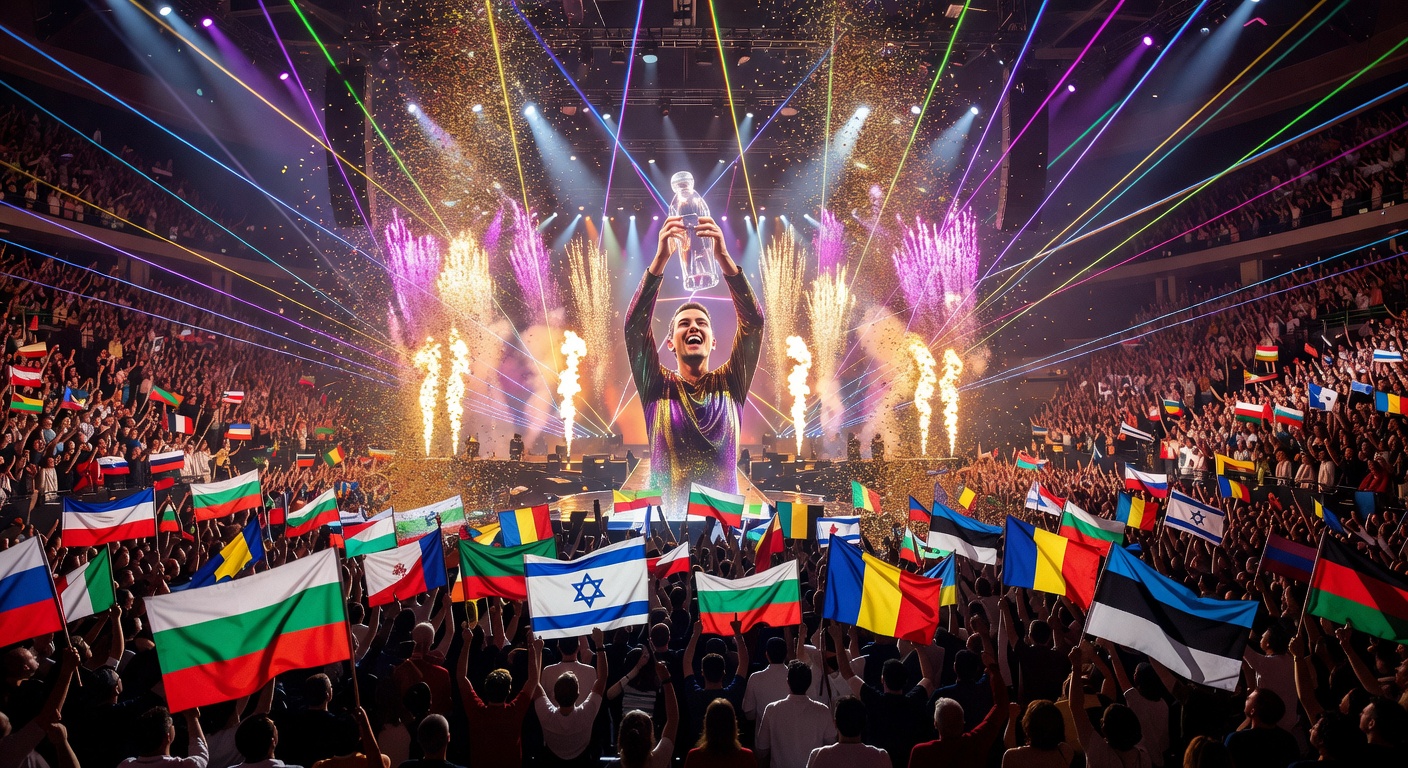
The 2026 Eurovision Song Contest, held in Vienna, was won by Bulgarian singer Dara with the song “Bangaranga” and a total of 516 points. It is Bulgaria's first victory in the history of the contest, and Dara became the first performer since 2017 to top both the professional jury vote and the public televote at the same time. Israel, represented by Noam Bettan with “Michelle,” finished second with 343 points, its second consecutive year in that position. Sofia will host the 71st edition in 2027.
The final was marked by the withdrawal of five countries — Spain, the Netherlands, Ireland, Iceland and Slovenia — which declined to take part because of Israel's presence. It is the largest collective boycott in the event's history.
This backdrop relates to tensions surrounding the armed conflict between Israel and Gaza, ongoing since October 2023. Israeli participation crystallized a debate among members of the organizing body over inclusion criteria: Russia had been excluded in 2022 after its invasion of Ukraine, on the grounds that its public broadcaster lacked independence, while Israel was retained on the basis of the editorial independence of its broadcaster KAN.
Actors diverge on how to read the edition. Some frame it first as a musical and cultural event, with the Bulgarian win in the foreground; others treat it chiefly as an episode of the conflict, with the contest result a secondary matter. The significance of the boycott is likewise disputed: praised by some as an unprecedented collective stance, it is presented elsewhere as a mere contextual detail. Also still debated is the consistency of the rules applied to Russia and then to Israel, a point stressed by several actors and left unmentioned by others.