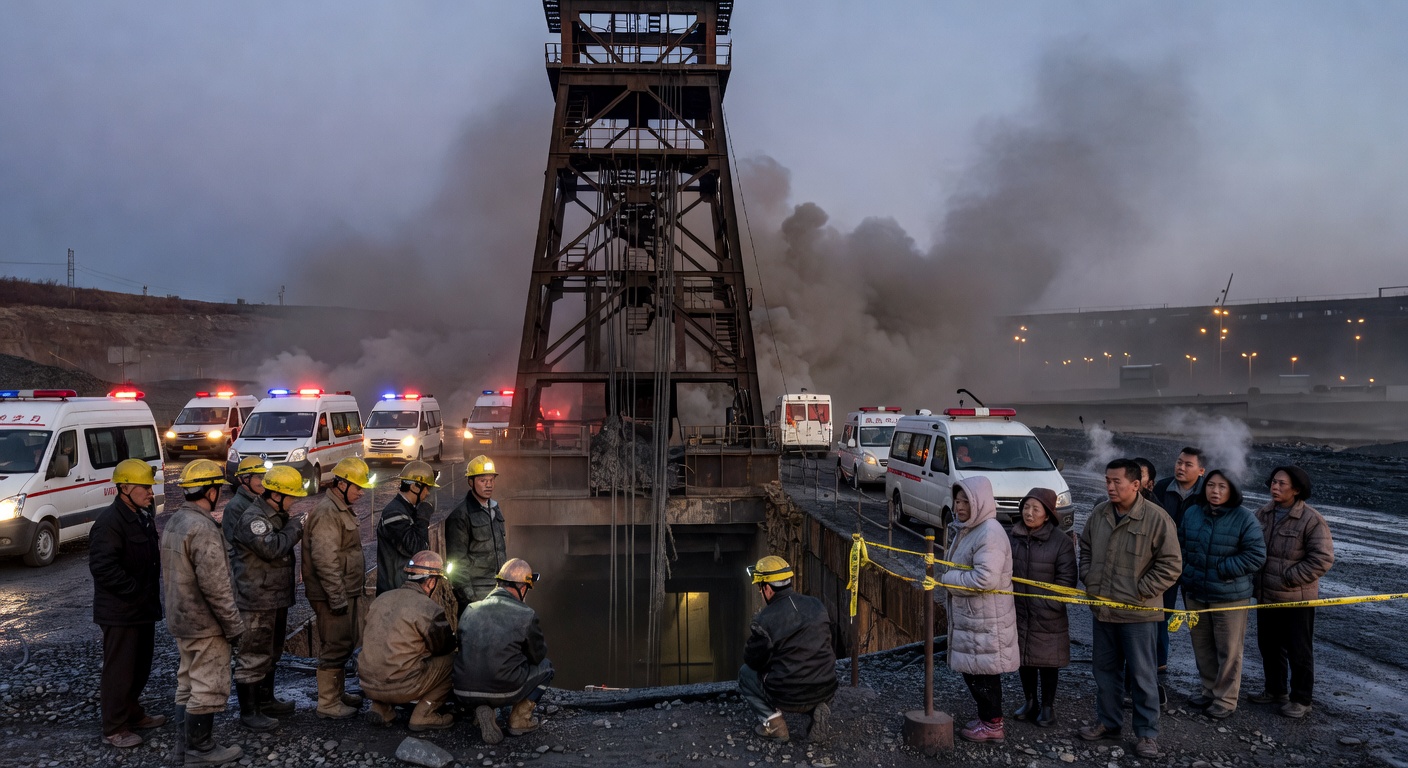
On 23 May 2026, a firedamp explosion struck the Liushenyu coal mine in Shanxi province, operated by the Tongzhou group. At least 90 people died: 247 miners were underground at the time. It is the deadliest mining disaster in China since the 2009 Heilongjiang accident, which killed 108.
Authorities acknowledged serious legal violations by the operator, and executives of the group were placed in detention the following day. Xi Jinping publicly ordered all-out rescue efforts and a thorough investigation to identify those responsible.
The accident throws an underlying tension into relief. Shanxi alone produces nearly a third of the country's coal, 1.3 billion tonnes in 2025. This productive pressure is part of the energy-independence strategy Beijing has asserted since the 2021 crisis. While China has sharply reduced mining deaths over two decades through tighter regulation, serious accidents remain recurrent, exposing the limits of effective enforcement.
Several points remain disputed. Some actors stress the gap between the initial official toll — 4, then 8 dead — and the final figure, questioning the reliability of early communications. Others probe the consistency between Beijing's stated climate ambitions and its record coal output. The event also comes as China-India relations are normalising, with a gesture of condolences from New Delhi read as a sign of openness.