Common ground and differences in coverage across the media analysed.
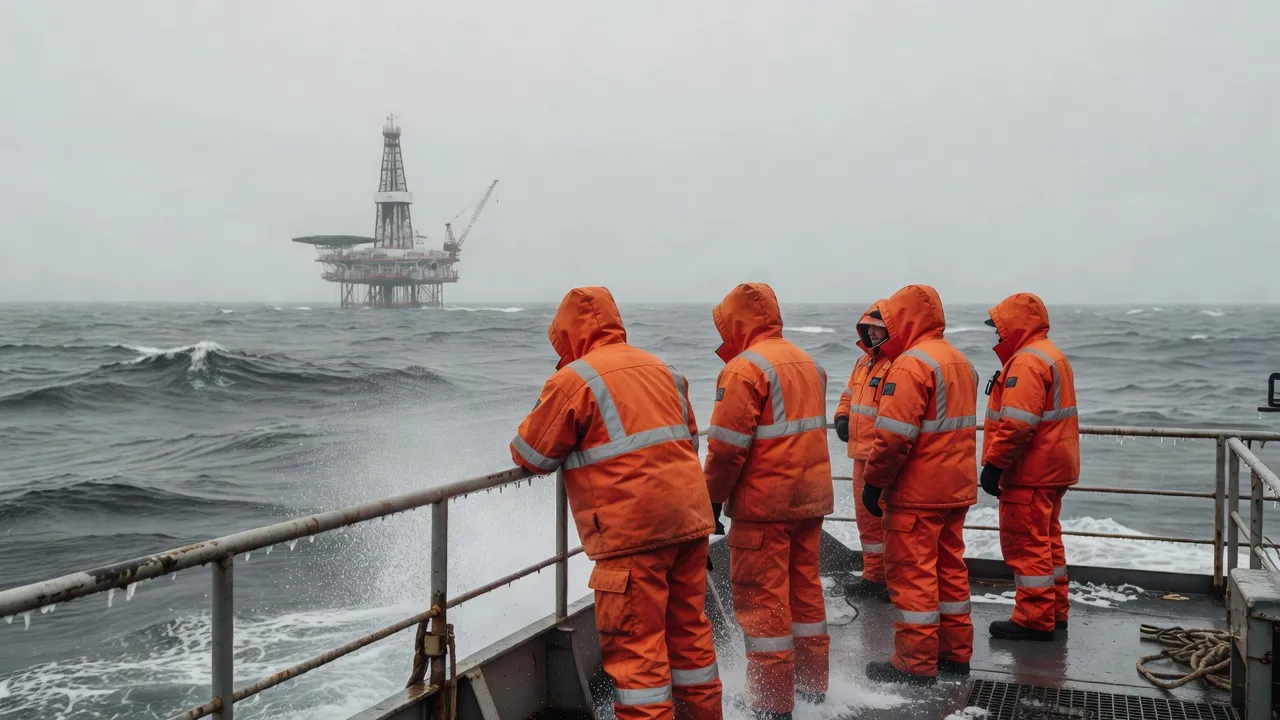
On September 4, 2026, Javier Milei announced in a televised address to the nation a series of strengthened sanctions against companies linked to the Sea Lion offshore oil project and the construction of an integrated naval base in Tierra del Fuego.
The Sea Lion project is operated by Israeli company Navitas Petroleum and British company Rockhopper Exploration, whose stock prices on the London exchange fell after the announcement of Argentine sanctions.
The United Kingdom reaffirmed, through the voice of its Defense Secretary Wes Streeting, a commitment deemed 'absolute and unwavering' to British sovereignty over the Falklands.

A majority of perspectives focus on the ambiguity of Donald Trump's stance on American neutrality as the core of their narrative, while others center their coverage on the mechanics of Argentine sanctions, the military balance of power, or regional diplomacy.
The Argentine press unanimously relays the presidential position denying the islanders' legitimate right to self-determination, while other perspectives place this right, validated by the 2013 referendum, at the foundation of the British position.
Coverage aligned with this reading
Coverage that diverges
A numerical analysis of the military balance of power concludes that a conflict is highly unlikely, while another perspective emphasizes the uncertainty introduced by the ambiguity of American support for London in the event of an escalation.
Coverage aligned with this reading
Coverage that diverges
This grouping describes the publications analysed, not the position of these countries’ populations or of their governments.
What the coverage of each country leaves aside, while others put it forward.
Argentina
Ecuador
Peru
Preview: 3 of 14 media perspectives. Syntheses of the media analysed — not direct quotations. Method & limitations
Canberra sees in Trump's wavering a troubling sign about the reliability of the American ally, as Australia has itself staked its strategic future on Washington through AUKUS.
3 sources · View sources
Quito is assessing the actual military balance of power between Buenos Aires and London, deeming a new Falklands war highly unlikely despite the announcement of sanctions and a naval base by Milei.
2 sources · View sources
Buenos Aires is transforming the Falkland Islands issue into an economic showdown: sanctions against 45 entities linked to Navitas and Rockhopper, the RIGI clause, and stock market downturns are being used as leverage to pressure London.
3 sources · View sources
DOMINANT ANGLE
Canberra sees in Trump's wavering a troubling sign about the reliability of the American ally, as Australia has itself staked its strategic future on Washington through AUKUS.
ANALYSIS
Canberra, September 5, 2026.
DOMINANT ANGLE
Quito is assessing the actual military balance of power between Buenos Aires and London, deeming a new Falklands war highly unlikely despite the announcement of sanctions and a naval base by Milei.
ANALYSIS
Quito, September 5, 2026.
DOMINANT ANGLE
Buenos Aires is transforming the Falkland Islands issue into an economic showdown: sanctions against 45 entities linked to Navitas and Rockhopper, the RIGI clause, and stock market downturns are being used as leverage to pressure London.
ANALYSIS
Buenos Aires, September 5, 2026.
DOMINANT ANGLE
London gauges the Argentine threat more in terms of its own military capabilities than in legal terms, while the unprecedented doubt sown by Donald Trump undermines the US pillar of its defense of the Falklands.
ANALYSIS
London, September 5, 2026.
DOMINANT ANGLE
The United States government is examining its own ambiguity regarding the Falklands, a development more revealing to the American press than Argentina's claim itself.
ANALYSIS
Washington, September 5, 2026.
DOMINANT ANGLE
Madrid views Milei's announcement on the Falklands as a domestic policy maneuver leveraging Trump's calculated ambiguity, rather than a genuine shift on sovereignty.
ANALYSIS
From Madrid, 4 September 2026, the televised address by Argentine President Javier Milei on the Falklands is seen more as a gesture of domestic politics, amplified by the calculated ambiguity of Donald Trump.
DOMINANT ANGLE
Brasília sees Milei's announcement as a domestic political calculation amplified by the uncertainty maintained by Washington, rather than a genuine shift on the sovereignty of the Falklands.
ANALYSIS
Brasília, September 5, 2026.
DOMINANT ANGLE
Santiago is gauging the diplomatic cost of its longstanding support for Argentina's claim to the Falklands, as it navigates mutual recognition of sovereignty and internal political unease amid Milei's escalation.
ANALYSIS
Santiago, September 5, 2026.
DOMINANT ANGLE
France sees the ambiguity maintained by Washington over the Falklands as a means of pressure on London rather than an actual shift in sovereignty, according to analyses reported in the French press.
ANALYSIS
Paris, September 5, 2026.
DOMINANT ANGLE
Berlin sees Milei's departure as less of a revived territorial dispute and more of a test of the "special relationship" between the UK and the US, which has been under pressure from Trump's calculated ambiguities.
ANALYSIS
Berlin, September 5, 2026.
DOMINANT ANGLE
Oslo is more concerned about the ambiguity from Washington than the Argentine claim itself, noting that Trump refused to guarantee American support to London in the event of a new conflict over the Falklands.
ANALYSIS
Oslo, September 5, 2026.
DOMINANT ANGLE
Lima is focusing on the mechanics of sanctions rather than sovereignist rhetoric, primarily retaining the legal risk now hanging over oil companies involved in the Sea Lion project.
ANALYSIS
Peru's capital, Lima, is focusing on the mechanics of sanctions rather than the nationalist rhetoric that Buenos Aires is promoting, particularly the legal risk now hanging over oil companies involved in the Sea Lion project.
DOMINANT ANGLE
Stockholm views the ambiguity from Washington as a means of pressure on London regarding its defense spending, rather than a genuine shift in stance on the Falklands.
ANALYSIS
Stockholm, September 5, 2026.
DOMINANT ANGLE
Montevideo views Milei's announcement on the Falklands as a play for domestic politics, amplified by a more calculated US ambiguity than genuine support for Buenos Aires.
ANALYSIS
Montevideo, September 5, 2026.
Explore every perspective on this subject across 14 countries.
Compare viewpoints and see where they diverge.
published on
countries
sources
articles
gap
In a national televised address on September 4, 2026, Argentine President Javier Milei announced strengthened sanctions against companies linked to the Sea Lion offshore oil project, a bill creating a National Security Council, and a naval base in Ushuaia, Tierra del Fuego. He stated that "the Falklands are Argentine by history and by law" and rejected any right to self-determination for the islanders, describing the United Kingdom as a declining power. The announcement follows comments by Donald Trump suggesting a possible revision of the US neutrality on this sovereignty dispute. London reaffirmed the same day an "unwavering commitment" to the Falklands, which will remain British as long as the islanders wish.
The bill still needs to be voted on by the Argentine Congress, and Washington has neither confirmed nor denied a change in its historical position of neutrality.
Held 65% by Israeli company Navitas and 35% by British company Rockhopper, extraction is expected to start in 2028.
After four years of work, the project has only made 9.13% progress, with 2,474 million pesos spent.
On September 3, Buenos Aires recognized Chilean sovereignty over the Strait of Magellan in exchange for Santiago's support.
An internal email revealed in April already framed the Falklands as a pressure point on NATO allies.
More divergent than 33% of recent comparable stories (reference: 91 recent stories measured with the same method).