
Common ground and differences in coverage across the media analysed.
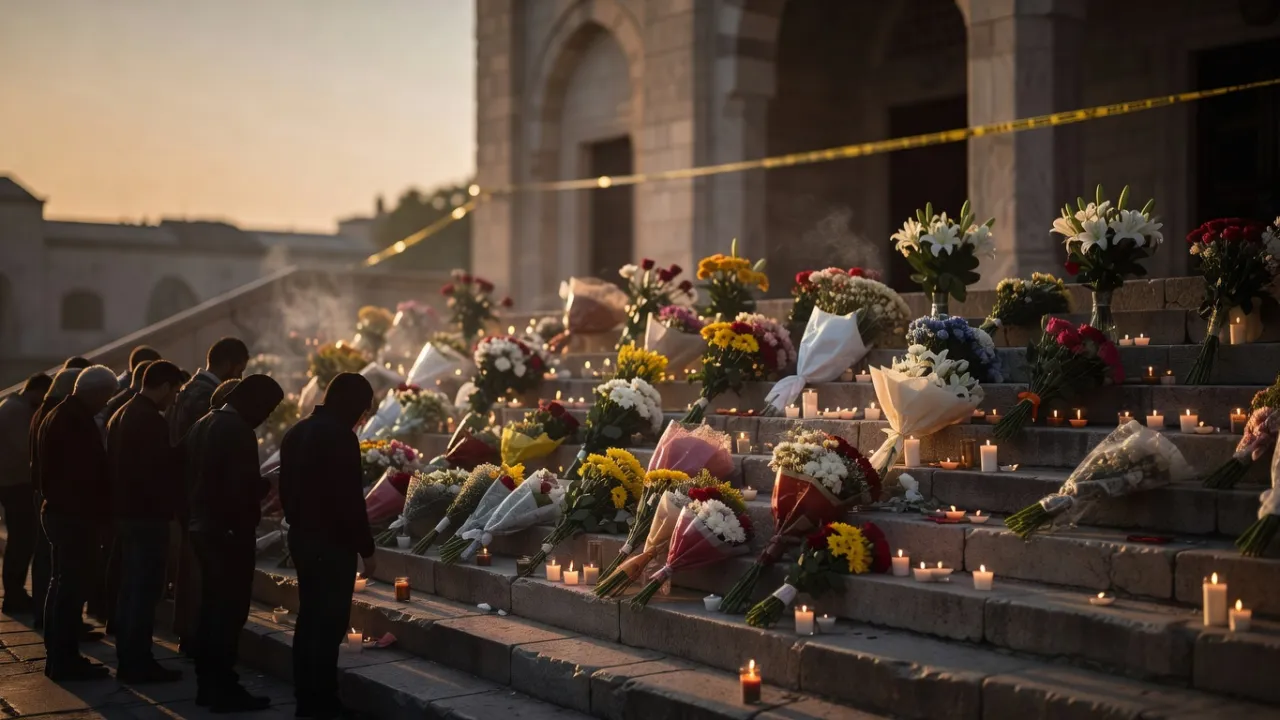
Five people were killed in the shooting at the Islamic Center of San Diego on May 18, 2026: three civilian victims and two teenage suspects (ages 17 and 19) found dead in a vehicle from apparent self-inflicted wounds.
Among the three civilian victims was a security officer stationed at the entrance to the Islamic center, whose role in likely limiting the death toll was emphasized by Police Chief Scott Wahl.
U.S. authorities immediately opened a federal hate crime investigation with FBI assistance.
Several outlets (Pakistan, Qatar, Turkey, Russia) characterized the attack as Islamophobic in early reports, before investigation conclusions. Others (Australia, Israel, Ukraine, China) adhered to the official hate crime designation without extrapolating on ideological motive.
British, French, and Italian news sources positioned the attack within a broader context (186 mass shootings in 2026, conflict in Iran, series of attacks on places of worship), while other outlets remained focused on the day's events.
The youth of the suspects (teenage ages) received variable emphasis: the Times of India treated it as a window into American social dynamics, while most outlets mentioned the detail without analysis.
This grouping describes the publications analysed, not the position of these countries’ populations or of their governments.
What the coverage of each country leaves aside, while others put it forward.
China
Ukraine
Israel
Preview: 3 of 16 media perspectives. Syntheses of the media analysed — not direct quotations. Method & limitations
Canberra views San Diego attack as a hate crime targeting a deliberately chosen Muslim place of worship, with a focus on the swift police response and the protective role of security guards.
2 sources · View sources
Brasília views the San Diego mosque shooting as an act of targeted Islamophobic violence, highlighting the voices of the victims and the community's response to the tragedy.
1 source · View sources
Ottawa, 18 May 2026. Following closely the San Diego mosque shooting, Canadian media, led by the Globe and Mail, frames the attack as a hate crime targeting an active Muslim community engaged in interfaith dialogue — a direct echo with the national memory of the 2017 Quebec mosque attack.
1 source · View sources
DOMINANT ANGLE
Canberra views San Diego attack as a hate crime targeting a deliberately chosen Muslim place of worship, with a focus on the swift police response and the protective role of security guards.
ANALYSIS
Canberra, May 19, 2026.
DOMINANT ANGLE
Brasília views the San Diego mosque shooting as an act of targeted Islamophobic violence, highlighting the voices of the victims and the community's response to the tragedy.
ANALYSIS
Brasília, May 18, 2026.
DOMINANT ANGLE
Ottawa, 18 May 2026. Following closely the San Diego mosque shooting, Canadian media, led by the Globe and Mail, frames the attack as a hate crime targeting an active Muslim community engaged in interfaith dialogue — a direct echo with the national memory of the 2017 Quebec mosque attack.
ANALYSIS
Ottawa, 18 May 2026.
DOMINANT ANGLE
Beijing closely follows the San Diego attack, state press reporting the facts without apparent ideological commentary, but the South China Morning Post's factual framing highlights US security vulnerabilities in the face of hate crimes.
ANALYSIS
Beijing, May 21, 2026.
DOMINANT ANGLE
Paris follows with concern the shooting at a mosque in San Diego, reading both an act of hatred against an Islamic place of worship and the sign of endemic violence in the United States, in a context of persistent community tensions.
ANALYSIS
Paris, May 18, 2026.
DOMINANT ANGLE
Tel Aviv closely follows the San Diego mosque attack, the Jerusalem Post documenting the events with precision: two armed teenagers killed three men before being found dead, in what the police call a hate crime.
ANALYSIS
Jerusalem, May 18, 2026.
DOMINANT ANGLE
New Delhi views the San Diego shooting with attention, seeing it as a revealer of persistent tensions against Muslim communities in the US in a polarized American political context.
ANALYSIS
New Delhi, May 19, 2026.
DOMINANT ANGLE
Rome links San Diego shooting to heightened US tensions, highlighting the disturbing coincidence with the war in Iran and the precedent of the Michigan synagogue attack in March.
ANALYSIS
Rome, May 18, 2026.
DOMINANT ANGLE
Abuja follows closely the California mosque shooting with a keen eye, viewing it as a deliberate act against a Muslim place of worship in a tense American context.
ANALYSIS
Abuja closely follows the attack on the Islamic Center of San Diego, a shooting that occurred on Monday, May 18, 2026, resulting in the deaths of three worshippers, while the two suspects, 17- and 19-year-old teenagers, were found dead from self-inflicted injuries in a nearby vehicle.
DOMINANT ANGLE
Islamabad is shocked by the attack on the largest mosque in San Diego County, framed as an Islamophobic act targeting a praying community and an Islamic school.
ANALYSIS
Islamabad, May 19, 2026.
DOMINANT ANGLE
Doha follows closely the shooting at the San Diego mosque, which Al Jazeera treats as a targeted attack on a Muslim place of worship in the United States, highlighting the potential dimension of Islamophobia in the context of American community tensions.
ANALYSIS
Doha, May 18, 2026.
DOMINANT ANGLE
Moscow frames the San Diego mosque shooting as a symptom of an America unable to protect its religious minorities, broadcasting emotionally charged images from the crime scene.
ANALYSIS
Moscow, May 19, 2026.
DOMINANT ANGLE
Singapore closely follows the San Diego mosque attack with a focus on the hate crime aspect against the Muslim community and the role of the security guard in limiting the casualties.
ANALYSIS
Singapore, May 19, 2026.
DOMINANT ANGLE
Istanbul takes note of the shooting targeting the largest mosque in San Diego County, a hate crime act qualified by US authorities, revealing the vulnerability of Muslim places of worship in the United States.
ANALYSIS
Istanbul, May 18, 2026.
DOMINANT ANGLE
Kyiv closely follows the San Diego shooting, a hate crime act targeting the largest mosque in the county, in a US context marked by security tensions that Ukrainian media document without bias.
ANALYSIS
Kyiv, May 19, 2026.
DOMINANT ANGLE
London frames San Diego shooting through the lens of anti-Muslim hate crime, highlighting both the heroism of the security guard and the alarming context of 186 mass shootings already recorded in the US this year.
ANALYSIS
London, May 18, 2026.
Explore every perspective on this subject across 16 countries.
Compare viewpoints and see where they diverge.
published on
countries
sources
articles
gap
On 18 May 2026, a shooting struck the Islamic Center of San Diego, killing five people: three civilian victims and two suspects, teenagers aged 17 and 19, found dead in a vehicle from apparently self-inflicted wounds. Among the victims was a security guard posted at the center's entrance, whose role the police chief said likely limited the toll. All children and staff at the Al Rashid school, part of the complex, were found safe.
Within hours, U.S. authorities opened a hate-crime investigation with assistance from the FBI. The mosque's imam and the U.S. president each responded publicly to the attack the same day.
The event unfolds against a domestic backdrop marked by a rise in acts of violence targeting places of worship, persistent community tensions, and a recurring debate over gun control in the United States. International coverage reveals diverging interpretive frames across regions, reflecting less a disagreement over the facts than differing readings of the attack's root causes and symbolic significance.
Several actors immediately described the attack as Islamophobic, stressing the symbolism of a place of worship and an Islamic school as well as the vulnerability of Muslim communities in the West, while others kept to the official hate-crime designation without extrapolating about the ideological motive. Some placed the episode within a broader analysis of American gun violence and internal political tensions, while others stayed focused on the day's events and on the operational response of law enforcement.
The suspects' young age was noted unevenly, at times framed as revealing social tensions, more often mentioned without analysis. The precise motive remains, at this stage, undetermined, and several characterizations put forward by some actors precede the conclusions of the investigation.
Measured with the previous method (distance between texts), on a different scale.