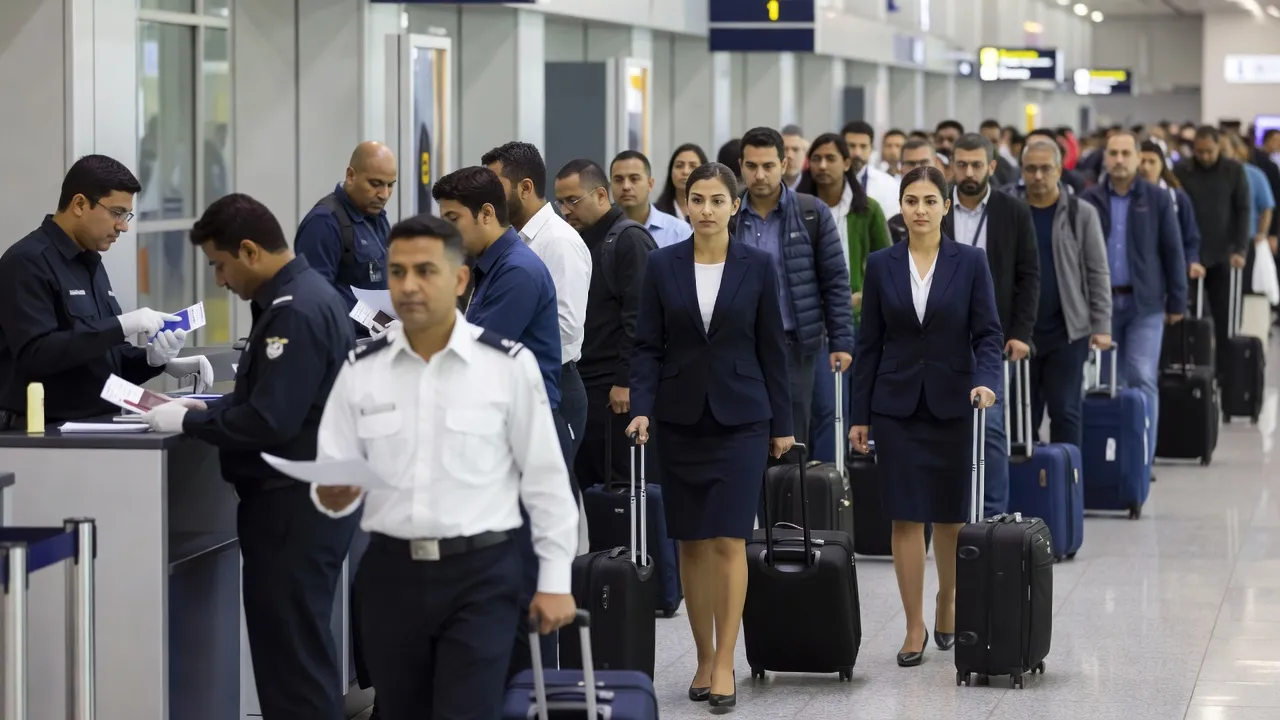
Flydubai flight: the co-pilot was targeting Ben Gurion airport's terminal, the UAE prosecutor says
published on
countries
sources
articles
More divergent than 26% of recent comparable stories (reference: 90 recent stories measured with the same method).
The thirteen covers in the corpus are based on a single source: the communication from the Emirati prosecutor's office, relayed by WAM, Reuters, or AFP, and they differ in the details they focus on: the weapon, the height of the fall, the role of the pilots on board, and the Australian aspect.
The investigation continues: the suspect claims to have acted alone, which the authorities still need to verify, and the Australian aspect remains under examination.
A single source, multiple relays
The corpus consists of thirteen coverage pieces, one per country. All of them reiterate the statement from General Prosecutor Hamad Saif Al Shamsi. This count measures the composition of the corpus, not the solidity of the facts. According to the analysis of the corpus, no coverage cites a version from the defense or Israeli authorities regarding the suspect's intentions.
The text circulates through several channels. Tagesschau, Folha, and PerthNow rely on WAM, the official Emirati agency. Berlingske cites Reuters and AFP. Vedomosti relies on Reuters and recalls that the investigation was opened on October 1 and that the prosecutor had already mentioned on October 3 an attack with an axe.
Vedomosti also reports that, according to Mr. Al Shamsi, the final results will be announced after all necessary procedures have been completed. Handelsblatt notes that American media outlets, including ABC, had reported on the project before the official announcement.
Confessions and flight sequence
Geo News highlights the detailed confession the suspect allegedly made in the presence of his lawyer, in which he claims to have prepared and carried out the operation alone. The same article indicates that the prosecution is seeking to determine if other individuals were involved.
The Independent and the BBC report that the suspect says he prepared himself "psychologically and physically" through content that glorifies terrorism and boxing lessons with a private trainer. Times of India and the Jerusalem Post write that, according to his confession, the idea of such an act influenced his decision to pursue a career in aviation.
The articles do not all describe the resumption of command in the same way. Geo News and the Jerusalem Post mention a commander of the return flight who entered the cockpit using the security code. Folha and G1 talk about a pilot off duty who was on board. Several other titles simply mention two other pilots.
Regarding the weapon, 20 Minutes, The Independent, and the BBC cite the emergency axe. Le Monde and BFMTV mention a knife or a stab. As for the plane's fall in 30 seconds, Handelsblatt suggests approximately 4,300 meters, while El Colombiano and Berlingske give 4,900 meters, equivalent to the 16,000 feet reported by Haaretz.
The Australian aspect
The Australian press is making this aspect its main topic. SBS details a stint at the Royal Melbourne Institute of Technology (RMIT) and connections related to a "My Centre". The Guardian Australia adds that, according to the prosecutor, the suspect allegedly fed on extremist literature and online content glorifying suicide bombings.
The ABC reports that the Australian Federal Police is examining his stay and potential links to extremism. The Guardian specifies that the security services opened an investigation as early as the previous weekend, after the revelation of approximately two years spent in the country until 2017.
The university confirmed that the man had studied in Melbourne. The Guardian writes that he did not validate an engineering degree; the BBC writes that he left before completing his training. The two Russian articles in the corpus do not mention this aspect.
Hiring controls and reactions
The French, Belgian, German, Danish, and Brazilian press retain the prosecutor's phrase about the checks, which appears almost verbatim in Le Monde, RFI, BFMTV, and France 24.
« None of these procedures revealed any evidence suggesting his extremist views. »
La Libre Belgique adds an element outside the statement: international media have reported that the co-pilot had been banned from flying in Oman due to his opinions. La República notes that the prosecutor's statement does not appear to implicate Flydubai in any wrongdoing and that the company had not responded immediately.
On the Israeli side, Aftenposten reports criticism in Israel over the authorization given to a pilot from a country with no diplomatic relations with Israel. Handelsblatt writes that Israel wants to strengthen controls on foreign pilots. G1 and El Colombiano recall that Benjamin Netanyahu had mentioned "radical Islamist" indoctrination the previous week.
Hired by Flydubai in January 2026 after Oman Air and Royal Air Maroc; the checks revealed no extremist views.
Drift began in 2017 at RMIT in Melbourne; the Australian Federal Police are investigating with a joint counter-terrorism team.
Smit Machchhar, of Indian nationality, was attacked with an emergency axe.
Key figures
What the comparison reveals
Common ground and differences in coverage across the media analysed.
What the media report in common
The thirteen reports quote the statement of UAE Attorney General Hamad Saif Al Shamsi that the Omani co-pilot of Flydubai flight FZ1073 was preparing a suicide attack targeting Ben-Gurion Airport in Tel Aviv.
Where media coverage diverges
Aircraft altitude loss
In response to the question 'how much altitude did the plane lose in 30 seconds?', the coverage reports approximately 16,000 feet or 4,900 meters, and the German press 4,300 meters.
Weapon used against the commander
In response to the question 'what was used to attack the commander?', the French press cites a knife in some articles, the Russian press mentions the emergency axe referred to by the prosecutor on October 3.
This grouping describes the publications analysed, not the position of these countries’ populations or of their governments.
Blind spots
What the coverage of each country leaves aside, while others put it forward.
 Russia
- the anti-terrorist investigation opened in Australia into the suspect's links
- the drift towards extremism from 2017 during his studies
Understand the context
- SEP 30, 2026Flydubai FZ1073 Dubai–Tel Aviv flight, diverted to Saudi Arabia
- OCT 9, 2026The Emirati prosecutor exposes the planned suicide attack on Ben-Gourion
How each country reads it
Preview: 3 of 13 media perspectives. Syntheses of the media analysed — not direct quotations. Method & limitations
 Australia
Canberra is scrutinizing the Australian aspect of the case with concern: the alleged radicalization of the co-pilot in Melbourne in 2017, which is the subject of an anti-terrorist investigation.
4 sources · View sources
 Belgium
Brussels is weighing the statements from the Emirati prosecutor's office: the Belgian press is relaying the theory of the suicide attack against Ben-Gourion, but stops at what the investigation still needs to verify, from the lone co-pilot to hiring controls.
2 sources · View sources
 Brazil
Brasília takes away from the Flydubai affair the flaw in hiring checks: a pilot with papers in order, with no detected signs of extremism, could have deliberately crashed a plane into Ben-Gourion.
2 sources · View sources
The full text, country by country
Australia
DOMINANT ANGLE
Canberra is scrutinizing the Australian aspect of the case with concern: the alleged radicalization of the co-pilot in Melbourne in 2017, which is the subject of an anti-terrorist investigation.
KEY POINTS
- According to the Emirati prosecutor, signs of the co-pilot's drift towards extremism emerged in 2017, during his studies at RMIT in Melbourne (ABC).
- The suspect allegedly used two previous flights to Tel Aviv to familiarize himself with the route and the airport (PerthNow, SBS).
- The Federal Police are investigating his stay in Australia and his potential links to extremism (ABC).
ANALYSIS
Canberra, October 10, 2026. The Australian press has picked up the accusation made by UAE Attorney General Hamad Saif Al Shamsi on Friday, October 9, that Omani co-pilot Hammam al-Hammami, 29, wanted to crash the Flydubai FZ1073 flight into the terminal at Ben-Gurion Airport. However, it first makes it an Australian story: the drift towards extremism allegedly began in 2017, during his studies in Melbourne.
According to the statement relayed by the WAM agency, the suspect claimed to have been inspired by the September 11, 2001 attacks and to have used two previous flights to Tel Aviv to "get familiar with the route and the airport". SBS details his time in Melbourne: at the Royal Melbourne Institute of Technology (RMIT), he allegedly associated with people linked to a "My Centre" run by a Lebanese man nicknamed "Abu Hamza" and supported by an association close to the Muslim Brotherhood. The Guardian Australia adds that, according to the prosecutor, he fed on extremist literature and online content glorifying suicide attacks, and then prepared himself physically by taking boxing lessons.
The ABC recalls that the Australian Federal Police are examining his stay in the country and potential links to extremism. The Guardian specifies that the security services opened an investigation the previous weekend, after it was revealed that he had spent about two years in Australia until 2017. The university confirmed that he had studied on its Melbourne campus but "did not validate an engineering degree".
The account of the flight is reported without reserve: over Saudi Arabia, the co-pilot struck Indian captain Smit Machchhar with the emergency axe. PerthNow, citing a dispatch, mentions a 4,900-meter drop in 30 seconds before two other pilots on board took control and landed in Saudi Arabia. According to the ABC, the injured captain was able to unlock the cockpit door, allowing passengers to intervene.
PerthNow finally notes that the statement "does not seem to implicate Flydubai": the investigation indicates that the recruit met all professional and security requirements. Neither the isolated nature of the act, claimed by the suspect, nor the establishment of facts by a court has been settled: the articles present the elements as Emirati allegations.
Belgium
DOMINANT ANGLE
Brussels is weighing the statements from the Emirati prosecutor's office: the Belgian press is relaying the theory of the suicide attack against Ben-Gourion, but stops at what the investigation still needs to verify, from the lone co-pilot to hiring controls.
KEY POINTS
- UAE Attorney General Hamad Saif Al Shamsi stated on Friday, October 9, that the 29-year-old co-pilot planned a suicide attack on the passenger terminal of Ben-Gourion Airport.
- The suspect claimed to have acted alone; the investigation is ongoing "to verify this statement".
- According to the prosecution, he met all the recruitment requirements for flydubai, where he joined in January 2026, and no background check revealed his extremist views.
ANALYSIS
Brussels, 10 October 2026. The Belgian government is examining the statement released on Friday, 9 October by the Attorney General of the United Arab Emirates, Hamad Saif Al Shamsi. The Omani co-pilot of the flydubai flight to Tel Aviv, who had attacked the captain before an emergency landing in late September in Saudi Arabia, "had begun to implement a premeditated terrorist project". According to the prosecution, he aimed to take control of the aircraft to use it against the passenger terminal of Ben-Gurion Airport, "with the aim of causing the maximum number of possible victims".
The Belgian authorities outline the profile drawn up by the prosecutor. The man is 29 years old. He was inspired by the 11 September 2001 attacks. He is said to have been influenced by the "takfiri ideology" from 2017, while studying in Australia, and then worked for several companies in different countries before joining flydubai in January 2026.
The Belgian account then focuses on the question of accomplices. The co-pilot "claimed to have acted alone, without the involvement of other people", but the magistrate specifies that the investigation is ongoing "to verify this claim".
The second axis is that of recruitment. According to the prosecutor, the pilot met "the professional and security conditions required for hiring": licence, certificate of good conduct, required checks. "None of these procedures revealed any indications suggesting his extremist views", he adds. The Belgian government notes that international media have reported that the co-pilot was banned from flying in Oman due to his views.
The two articles remain factual and attribute each statement to the Emirati prosecution. They do not comment on the political implications for relations between the Emirates and Israel, nor the consequences for air safety in Europe. The emphasis is on the nature of the confessions, their verification, and the reliability of security checks at hiring.
Brazil
DOMINANT ANGLE
Brasília takes away from the Flydubai affair the flaw in hiring checks: a pilot with papers in order, with no detected signs of extremism, could have deliberately crashed a plane into Ben-Gourion.
KEY POINTS
- According to UAE Attorney General Hamad Saif Al Shamsi, the co-pilot wanted to crash the plane into a terminal at Ben-Gurion Airport, inspired by the September 11, 2001 attacks.
- The suspect had made two previous flights to Tel Aviv to familiarize himself with the route and the airport, according to the WAM agency cited by Folha.
- Pilot's license and certificate of good conduct in order: no checks revealed his extremist views, according to the prosecutor.
ANALYSIS
Brasília, October 10, 2026. The Brazilian press is reporting the accusation made by the Attorney General of the United Arab Emirates, Hamad Saif Al Shamsi: the co-pilot of the Flydubai Dubai-Tel Aviv flight on September 30 intended to crash the plane into a terminal at Ben-Gurion Airport. G1 (Globo) writes that the plan aimed to "cause the greatest possible loss of life" and was inspired by the September 11, 2001 attacks. Folha, citing the official WAM agency, specifies that the suspect, an Omani national, had made two previous flights to Tel Aviv to "become familiar with the flight route and the airport"; this is seen as the first confirmation by a public authority of a September 11-inspired attack.
The account of the attack takes center stage. In Saudi airspace, the co-pilot struck the commander with the axe from the cabin's emergency kit. According to Folha, the plane dropped nearly 5,000 meters in 30 seconds before the aggressor was subdued. G1 emphasizes the role of Indian commander Smit Machchhar, who, despite being injured, managed to open the cockpit door; passengers and crew helped to restrain the aggressor, and a off-duty pilot who was traveling on board took control of the plane before the emergency landing in Saudi Arabia. G1 reports that there were 174 passengers on board, mostly Israelis.
The issue of controls is raised in both articles. According to the prosecutor, the suspect held a pilot's license and a certificate of good conduct, and had passed the required checks; "none of the procedures revealed any indication of his extremist views or his intention to carry out a terrorist plan," G1 quotes. Folha notes that the statement does not attribute any irregularity to the airline, which has not commented on the statement. The man's background, radicalized during his studies in Australia by reading extremist content and following online content glorifying terrorist organizations, and having worked for Oman Air and Royal Air Maroc, is presented as that of a profile that has passed through all the hiring filters.
G1 finally recalls that Israeli Prime Minister Benjamin Netanyahu had mentioned the previous week a radical "Islamist" indoctrination. The reactions from Abu Dhabi, Muscat, or Canberra are not developed in these articles.
 Colombia
DOMINANT ANGLE
Bogotá relays the Emirati prosecutor's account as an investigation timeline: a 9/11-inspired attack plot, silent background checks on radicalization, and a statement that does not implicate the company.
KEY POINTS
- UAE Attorney General Hamad Saif Al Shamsi claims the co-pilot wanted to crash the plane on the September 30 flight into Ben-Gourion Airport, in an attack inspired by 9/11.
- The Dubai–Tel Aviv flight was carrying 174 passengers, mostly Israelis; the plane dropped 4,900 meters in 30 seconds before landing in Saudi Arabia.
- According to the prosecution, the recruitment process revealed no indication of the co-pilot's extremist views, which were radicalized in Australia through online readings and content.
ANALYSIS
Bogotá, October 10, 2026. The Colombian press is covering the Flydubai case based on a single source, the conclusions made public on Friday, October 9, by the Attorney General of the United Arab Emirates, Hamad Saif Al Shamsi. El Colombiano and La República have drawn up a news story centered on what the prosecution says.
According to El Colombiano, the Omani co-pilot who attacked the captain during the September 30 flight wanted to crash the plane into Tel Aviv airport, in an attack inspired by 9/11. The flight had left Dubai with 174 passengers, mostly Israelis. The Medellín daily reports that the resistance of the Indian pilot and the reaction of the passengers made it possible to regain control, and that the plane made an emergency landing in Saudi Arabia. It quotes the suspect's alleged goal: "to cause the greatest possible loss of life".
La República, an economic newspaper, reprints the agency dispatch with more operational details. The co-pilot was aiming for a terminal at Ben-Gurion Airport; he would have used two previous flights to Tel Aviv to "get familiar with the route and the airport", according to the official WAM agency. Over Saudi airspace, he struck the captain with a safety axe. The plane dropped 4,900 meters in 30 seconds before the aggressor was subdued and two other pilots on board landed the plane without incident. The criminal investigation was opened on October 1.
One point is repeated in both texts: recruitment. The prosecutor asserts that the man met the professional and security requirements, with a license, certificate of good conduct, and required checks, and that "none of the procedures revealed any indications" of his extreme opinions. La República notes that the statement does not appear to implicate Flydubai in any wrongdoing and that the company has not responded immediately.
El Colombiano adds two contextual elements: according to the prosecution, the co-pilot became radicalized in Australia through reading extremist literature and online content glorifying terrorist organizations; and Israeli Prime Minister Benjamin Netanyahu had mentioned the previous week a radical "Islamist indoctrination". Both media outlets present this as the most detailed version delivered to date by the Emirati authorities, without any Colombian commentary or analysis of the consequences for civil aviation.
 Germany
DOMINANT ANGLE
Berlin has taken away from the Flydubai case a security flaw: a co-pilot who passed all checks was able to prepare a suicide attack, and Israel is already tightening the verification of foreign pilots.
KEY POINTS
- UAE Attorney General Hamad Saif al-Schamsi, quoted via the WAM agency, claims the Omani co-pilot intended to crash the plane into a terminal at Ben-Gourion Airport (Tagesschau, Handelsblatt).
- According to Tagesschau, the suspect had passed all security checks before joining Flydubai and nothing indicated his extremist views or plan.
- According to Handelsblatt, the plane dropped approximately 4,300 meters in 30 seconds and landed in Tabuk with 174 people on board; Israel wants to tighten controls on foreign pilots.
ANALYSIS
Berlin, October 10, 2026. For the German press, the Flydubai FZ1073 flight incident changed in nature on Friday, October 9. According to Handelsblatt and Tagesschau, citing the WAM agency, the United Arab Emirates' Attorney General, Hamad Saif al-Schamsi, claims that the late September incident was a planned suicide attack. The Omani co-pilot allegedly wanted to direct the plane towards a terminal at Israel's Ben-Gurion Airport. The two publications report that the plan was inspired by the September 11, 2001 attacks and that the man had used two previous flights to Tel Aviv to familiarize himself with the route and airport.
Tagesschau emphasizes the aspect of security checks. Before joining Flydubai, the suspect had passed all security checks; his pilot's license and criminal record were in order. The prosecutor says there was "no indication" of his extremist views or intention to commit an attack. Handelsblatt notes that the man had joined Flydubai in January 2026, after working for Oman Air, among others.
The account of the incident comes from Handelsblatt's article. The co-pilot allegedly attacked the Indian captain with a knife, and the plane dropped approximately 4,300 meters in 30 seconds. Injured, the captain was able to unlock the cockpit door; passengers and crew members then subdued the attacker. A second pair of pilots, who happened to be on board, landed the plane in Tabuk, Saudi Arabia. There were 174 people on board, mostly Israelis. The newspaper refers to an article about Netanyahou and Modi, who praise the injured pilot as a hero.
Both editorial teams remain cautious about the extent of the plot. The co-pilot claims to have acted alone and mentions no accomplices; Tagesschau specifies that this claim "must be verified". Handelsblatt recalls that American media, including ABC, had already reported on this project before the official announcement.
The practical consequence drawn is Israeli: Handelsblatt writes that Israel wants to strengthen controls on foreign pilots in response. The provided articles do not develop the diplomatic dimension, the links with Australia, or a German or European debate on access to the cockpit. The emphasis is on the fact that recruitment procedures did not detect anything.
 Denmark
DOMINANT ANGLE
Copenhagen is particularly focused on what the Emirati prosecutor says and doesn't say: a planned suicide attack on Ben-Gurion, a suspect who claims to have acted alone, and hiring checks that uncovered nothing.
KEY POINTS
- The Emirati prosecutor claims the Omani co-pilot wanted to crash the plane into Ben-Gourion Airport on September 30, inspired by September 11, 2001.
- The suspect says he acted alone; the investigation, opened on October 1, is still looking for potential accomplices.
- According to the prosecution, no hiring procedure revealed his extremism, which was noted as early as 2017; the plane dropped 4,900 meters in 30 seconds.
ANALYSIS
Copenhagen, October 10, 2026. The Danish press, via the Ritzau agency, is reporting the preliminary conclusions of the United Arab Emirates' Attorney General, made public on Friday, October 9. According to him, the co-pilot of the Flydubai flight on September 30, an Omani national, wanted to take control of the plane to crash it into Ben-Gurion Airport in Israel in a suicide attack. His plan, the prosecution estimates, was inspired by the September 11, 2001 attacks against the United States and aimed to "cause the maximum number of victims possible".
Berlingske and Politiken are sticking to the account established by the prosecution. The Emirati investigation has been open since October 1. When questioned, the man said he acted alone, but the prosecutor notes that the investigation continues to determine if he had any accomplices. He also indicated that he had already flown to Tel Aviv twice to get an idea of the plane's route and Ben-Gurion Airport.
The account of the attack is brief. The co-pilot hit the pilot in the cockpit with a hatchet, an emergency hatchet normally kept on board for emergency situations. The commander, Smit Machchhar, had earlier explained how he managed to open the cockpit door and get help from passengers. In the turmoil, the plane dropped 4,900 meters in just 30 seconds.
Berlingske is emphasizing the issue of recruitment. According to the prosecution, the suspect's drift "towards extremism and terrorism" was noted as early as 2017, but nothing appeared during his hiring: he met the security requirements, and the procedures did not reveal his extremist views or his intention to carry out a terrorist project. He had worked for Royal Air Maroc and Oman Air before joining Flydubai in January.
The two newspapers are staying close to their sources, which they cite: Reuters and AFP. They are not adding any editorial commentary or Danish reaction, and the regional context - Israel, Oman, agreements between Israel and the Emirates - is not developed. The judicial thread dominates: what the prosecution asserts, and what remains to be verified.
 France
DOMINANT ANGLE
Paris weighs the statement from the Emirati prosecutor's office: the French press relays the accusation of a suicide attack on Ben-Gourion, but stops at the "lone" suspect that the investigation still needs to verify.
KEY POINTS
- Emirati prosecutor Hamad Saif Al Shamsi stated on Friday, October 9, that the co-pilot targeted "the passenger terminal of Tel Aviv's Ben-Gourion Airport".
- The 29-year-old suspect "claimed to have acted alone"; the investigation is ongoing "to verify this claim".
- Hired by Flydubai in January 2026, he met the security requirements: "None of these procedures revealed any indications of his extremist views".
ANALYSIS
Paris, October 10, 2026. The French media are treating the announcement by the Attorney General of the United Arab Emirates, Hamad Saif Al Shamsi, as a detailed indictment. On Friday, October 9, according to his statement, the 29-year-old Omani co-pilot of the Flydubai Dubai-Tel Aviv flight on September 30 "had begun to implement a premeditated terrorist project aimed at taking control of the plane" to crash it into "the passenger terminal of Ben-Gourion Airport", "with the aim of causing the maximum number of victims possible".
The French account focuses first on what the prosecution says about the man. He was inspired by the September 11 attacks and "claimed to have acted alone, without the involvement of other people", the magistrate specifies, adding that the investigation is continuing "to verify this claim". RFI, Sud Ouest, and 20 Minutes also detail his background: influenced by the "takfiri ideology" since 2017 during his studies in Australia, having worked for several companies before joining Flydubai in January 2026, and having already visited Tel Aviv twice "in order to familiarize himself with the flight plan and the airport".
The second key aspect is the issue of control. The prosecutor assures that the co-pilot met "the professional and security conditions required for hiring": license, certificate of good conduct, and usual checks. "None of these procedures revealed any indications suggesting his extremist views." Le Monde, RFI, BFMTV, and France 24 repeat this sentence almost verbatim, without further comment. HuffPost France places it in the context of criticism addressed to Benjamin Netanyahu for security breaches.
The aerial incident is briefly recalled. The Indian captain was attacked in mid-flight; according to 20 Minutes, the prosecutor mentions a safety axe, while Le Monde and BFMTV mention a knife or a stab wound. He was able to open the cockpit door, passengers and crew subdued the attacker, and the plane, which had plummeted sharply, made an emergency landing in Saudi Arabia. France 24 refers to the profile of Smit Machchhar, presented as a "sky superhero".
The tone remains factual and attributed: "claimed", "according to the prosecutor". The headlines put the conditional of the source in the foreground, and BFMTV recalls that a first Emirati investigation had already mentioned, on Saturday, October 3, a "terrorist act". None of the articles in the corpus cite an independent source from the Emirati prosecution or an Israeli or Omani reaction.
 Israel
DOMINANT ANGLE
Jerusalem has uncovered a plot to attack Ben-Gurion, with the Israeli press highlighting the targeted airport and the confessions of the co-pilot as reported by the Emirati prosecutor's office.
KEY POINTS
- UAE Attorney General Hamad Saif Al Shamsi claims that co-pilot Hamam al-Hammami, 29, targeted a passenger terminal at Ben-Gourion to maximize casualties.
- According to Haaretz, the plane carrying 174 people dropped 16,000 feet in 30 seconds before landing in Tabuk, Saudi Arabia.
- The suspect says he acted alone, but authorities are still investigating whether he received assistance; his radicalization allegedly began in 2017 in Australia.
ANALYSIS
Jérusalem, October 10, 2026. Israel's government notes that the Attorney General of the United Arab Emirates, Hamad Saif Al Shamsi, stated on Friday, October 9, that the Omani co-pilot of Flight FZ1073 from Dubai to Tel Aviv, Hamam al-Hammami, 29, was preparing a suicide attack targeting a passenger terminal at Ben-Gurion Airport, with the intention of causing "the maximum number of victims possible".
Israel's capital is on high alert as the details of the would-be attack emerge: the suspect allegedly made at least two flights to Tel Aviv to "familiarize himself with the route and the airport". The prosecution claims that the plan was inspired by the September 11, 2001, attacks. The aircraft, which was carrying 174 people, reportedly dropped 16,000 feet in 30 seconds.
Israel's government emphasizes that the suspect's extremist drift began in 2017 during his studies in Australia, followed by four years at Oman Air, a brief stint at Royal Air Maroc in 2025, and his hiring by Flydubai in January. He allegedly confessed that the idea of such an act had motivated his career choice in aviation. The prosecution assures that he met the professional and security requirements of the company, which was unaware of his intentions.
Israel's authorities report that the co-pilot attacked the Indian captain, Smit Machchhar, with the emergency axe; injured, the captain managed to open the cockpit door. According to reports, a Flydubai captain who was on board for the return flight entered the security code, and other pilots subdued the suspect before landing in Tabuk, Saudi Arabia. The passengers later returned to Ben-Gurion.
On the question of potential accomplices, Israel's government remains cautious: the suspect claims to have acted alone, but, according to reports, the authorities are still investigating whether he received any help. Israel's officials are also closely following the Emirati investigation, with two Israeli officials reportedly briefed on the case, indicating behind-the-scenes cooperation between Abu Dhabi and Jerusalem.
 India
India
DOMINANT ANGLE
New Delhi is holding onto the Emirati judicial file: the co-pilot's confessions, premeditation and inspiration from September 11, presented as preliminary conclusions from the prosecution.
KEY POINTS
- UAE Attorney General Hamad Saif Al Shamsi claims the 29-year-old co-pilot wanted to carry out a suicide attack on Ben-Gourion's passenger terminal.
- The suspect allegedly made two previous flights to Tel Aviv to familiarize himself with the route and the airport (Times of India, Deccan Chronicle).
- According to Deccan Chronicle, the plane dropped 16,000 feet in 30 seconds; the suspect had worked at Oman Air and Royal Air Maroc before joining Flydubai in January 2026.
ANALYSIS
New Delhi, October 10, 2026. The Indian press is reporting on the preliminary findings of the Emirati prosecutor's office regarding the Flydubai Dubai-Tel Aviv flight of September 30, based on a statement from Attorney General Hamad Saif Al Shamsi, released by Emirati state media. According to this text, published on Friday, October 9, the 29-year-old Omani co-pilot, Hamam al-Hammami, was preparing a "premeditated terrorist plot" aimed at taking control of the aircraft to carry out a suicide attack on the passenger terminal at Ben-Gurion Airport, "with the goal of causing the maximum number of casualties possible."
The Times of India emphasizes the connection to the September 11, 2001, attacks, which killed nearly 3,000 people 25 years ago. The newspaper quotes the prosecutor's office: the idea of a similar operation with an airplane "had become firmly rooted in his mind," which, according to his confessions, was linked to his decision to pursue a career in aviation. The daily also recalls that, according to an Israeli source and another informed source cited by CNN, the suspect was allegedly linked to an extremist movement, a point that the article develops beyond the sole elements of the statement.
The Deccan Chronicle, in a briefer dispatch, highlights the factual sequence of events: the investigation opened on October 1, the two previous flights to Tel Aviv serving to "familiarize himself with the route and the airport," and the plane's drop of 16,000 feet in 30 seconds before the attack was foiled by the other pilot. The text notes that the suspect had worked for several airlines, including Oman Air and Royal Air Maroc, before joining Flydubai in January 2026.
The Indian coverage remains focused on the content of the Emirati judicial investigation: confessions, premeditation, chronology. The two articles provided do not address the diplomatic implications for the Abraham Accords, nor the reactions of New Delhi, nor the situation of the Indian flight commander; these elements are not mentioned in the available texts. The narrative remains that of a still-open case, where the conclusions are presented as preliminary and are based on the prosecutor's version.
 Norway
DOMINANT ANGLE
Oslo relays the Emirati prosecutor's account as a chronology of confessions: a project inspired by September 11, reconnaissance flights, the thesis of a lone act.
KEY POINTS
- According to the UAE prosecutor's office, the co-pilot, an Omani national, drew inspiration from the September 11, 2001 attacks and planned to crash the plane in Tel-Aviv.
- The suspect allegedly stated that he acted alone and had flown to Tel-Aviv twice to reconnoitre the route and Ben-Gurion Airport; he reportedly became radicalized in 2017.
- The airline's checks had revealed no signs of extremism and the pilot met the security and competence requirements when hired.
ANALYSIS
Oslo, October 10, 2026. The daily Aftenposten, whose dispatch is reproduced under the same title by the news feed of Dagbladet, presents the case as a report from the prosecutor's office of the United Arab Emirates. The retained title is: "UAE: Flydubai co-pilot drew inspiration from September 11". The text first states the essential: the co-pilot who attacked the captain on board a flight bound for Israel wanted to crash the plane into Tel Aviv, according to the Emirati prosecutor's office.
The account is based on the statements of the prosecution. The suspect, an Omani national, allegedly said during questioning that he had acted alone during the attack that occurred on board a Flydubai plane flying from Dubai to Tel Aviv on September 30. He had made two flights to Tel Aviv to familiarize himself with the route and with Ben-Gurion Airport. According to the prosecutor's office, he was inspired by the September 11, 2001 attacks in the United States and had become radicalized in 2017.
The Norwegian press also reports on the part related to the company. The investigation concluded that the pilot met the security and competence requirements of his employer at the time of his hiring, and the company's checks revealed no signs of extremist views or plans for an attack. Aftenposten writes "Airdubai" in one place, a clear typo for Flydubai.
The attack itself is described in one sentence: the co-pilot, seated in the cockpit, struck the captain with a fire axe. He was then subdued by the pilot accompanying him and by other passengers, including pilots from another crew, who stabilized the plane and landed it.
The only element outside the Emirati version mentioned in the text is criticism in Israel wondering how a pilot from a country without diplomatic relations with Israel was able to obtain permission to fly to Tel Aviv. The coverage remains brief and without Norwegian commentary; it does not mention the identity of the suspect, the injured captain, or the investigation conducted in Australia. The Dagbladet article, as it appears in the corpus, only contains the news feed page without exploitable text on the case.
 Pakistan
DOMINANT ANGLE
Islamabad is focusing on the confessions and verifications of the Emirati prosecution: a co-pilot who claims to have acted alone, an investigation still searching for potential accomplices.
KEY POINTS
- UAE Attorney General Hamad Saif Al Shamsi stated on Friday, October 9, that the 29-year-old Omani co-pilot wanted to crash the plane into the passenger terminal at Ben-Gourion (Geo News).
- The suspect made a detailed confession in the presence of his lawyer and claimed to have acted alone; the prosecution is verifying his account and potential accomplices (Geo News).
- The investigation, opened on October 1, established that he had used two previous flights to Tel Aviv to familiarize himself with the route and the airport; the aircraft lost 16,000 feet in 30 seconds (Business Recorder).
ANALYSIS
Islamabad, October 10, 2026. Geo News and Business Recorder are reporting the Emirati prosecution's account of the Flydubai FZ1073 flight on September 30 between Dubai and Tel Aviv. On Friday, October 9, Attorney General Hamad Saif Al Shamsi stated that a 29-year-old Omani co-pilot had planned to take control of the plane and crash it into the passenger terminal at Ben-Gurion Airport in a suicide attack.
Geo News highlights the suspect's confession: the suspect provided a detailed confession in the presence of his lawyer, claiming to have prepared and carried out the operation alone. However, the prosecutor notes that the prosecution is still verifying the account and seeking to determine if other individuals were involved.
The same article describes the assault: the suspect allegedly hit the captain on the head with a fire axe in the cockpit. A captain assigned to the return flight, who was on board, noticed that the door was opening and closing in an unusual manner. He entered using the access code and, with a crew member and several passengers, subdued the man. Along with his co-pilot, he regained control of the plane, diverted it to Tabuk, Saudi Arabia, and landed it without incident.
According to Geo News, the suspect's extremist ideas began to form in 2017, during his studies in Australia, fueled by extremist literature and online content glorifying terrorist organizations and suicide attacks. He allegedly drew inspiration from the September 11, 2001, attacks and said he prepared by exposing himself to more of this content and training in boxing with a private coach.
Business Recorder, citing the official WAM agency, reports that the investigation, which was opened on October 1, established that the suspect had used two previous flights to Tel Aviv to "familiarize himself with the flight route and airport." The plane dropped 16,000 feet in 30 seconds. The man had worked for several airlines, including Oman Air and Royal Air Maroc, before joining Flydubai in January 2026. The site also refers to an article about Benjamin Netanyahu's warning of a "very heavy price" for any power behind the incident.
In both texts, the focus is on what the prosecution has established - the confession and preparation - and what it still needs to verify: the alleged isolation of the perpetrator and potential accomplices.
Russia
DOMINANT ANGLE
Moscow is relaying the version of the Emirati prosecution as closely as possible to the statement: a planned suicide attack on Ben-Gourion Airport, without its own investigation or political commentary.
KEY POINTS
- According to the UAE Attorney General cited by WAM via TASS, the Omani co-pilot wanted to carry out a suicide attack on Ben-Gourion's passenger terminal to cause the maximum number of casualties.
- Vedomosti, according to Reuters, indicates that the plan was inspired by September 11, 2001, and that the suspect had used two previous flights to Tel Aviv to learn the route and the airport.
- The investigation began on October 1; on October 3, the prosecutor reported an attack with an emergency axe on the commander, and the final results are still to be announced.
ANALYSIS
Moscow, October 10, 2026. The Russian press is covering the Flydubai case through dispatches, relying on statements from the United Arab Emirates' Attorney General, Hamad Saif Al Shamsi. TASS, reporting from Doha, headlined on October 9 that the co-pilot of the September 30 Dubai-Tel Aviv flight had planned a "terrorist attack" at Ben-Gurion Airport. The agency cites the Emirati agency WAM: the co-pilot, an Omani national, wanted to "take control of the plane" to carry out a suicide attack on the passenger terminal, "with the aim of causing the maximum number of victims possible." TASS adds that the man was subdued by the crew and passengers, and the plane made an emergency landing in Saudi Arabia.
Vedomosti, on the same day, relies on Reuters, which quotes the prosecutor. The daily reiterates the detail of a plan "inspired by the September 11, 2001 attacks" in the United States. It specifies that the suspect used two previous flights to Tel Aviv to "get familiar with the route and the airport." The investigation was opened on October 1. Vedomosti also recalls that on October 3, the prosecutor had stated that the co-pilot had attacked the commander in the cockpit with a safety axe and attempted to take control. The final results, according to Mr. Al Shamsi, will be announced after all necessary procedures have been completed.
The newspaper notes that the plane, flight FZ1073, landed in Saudi Arabia after transmitting the code used in case of possible hijacking while in flight. It also notes a discrepancy in nationality: Ynet had reported that the first pilot was Omani and the second Emirati, while the prosecutor identifies the co-pilot as Omani.
Neither of the two articles comments on the consequences for Israel, the Emirates, or the Abraham Accords, nor does it cite any official Russian reaction. They do not mention the suspect's identity, his background in Australia, or the injured commander. The tone remains that of a dispatch: who says what, on what date, according to what source. The Russian reading therefore mainly retains what the Emirati prosecutor's office says, and what its investigation still needs to establish.
 United Kingdom
DOMINANT ANGLE
London weighs the accusations from the Emirati prosecutor's office with cautious language: "allegedly" and "UAE says" frame the story of a co-pilot who allegedly wanted to crash his plane on Ben-Gourion.
KEY POINTS
- UAE Attorney General Hamad Saif al-Shamsi claims the 29-year-old Omani co-pilot wanted to crash flight FZ1073 into a terminal at Ben-Gurion Airport in a suicide attack.
- According to the prosecution, the first signs of a drift towards extremism date back to 2017, during his studies in Australia; RMIT University confirms he studied there without completing his engineering degree.
- According to The Independent, the plane dropped 16,000 feet in 30 seconds before two other pilots took control and landed in Saudi Arabia.
ANALYSIS
London, 10 October 2026. The British press is treating the Flydubai FZ1073 flight incident as a case of accusation, reporting on the evidence without taking a stance. The Independent headlines: "FlyDubai co-pilot planned to crash flight into Ben Gurion Airport, UAE says". The BBC uses "allegedly" to qualify the attempted hijacking.
The two headlines echo the statements made on Friday, 9 October, by the UAE's Attorney General, Hamad Saif al-Shamsi. According to him, the 29-year-old Omani co-pilot, whom the BBC says is "widely named" Hamam al-Hammami, had embarked on a premeditated terrorist plot to seize control of the 30 September flight. His goal would have been to crash the plane into a terminal at the Israeli airport in a "suicide attack". The prosecution claims that he used two previous flights to Tel Aviv to familiarize himself with "the flight route and the airport", and that the project was inspired by the 11 September 2001 attacks.
The account emphasizes the preparation. According to the prosecutor, as reported by the state agency WAM, the suspect claims to have prepared himself "psychologically and physically", by consulting content that glorifies terrorism and taking boxing lessons with a private coach.
The Australian dimension occupies a notable place. The prosecutor situates the first signs of drift towards "extremism and terrorism" in 2017, during his studies, under the influence of a takfiri ideology drawn from extremist readings and online content glorifying suicide attacks. The BBC adds that Melbourne's RMIT University confirmed that he had studied there, but left before completing his engineering degree.
Regarding the events on board, The Independent specifies that the Boeing 737 was in Saudi airspace when the co-pilot attacked the commander with an axe, before being subdued. The plane dropped 16,000 feet in 30 seconds; two other pilots took control and landed it in Saudi Arabia. The BBC writes that the commander was injured with the emergency axe and that the suspect was subdued by passengers.
The two media outlets stick to the prosecution's version and its source, WAM, without mentioning any independent corroboration or reaction from Israel or Oman in the available excerpts.
Explore every perspective on this subject across 13 countries.
Compare viewpoints and see where they diverge.