Common ground and differences in coverage across the media analysed.
What the media report in common
1
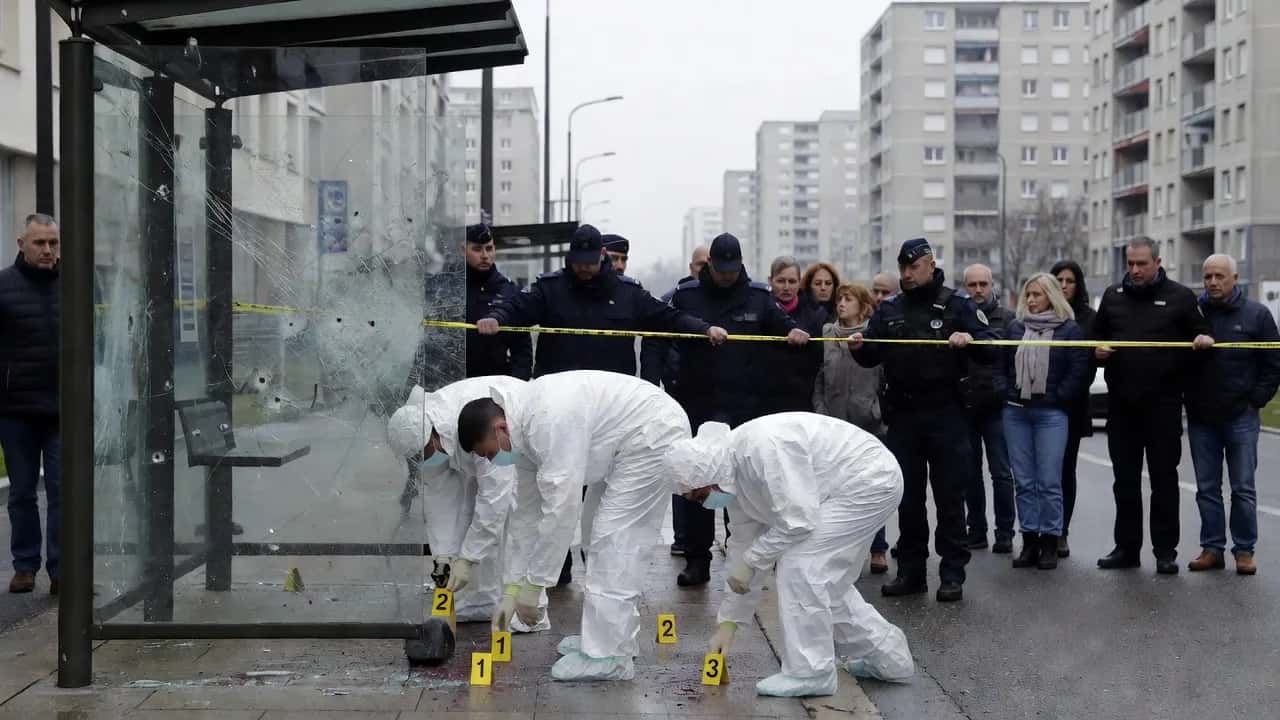
A man fired from a vehicle at pedestrians in Trappes and La Verrière, killing one person and injuring several, including a 12-year-old girl.
2
The National Anti-Terrorist Prosecutor's Office has been handling the investigation, with a circumstance related to actual or supposed membership in a race, ethnicity, nation, or religion.
3
A suspect was arrested shortly after the shooting in Coignières, with a submachine gun in his vehicle.
Where media coverage diverges
Racist or Islamophobic motive
In response to the question 'is the racist motive presented as established?', Spanish, Pakistani, and Norwegian media reiterate the Islamophobic interpretation of the mayor of Trappes, while German, Italian, and Australian (ABC) media describe a motive that is still to be confirmed or random shootings.
AustraliaBangladeshDenmarkFinlandFranceHungarySerbiaSingaporeUnited States
security
United KingdomBelgiumBrazilGermanyIsraelPolandSweden
society
SpainNorwayPakistan
legal
Italy
4 different framings across 20 countries · 9 of 20 countries share the same framing
Pair by pair: same frame or different frames
Each square pairs two countries. Filled: both countries' coverage uses the same frame. Empty: their frames differ. The map describes framings without evaluating them.
Pairs with the same frame: 60 of 190
same frame
different frames
Blind spots
What the coverage of each country leaves aside, while others put it forward.
Poland
Macron's description of a 'racist terrorist attack'
the mayor of Trappes' statements on the motive
Germany
the apartment rigged with gas bottles
the suspect's profile
Israel
the racist or Islamophobic interpretation of the motive
The shooting occurred in France after several days of protests and urban violence, with a deployment of 70,000 police officers announced for the weekend. Emmanuel Macron's description of the incident as a "racist terrorist attack" comes amid a domestic debate on immigration, discrimination, and security. The foreign press has largely relayed the story through news agencies (AFP, Reuters, BBC), and the interpretations vary depending on the emphasis placed on the motive, the investigation, or social tensions.
Understand the context
OCT 23, 2026
Shootings in Trappes and La Verrière, arrest in Coignières, referral to the National Anti-Terrorism Prosecutor's Office
OCT 24, 2026
Planned demonstrations, with 70,000 police and gendarmes mobilized
How each country reads it
Preview: 3 of 20 media perspectives. Syntheses of the media analysed — not direct quotations. Method & limitations
Canberra links the Trappes shooting to the tensions shaking France: the Australian press highlights the "turning point" mentioned by Emmanuel Macron, following riots and on the eve of new demonstrations.
Dhaka is particularly mindful of Emmanuel Macron's words, who speaks of a "turning point" following the Trappes shooting, in a France already strained by national protests.
London is reconstructing the timeline of the shootings and the anti-terrorist seizure more than the French political debate: British media are detailing the sequence of events, the toll, and the criminal qualification of an act deemed racist.
Canberra links the Trappes shooting to the tensions shaking France: the Australian press highlights the "turning point" mentioned by Emmanuel Macron, following riots and on the eve of new demonstrations.
KEY POINTS
A 39-year-old gunman opened fire from a car in Trappes and La Verrière: one dead, at least five injured including a 12-year-old girl (SBS, PerthNow).
Emmanuel Macron described the incident as a racist and terrorist attack and spoke of a "turning point" for the Republic (PerthNow, The Age).
The government is deploying 70,000 police officers for Saturday's demonstrations, with Lyon and Marseille banning the marches (The Age, SMH).
ANALYSIS
Canberra, October 24, 2026. The Australian press is covering the Trappes and La Verrière shooting as another episode in a France under pressure. According to SBS, a gunman opened fire from a vehicle at three locations in the Yvelines, in about fifteen minutes, killing one person and injuring at least five, including a 12-year-old girl. PerthNow reports that the suspect, 39, fired an automatic weapon at a gas station, a medical center, and a playground, and that the girl was hit eight times, according to the BFM channel.
The official account is widely reported. Interior Minister Laurent Nuñez speaks of a "terrorist crime", "an extremely serious act", and mentions a weapon "of military quality, or at least automatic". The national anti-terrorist prosecutor's office is investigating for "murder in connection with a terrorist enterprise", with the circumstance of actual or supposed membership in a race, ethnicity, nation, or religion. The mayor of Trappes, Ali Rabeh, mentions a "probably Islamophobic" act and indicates, as quoted by PerthNow, that the person killed was of African origin.
Emmanuel Macron, in Trappes, states that the victims were targeted "because of their skin color or supposed religion, and for no other reason", and speaks of a "turning point" for the Republic. SBS notes that, according to him, the suspect's statements indicate premeditation. The Age and the Sydney Morning Herald add that the police discovered traps set at the shooter's home and that a close relative was taken into custody.
The context weighs heavily on the entire treatment. These two titles recall that the attack comes after a week of violence and looting, and on the eve of demonstrations on Saturday about the cost of living and school funding. The government is mobilizing 70,000 police officers, while Lyon and Marseille are banning processions. The authorities do not establish a direct link with the riots, but the debate about the presence of migrants among the rioters is mentioned. The mayor of La Verrière, Nicolas Dainville, sees it as a sign of the pressure on French unity.
The ABC, in its initial dispatches, also relayed the reaction of Prime Minister Sébastien Lecornu, who judged the event "very serious" and assured that the security forces and justice were "fully mobilized", as well as the police's initial caution regarding the motive.
Bangladesh
DOMINANT ANGLE
Dhaka is particularly mindful of Emmanuel Macron's words, who speaks of a "turning point" following the Trappes shooting, in a France already strained by national protests.
KEY POINTS
A gunman opened fire from his vehicle in Trappes and La Verrière around 10:30 am, killing one person and injuring several others, including a 12-year-old girl (TBS News, The Daily Star).
The anti-terrorism prosecutor's office has launched an investigation into "murder in connection with a terrorist enterprise"; the 39-year-old suspect was arrested in Coignières.
Emmanuel Macron described the attack as "terrorist and racist" and a "turning point", saying it was the first time a planned terrorist act had targeted French people because of their skin color or religion.
ANALYSIS
Dhaka, October 24, 2026. Bangladeshi media are covering the Yvelines shooting through international dispatches, emphasizing the political scope of the French president's remarks. The Daily Star, in a brief, reports that a man opened fire from his vehicle in the streets of Trappes, west of Paris, killing one person and injuring four, according to a police source. He was arrested in Coignières, the neighboring commune, after firing in Trappes and La Verrière around 10:30 am. The newspaper specifies that the prosecutor's office has opened an investigation for "murder in connection with a terrorist enterprise," and that local authorities judged the toll likely to evolve, with rescue teams still on site.
The mayor of Trappes, Ali Rabeh, is quoted on Instagram: "An individual fired from his vehicle at several people as he passed by." Prime Minister Sébastien Lecornu considers the case "very serious" and states that "all means of security forces and justice are fully mobilized".
TBS News develops further. The site describes a shooter firing an automatic weapon at a gas station, a medical center, and a children's playground. It reports one death and five injuries, including a 12-year-old girl. The suspect, a 39-year-old man identified as Kevin T., was arrested. Emmanuel Macron is quoted: it is a "turning point," as this is the first time a terrorist act is "planned to kill our compatriots, our children, because of the color of their skin or their religion." According to the text, the president added that the shooter had chosen not to target certain people because of their skin color and appearance.
United Kingdom
DOMINANT ANGLE
London is reconstructing the timeline of the shootings and the anti-terrorist seizure more than the French political debate: British media are detailing the sequence of events, the toll, and the criminal qualification of an act deemed racist.
KEY POINTS
One death and four injuries according to the BBC, including a 12-year-old girl hit eight times according to the Daily Mail; The Independent reports five injuries.
The national anti-terrorist prosecutor's office is investigating for "murder in connection with a terrorist enterprise" (BBC).
Macron: the victims were targeted "because of their skin color or perceived religion, and for no other reason" (The Independent).
ANALYSIS
London, 24 October 2026. The British press is treating the Trappes and La Verrière attack as an armed incident turned antiterrorist case, initially following the chronology of the shootings. The BBC reports that several drive-by shootings took place on Friday, first in Trappes, southwest of Paris, then in La Verrière, and that one person is dead, with four others injured. Prime Minister Sébastien Lecornu announced on X that the individual had been "apprehended and placed in custody".
The Daily Mail, the most vivid, describes a shooter "intent on causing as many casualties as possible", who allegedly fired a World War II-era weapon at around 10:30. It notes that a 12-year-old girl was hit eight times but is in stable condition. The Independent specifies that the shootings took place over approximately 15 minutes in three locations, that three of the five injured have life-threatening wounds, and that the suspect was arrested less than 20 minutes after the first shot. The Interior Minister, Laurent Nuñez, refers to a "deadly rampage".
On mobile, the headlines remain attributed. The mayor of Trappes, Ali Rabeh, tells BFMTV that the shooter wanted to "cause carnage" and describes the act as "racist [and] probably Islamophobic". The BBC notes that, according to him, the deceased victim was of African origin, while the national antiterrorist prosecutor's office calls for caution regarding the identity of the victims. The Daily Mail quotes a Yvelines MP, Laurent Mazaury, who says the suspect allegedly stated during his arrest that he wanted to kill people he deemed to be of foreign origin.
Belgium
DOMINANT ANGLE
Brussels is reporting the Yvelines shooting hour by hour, focusing on the chronology, the shooter's profile, and the referral to the anti-terrorism prosecutor rather than the French political debate.
KEY POINTS
The Pnat has opened an investigation for "murder in relation to a terrorist enterprise", with the circumstance of actual or supposed membership in a so-called race, ethnicity, nation or religion.
The suspect, Kévin T. born in 1987, was apprehended in Coignières at 10:20 am; his apartment in Plaisir was booby-trapped with three gas bottles and a timer, and a Sten-type submachine gun was found in his Renault Clio.
A 12-year-old girl was hit by eight bullet impacts, according to the mayor of La Verrière, Nicolas Dainville; her condition is "stabilized".
ANALYSIS
Brussels, October 24, 2026. The Libre Belgique and La DH are covering the Yvelines shooting in the "what we know" mode, with a condensed timeline. On Friday, October 23, a man fired shots from his car in Trappes and La Verrière, killing one person and injuring at least four, according to initial reports, and then five in La Libre's update. Interior Minister Laurent Nuñez, quoted by both publications, speaks of a "terrorist crime" and an "extremely serious act".
The account emphasizes the speed of the intervention. Five police officers from the anti-crime brigade arrested the perpetrator in Coignières, around 10:20 am according to the Pnat, after a journey that "lasted about a quarter of an hour". The minister estimates that they "very probably" interrupted an ongoing murderous series. The Belgian titles relay the phrase that the shooter had "obviously" wanted to "cause a bloodbath".
La Libre devotes a separate article to the material elements. The Pnat indicates that the search in Plaisir revealed a trapping device "using three gas bottles and electrical wires connected to a timer". The suspect, identified as Kévin T., born in 1987, had a Sten-type submachine gun and a tear gas bomb in his Renault Clio. He is in custody, which can last 96 hours, as is a member of his direct family. The title sees "a new drama avoided".
Brazil
DOMINANT ANGLE
Brasília first takes note of the "terrorist" qualification given by Paris to the Trappes and La Verrière shootings, which it views in the context of a France already on edge due to the urban violence of the previous week.
KEY POINTS
On Friday, October 23, around 10:30 a.m. local time, a 39-year-old man fired from his vehicle in Trappes and La Verrière: one dead and four injured, including a 12-year-old child hit eight times (G1).
Laurent Nuñez: "It is clearly a terrorist crime"; the mayor of Trappes, Ali Rabeh, mentions an attack "probably islamophobic" (Veja).
The Prime Minister announced the seizure by the National Anti-Terrorism Prosecutor's Office; Emmanuel Macron described the act as "terrorist and racist" (G1).
ANALYSIS
Brasília, October 24, 2026. Brazilian media are treating the Yvelines shooting as a top-priority news item, based on official French statements. Veja and G1 Globo report that on Friday, October 23, around 10:30 a.m. local time (5:30 a.m. in Brasília), a 39-year-old man, whose name has not been disclosed, fired from his vehicle at passersby in Trappes and then in La Verrière, west of Paris. The initial toll is one dead and four injured.
The characterization dominates the account. Veja quotes Interior Minister Laurent Nuñez: "It is clearly a terrorist crime, an extremely serious act." The mayor of Trappes, Ali Rabeh, speaks of an attack "with racist connotations, probably Islamophobic." When questioned on BFMTV, he adds that the shooter "seemed to be firing randomly, with the intention of committing a massacre," a phrase that G1 repeats when evoking a desire for "carnage."
G1 has the most straightforward headline, presenting Emmanuel Macron qualifying the shooting as a "terrorist and racist" act. The site also cites the president's message on X, which expresses his "deep emotion" and assures that "the Nation is by the side" of the victims and the inhabitants of Yvelines. The Prime Minister announced on X that the National Anti-Terrorist Prosecutor's Office had been seized.
Germany
DOMINANT ANGLE
Berlin describes an ongoing anti-terror investigation: the German press is following the qualifications of the prosecution and the Interior Minister, without ruling on the racist motive.
KEY POINTS
According to Tagesschau, a driver shot pedestrians in Trappes and La Verrière: one dead, four seriously injured including a child; a 39-year-old suspect was arrested.
Laurent Nuñez speaks of a "terrorist crime"; the anti-terrorist prosecutor's office is investigating for assassination in connection with a terrorist enterprise, with a circumstance related to ethnicity, nation or religion.
Emmanuel Macron claims, according to Handelsblatt, that this is the first time an attack was planned to kill compatriots because of their skin color or supposed religion.
ANALYSIS
Berlin, October 24, 2026. The Tagesschau and Handelsblatt reported on Friday, October 23, on the shootings in Trappes and La Verrière, in the Yvelines, focusing on the anti-terrorist investigation thread. According to the Tagesschau, a driver opened fire on pedestrians around 10:30 am, killing one person and injuring four seriously, including a child. The Minister of the Interior, Laurent Nuñez, specified that the 39-year-old suspect had fired an automatic weapon at three locations before being arrested.
The Handelsblatt quotes Laurent Nuñez: "The investigations are ongoing, but it is clearly a terrorist crime." He repeated the anti-terrorist prosecutor's report, a man born in 2000 was killed and five other people were injured, whose condition was unstable in the evening. Several witnesses close to the shootings are described as being in a state of shock.
The Tagesschau focuses on the legal qualification: the prosecutor is investigating for murder in connection with a terrorist enterprise, related to actual or supposed membership in an ethnic group, nation, or religion, which could indicate a racist motive. The channel notes the restraint of Aurore Bergé, Minister in charge of combating discrimination: "If the racist nature is confirmed," she hopes that the entire nation will stand behind the inhabitants and victims. The mayor of Trappes, Ali Rabeh, is more direct: he speaks of a "racist and probably Islamophobic" attack. He also indicated to BFMTV that the shooter seemed to have fired randomly and wanted a "bloodbath".
Denmark
DOMINANT ANGLE
Copenhagen is particularly focused on Emmanuel Macron's statement: the Danish press headlines the "terrorangreb" described as racist and the "vendepunkt" for the Republic, before the details of the investigation.
KEY POINTS
According to Reuters, cited by Berlingske, DR, and Politiken, Emmanuel Macron described the shooting as a "terrorangreb" and a racist attack, and as a "vendepunkt" for the Republic.
According to the AFP, one person is dead and four were injured, including a 12-year-old girl hit by eight bullets, out of danger according to La Verrière mayor Nicolas Dainville.
Berlingske reports, based on an anonymous source cited by the AFP, the arrest in Coignières of an armed suspect with a submachine gun, whose apartment contained three gas bottles connected to a timer.
ANALYSIS
Copenhagen, October 24, 2026. In the Danish press, the Trappes case opens with the voice of the head of state. Berlingske, DR Nyheder, and Politiken all carry the same headline: "Macron kalder skyderi i Frankrig for racistisk terrorangreb", which translates to "Macron qualifies the shooting in France as a racist terrorist attack". The three newspapers cite Reuters for the president's remarks, made on Friday evening.
According to this quote, Emmanuel Macron said that "what happened today marks a turning point for the Republic and for our country" and that the people targeted were targeted because of their religion and skin color. The articles speak of a "terrorangreb" and a "racistisk angreb". Berlingske adds in its header that the shooting is, according to the president, a "vendepunkt" for France.
The factual account is based on AFP. A man fired from his car on Friday morning in Trappes, then in the neighboring commune of La Verrière. One person is dead and four others were injured, including a 12-year-old girl who was hit by eight bullets. The mayor of La Verrière, Nicolas Dainville, told AFP that she was out of danger.
Berlingske, which is longer, provides elements that the Ritzau dispatches from DR and Politiken do not. The mayor of Trappes told AFP that the man had fired "at random, to try to provoke a carnage". Most of the victims, according to the agency, were of non-French origin. An anonymous source close to the case indicated to AFP that the suspect had been arrested in Coignières, with a submachine gun and tear gas grenades. In his apartment, three gas bottles and electrical wires were connected to a timer.
Spain
DOMINANT ANGLE
Madrid interprets the Trappes and La Verrière shooting as an Islamophobic attack, based on the mayors' statements, and views it as a revelation of French fractures.
KEY POINTS
At around 10:30, a man fired bursts with a category A automatic weapon from a vehicle in Trappes and La Verrière: one 26-year-old dead and four seriously injured according to ElDiario.es.
The mayor of Trappes, Ali Rabeh, speaks of the "first attempt at a mass crime with an Islamophobic connotation" in France; the Anti-Terrorist Prosecutor's Office is investigating.
A 12-year-old girl was hit by eight bullets in La Verrière, but her condition has been stabilized, according to Mayor Nicolas Dainville.
ANALYSIS
Madrid, October 24, 2026. The Spanish press is covering the shooting that occurred on Friday near Paris, focusing on the human toll and the statements of local officials. ElDiario.es reports on "one dead and four injured" in the Parisian suburbs and an "Islamophobic" attack, according to the mayor. HuffPost España quotes Prime Minister Sébastien Lecornu, who indicated that the anti-terrorist prosecutor's office was investigating and that "all the resources of the security forces and judicial authorities are fully mobilized".
The facts, as reported by ElDiario.es: around 10:30 am, about thirty kilometers from Paris, a man fired several bursts at passersby from a vehicle. Interior Minister Laurent Nuñez reported three shootings in Trappes and La Verrière, with a category A automatic weapon, whose sale to the public is prohibited. In Trappes, the shooter allegedly opened fire in a public park and near a gas station: a 26-year-old person died, and a 20-year-old was injured. In La Verrière, three people were hit, including a 12-year-old girl who was struck by eight bullets, whose condition was stabilized, according to Mayor Nicolas Dainville on BFMTV.
The focus is on the racist dimension. The mayor of Trappes, Ali Rabeh, claims that the shooter "was clearly firing at random and wanted to provoke a massacre" and speaks of the "first attempt at a mass crime with an Islamophobic connotation" in France. HuffPost España reiterates his precision on the origin of the victims: the deceased is "of African origin" and the person in critical condition "of North African origin". ElDiario.es notes that the suspect is the subject of an investigation for a terrorist motive of a racist nature.
Finland
DOMINANT ANGLE
Helsinki is particularly mindful of Emmanuel Macron's words, who describes the Trappes shooting as a racist terrorist attack and a turning point for the Republic, as reported by the BBC, Le Monde and Reuters.
KEY POINTS
One person has died and five have been injured, including a 12-year-old girl hit by eight bullets according to the BBC as cited by Iltalehti.
The 39-year-old suspect was arrested in Coignières in under ten minutes, with a submachine gun in his vehicle and a booby-trapped apartment (Ilta-Sanomat, MTV).
Macron speaks of a "turning point" in the life of the Republic and, according to Yle, the first attack in France targeting victims chosen for their skin color or supposed religion.
ANALYSIS
Helsinki, October 24, 2026. Iltalehti, Ilta-Sanomat, MTV Uutiset, and Yle report on the shooting that occurred on Friday morning in Trappes and then in La Verrière, west of Paris. According to Yle, one person is dead and five have been injured, including a 12-year-old child; Yle adds that most of the victims were of foreign origin.
Iltalehti, citing the BBC, reports that the attack lasted nearly fifteen minutes, according to Interior Minister Laurent Nuñez, with the shooter firing from his vehicle. The newspaper recounts the account of Trappes Mayor Ali Rabeh: the suspect fired near a gas station, a health center, and a playground, and "wanted to provoke a carnage." Also according to the BBC, the little girl, who was wearing a headscarf, received eight bullets and had to undergo surgery.
The media detail the investigation. The suspect, a 39-year-old man, was arrested in Coignières; MTV, citing Le Parisien, speaks of an arrest in less than ten minutes after the first emergency calls. Ilta-Sanomat, according to Le Monde, mentions a submachine gun and tear gas cartridges in the vehicle, as well as a booby-trapped apartment with gas bottles and electrical wires. The national anti-terrorism prosecutor's office has opened an investigation for murder in connection with a terrorist enterprise, retaining the real or supposed membership of a race, ethnicity, nation, or religion.
France
DOMINANT ANGLE
Paris is unequivocal: the country is sticking to the presidential qualification of "racist terrorist attack" and debating its meaning, in an already tense climate.
KEY POINTS
The National Anti-Terrorism Prosecutor's Office is investigating "murder in connection with a terrorist enterprise" with the circumstance of a motive related to an alleged race, ethnicity, nation, or religion.
The suspect, Kévin T., 39 years old, was arrested in Coignières with a submachine gun; his apartment was booby-trapped with three gas bottles.
Emmanuel Macron denounced in Trappes "a racist terrorist attack" and "a turning point in the life of our Republic".
ANALYSIS
Paris, October 24, 2026. On Friday, October 23, around 10 am, a 39-year-old man, Kévin T., opened fire with an automatic weapon from a Clio in Trappes and then in La Verrière (Yvelines). A 26-year-old man, Pengo B.-W., was killed; five people are injured, including a 12-year-old girl who was hit by eight bullets. Five police officers from the BAC arrested the suspect in Coignières, with a Sten-type submachine gun, sixteen minutes after the start of the shooting, according to 20 Minutes.
The National Anti-Terrorist Prosecutor's Office has taken over the case for "murder in connection with a terrorist enterprise," with the circumstance of actual or supposed membership in a so-called race, ethnicity, nation, or religion. It indicates that the shooter had booby-trapped his apartment with three gas bottles. Listed in the TAJ file but unknown to the intelligence services, the suspect is in custody, as is a member of his family circle. Le Monde notes that his motivations remain nebulous.
The Minister of the Interior, Laurent Nuñez, speaks of a "terrorist crime"; the mayor of Trappes, Ali Rabeh, of an "attack, with racist connotations, probably Islamophobic," and denounces the speeches that "ideologically arm" those who take action. In Trappes, Emmanuel Macron denounces a "racist terrorist attack" and "a turning point in the life of our Republic": it is, he says, "the first time" that a planned terrorist act targets French people "because of their skin color or the religion attributed to them." He invokes premeditation and the suspect's statements "very clearly recorded," then calls for "concord" and not to "give in" to the ideas that are taking hold.
Hungary
DOMINANT ANGLE
Budapest first takes note of Emmanuel Macron's words: the Hungarian press headlines the "racist terrorist attack" and the "turning point" for the Republic, long before the details of the investigation.
KEY POINTS
Emmanuel Macron described the attack as a "rasszista terrortámadás" (racist terrorist attack) and a "fordulópont" (turning point) for the Republic, according to Telex and 444.
The suspect, 39 years old, had been convicted four times, with convictions automatically expunged from his record, and was not on the list of serious threats to national security, according to the PNAT as cited by Telex.
The mayor of Trappes, Ali Rabeh, described a shooter who seemed to be firing randomly and wanting to commit a massacre, including towards a playground, according to Index.
ANALYSIS
Budapest, October 24, 2026. The Hungarian press covers the Yvelines shooting as an event initially relayed by Anglophone agencies and media, then refocused on the words of French President Emmanuel Macron. Telex and 444 headline with Emmanuel Macron's phrase, who qualified the attack as "racist terrorism" and "a turning point in the life of our Republic and our nation". Telex, citing the BBC, specifies that one man died and five people were injured; three of them, including a 12-year-old girl, remain in a serious condition.
The facts are reconstructed as follows: on Friday morning, the shooter opened fire from his car, first in Trappes, southwest of Paris, then in La Verrière. 444 mentions an attack of about fifteen minutes and a gray Renault Clio described by witnesses. Index adds, according to Sky News, that shots also targeted a playground, and reports the phrase of Trappes Mayor Ali Rabeh, according to which the man seemed to be shooting randomly and wanting to "commit a massacre". Index counts one dead and four injured, HVG "at least four": the tolls diverge according to the time of publication.
On the judicial aspect, Telex and 444 note that the National Anti-Terrorist Prosecutor's Office (PNAT) has retained a murder in connection with a terrorist enterprise. They note that the suspect, a 39-year-old man referred to in the French press as Kevin T., had been convicted four times, these convictions having been automatically erased from his record. Known to the police, he was not being monitored by intelligence nor listed on the list of individuals posing a serious threat to national security, according to the PNAT cited via BFMTV. A close associate was also placed in police custody.
Israel
DOMINANT ANGLE
Jerusalem reports the Trappes shooting as a terrorist crime and a domestic security issue, linking it to the violence in France that week rather than its racist motive.
KEY POINTS
A man fired from his car in Trappes on Friday, October 23: one dead and at least four injured, including a 12-year-old girl (Jerusalem Post, Haaretz).
Laurent Nuñez described the incident as "clearly a terrorist crime"; Mayor Ali Rabeh mentioned the intention to commit "a massacre" (Haaretz).
Nuñez announced 70,000 law enforcement members mobilized for Saturday, after the worst violence in France in years (Jerusalem Post).
ANALYSIS
Jérusalem, October 24, 2026. The Israeli English-language press treats the Trappes shooting as a French internal security dispatch, without dwelling on the racial dimension highlighted in Paris. The Jerusalem Post and Haaretz take up the same factual core, dated Friday, October 23: a man opened fire from his car in Trappes, in the Yvelines, west of Paris, killing one person and injuring at least four others, including a 12-year-old girl.
Haaretz headlines a "terrorist" shooting and quotes Interior Minister Laurent Nuñez, for whom it was "clearly a terrorist crime". The daily specifies that the authorities are investigating a possible terrorist attack. It also reports the words of Trappes Mayor Ali Rabeh, according to whom the shooter wanted to commit "a massacre". The text is brief and limited to these official statements.
The Jerusalem Post provides more details. It indicates that Prime Minister Sébastien Lecornu announced the arrest of a suspect and the full mobilization of security forces, and that the anti-terrorist prosecutor's office was following the situation. The mayor, interviewed by BFMTV, said the man seemed to be shooting "at random" and that he lived in a neighboring town. The newspaper notes that "there was no information on his motivations for the time being". The articles provided do not mention the qualification retained by the anti-terrorist prosecutor's office, nor Emmanuel Macron's words on a "racist terrorist attack".
Italy
DOMINANT ANGLE
Rome is primarily focusing on the qualification retained by the National Anti-Terrorist Prosecutor's Office, the details of which are outlined by the ANSA agency, while La Repubblica highlights Macron's phrase about a "racist attack".
KEY POINTS
The National Anti-Terrorist Prosecutor's Office is investigating "murder in connection with a terrorist enterprise", with the circumstance of actual or supposed membership in a race, ethnicity, nation or religion (ANSA).
Initial police report: one dead and four injured, including a 12-year-old girl according to La Repubblica; the man was arrested in Coignières (ANSA).
The mayor of Trappes, Ali Rabeh, states on BFMTV that the deceased victim is "of African origin" and a seriously injured person is "of Maghrebi origin" (ANSA).
ANALYSIS
En Italie, Friday, October 23, the Italian press reported on the shooting that occurred in the Yvelines based on two main sources, the ANSA agency and the daily La Repubblica, which provide complementary readings.
ANSA provides the most factual account. According to the agency, an individual opened fire in the middle of the street in Trappes, a commune in the Yvelines located about forty kilometres from Paris, around 10:30 am. An initial police report mentioned one death and four injuries. The man was quickly arrested in Coignières, according to a source from the security forces. The Yvelines prefecture indicated that the toll "is not yet definitive" and that rescue efforts were underway.
The agency emphasizes the statement of Trappes Mayor Ali Rabeh, who said on BFMTV that the deceased victim is "of African origin" and that a critically injured person is "of Maghrebi origin", two profiles that he considers "particular". ANSA notes that the elected official leaves it to the judiciary to determine whether the suspect, already arrested, invoked a racist motive.
The heart of the Italian account is judicial. After the armed attack in Trappes and La Verrière, the National Anti-Terrorist Prosecutor's Office opened an investigation for "murder in connection with a terrorist enterprise", with the aggravating circumstance that the facts were committed due to the real or supposed membership of a so-called race, ethnicity, nation or religion. ANSA adds two other aspects, the "possession of category A weapons", which includes automatic weapons capable of firing in bursts, and "terrorist criminal association" aimed at preparing crimes against persons.
Norway
DOMINANT ANGLE
Oslo initially retains the qualification of "rasistisk angrep" posed by the mayor of Trappes, and is following the anti-terrorist investigation in France through still provisional reports.
KEY POINTS
According to Aftenposten, Laurent Nuñez states that the shots took place in three locations in Trappes and La Verrière and that the suspect used at least one automatic weapon.
The mayor of Trappes, Ali Rabeh, describes the attack as "rasistisk, sannsynligvis islamofobisk" and indicates that several victims were of African origin.
A 12-year-old child is among the injured, hit eight times according to Aftenposten; the toll varies between one dead and four or five injured according to the media.
ANALYSIS
Oslo, October 24, 2026. Norwegian media are treating the Trappes and La Verrière shooting as a developing international news story, with a death toll that varies from one editorial office to another. Aftenposten reports "at least one person killed and five injured" when a man opened fire from a car in Trappes, west of Paris. In its news feed, Dagbladet headlines "one dead and four injured" and suspects terrorism, a sign that the figures remain unstable. Aftenposten specifies that local authorities have warned that the number of dead and injured may change.
The newspaper highlights the voice of Interior Minister Laurent Nuñez, quoted in a straightforward title: "Helt åpenbart et terrorangrep", or a "manifestly terrorist" act. According to Nuñez, the shooting occurred in three locations in Trappes and La Verrière, and the suspect used at least one automatic weapon. The suspect was arrested in Coignières, near Paris. The minister emphasizes that the anti-terrorist prosecutor's investigation is ongoing.
The second axis is that of Trappes Mayor Ali Rabeh, whose phrase gives the title to the article: "Rasistisk angrep". He speaks of a "racist, probably Islamophobic" attack, and tells BFM TV that it's "a miracle" there weren't more victims. According to him, the shooter targeted a playground and seemed to be shooting "without distinction, with the intention of committing a massacre". He adds that several victims were of African origin. This description, attributed to a local official, structures the Norwegian reading: the attack is presented in its racial dimension before any political analysis.
Pakistan
DOMINANT ANGLE
Islamabad takes note of the racial and Islamophobic dimension of the Trappes shooting: the Pakistani press repeats the words of Macron and Mayor Ali Rabeh and focuses on the headscarf of the injured girl.
KEY POINTS
One dead and five injured, including a 12-year-old girl hit eight times, in shootings from a vehicle in Trappes and then La Verrière (Geo News, ARY News).
Macron speaks of a "turning point": the first terrorist act planned to kill French people based on their skin color or religion (ARY News, Geo News).
The mayor of Trappes, Ali Rabeh, considers the attack "objectively racist, probably Islamophobic"; the deceased victim was of African origin (Geo News).
ANALYSIS
Islamabad, October 24, 2026. On Friday, October 23, in the morning, a man fired an automatic weapon from his vehicle at a gas station, a medical center, and a children's playground in Trappes, then headed towards La Verrière, according to Geo News. One person was killed and five others were injured, including a 12-year-old girl who was hit eight times, according to BFM, cited by ARY News and Business Recorder. The initial reports, taken up by ARY from Reuters, reported one dead and four injured.
The suspect, a 39-year-old man identified in the French press as Kevin T., was arrested on the N10; a close family member was also placed in custody, according to Geo. The Pakistani press particularly retains Emmanuel Macron's phrase, who spoke of a "turning point": "the first time we have had a terrorist act that was planned to kill our compatriots, our children, based on the color of their skin or their religion". Daily Times and ARY add that the shooter would have chosen not to target certain people because of their skin color or European appearance.
The racial and religious dimension is at the center of the accounts. Geo quotes the mayor of Trappes, Ali Rabeh, who judges the attack "objectively racist, probably Islamophobic" and specifies that the deceased victim was of African origin and that a seriously injured person was of North African origin. The mother of the girl confided to RTL that her daughter had to be operated on and wondered if her headscarf had made her a target: "How could anyone do this to a child?" Daily Times emphasizes that the population of the neighborhood is diverse and that local elected officials are calling for a public condemnation.
Poland
DOMINANT ANGLE
Warsaw documents the Yvelines shooting as a terrorist incident: the Polish press focuses on the sequence of shots, the arrest of the suspect and the referral to the anti-terrorist prosecutor's office.
KEY POINTS
The gunman opened fire from a car, in bursts, in Trappes and then La Verrière, and was arrested in Coignières (BFMTV, cited by Rzeczpospolita and Dziennik.pl).
The PNAT has launched an investigation for murder in connection with a terrorist enterprise, attempted murders, and participation in a terrorist group.
According to Le Figaro, the suspect is a 39-year-old man, Kevin T., who allegedly used an automatic weapon; a 12-year-old girl is among the injured.
ANALYSIS
Warsaw, 24 October 2026. The first Polish reports, published on Friday, 23 October, treat the Yvelines shooting as a last-minute piece of information from Paris, relayed from French media. Rzeczpospolita headlines a possible "terrorist attack in France" and specifies that the assailant fired from a car, one person died, and a 12-year-old girl is among the injured.
The account is based initially on BFMTV. According to the channel, cited by the two headlines, the man opened fire on a public road and fired in bursts, successively in Trappes and La Verrière, before being arrested in Coignières, in the same department. Dziennik.pl, which reprints a dispatch from the PAP, sticks to this minimal scenario: a shooting west of Paris, one victim, a suspect apprehended.
Rzeczpospolita goes further by citing Le Figaro. The French daily identifies the suspect as a 39-year-old man, named Kevin T. A internet user would have been the first to publish on social networks the alert about an individual moving in a car and firing a gun. A police source tells the newspaper that the perpetrator used an automatic weapon, and that one of the injured is a 12-year-old girl.
The anti-terrorist dimension is presented in a factual manner. The National Anti-Terrorist Prosecutor's Office (PNAT) announced that it is taking over the case and opened an investigation for assassination in connection with a terrorist enterprise, attempted assassinations, and participation in a terrorist group. The newspaper notes that Prime Minister Sébastien Lecornu did not detail the circumstances of the events in the Yvelines, but judged them "very serious".
Serbia
DOMINANT ANGLE
Belgrade first takes note of Emmanuel Macron's words, who describes the Trappes shooting as a terrorist and racist attack, and frames it within a climate of social tensions in France.
KEY POINTS
Macron said: "What happened today is a turning point," deeming the attack terrorist and racist, targeting people for their skin color or religion (Politika).
A 39-year-old suspect, identified as Kevin T., was arrested; one person is dead, including a 12-year-old girl among the seriously injured, hit eight times according to BFMTV (Politika).
The mayor of Trappes, Ali Rabeh, told BFM TV that the shooter fired randomly and that it was "miraculous" there were no other victims (Beta).
ANALYSIS
Belgrade, October 24, 2026. The Serbian press reports on the Trappes shooting from two complementary angles: the words of the French president and the social unrest in which the attack occurred.
Politika headlines with Emmanuel Macron, who deemed it a terrorist and racist attack, after an assailant opened fire in several locations in Trappes, killing one person and injuring five. Among the injured is a 12-year-old girl, hit eight times according to the BFMTV channel and in critical condition. According to available information, the shooter fired an automatic weapon at a gas station, a medical center, and a children's playground. The police arrested a 39-year-old suspect, identified as Kevin T., whose last name was not released. "What happened today is a turning point," Macron said, adding that, based on the known elements, the attack targeted people because of their skin color or religion.
The daily newspaper specifies that the national anti-terrorism prosecutor's office has taken over the case. This institution is competent to investigate suspected terrorist attacks, including violence motivated by a far-right ideology. The final conclusions on the motives will depend on the investigation and the evidence gathered.
The Beta agency gives a more cautious account, in real-time: one person killed and four injured in a shooting from a moving vehicle near Paris, a suspect arrested near Trappes, motives still "nebulous" according to the police. Prime Minister Sébastien Lecornu stated that all available means, including security forces and judicial authorities, were mobilized. The mayor of Trappes, Ali Rabeh, told BFM TV that the shooter had fired randomly at passersby: "It's a real miracle there aren't more victims." According to him, the person killed is of African origin and one of the seriously injured is of North African origin.
Sweden
DOMINANT ANGLE
Stockholm is reporting the Trappes and La Verrière shooting as a presumed terrorist attack, following the initial police findings step by step and placing it in the context of a France on the eve of new riots.
KEY POINTS
A man fired an automatic weapon from a car in Trappes and La Verrière around 10:30 Friday, then was arrested in Coignières (DN, citing Le Monde).
The suspect is a 39-year-old man according to BFMTV; the provisional toll reported is one dead and four injured, including a twelve-year-old child (Expressen).
DN reports the shooting on the eve of a weekend where new unrest is feared, after riots deemed the most serious in years.
ANALYSIS
Stockholm, October 24, 2026. Swedish headlines initially treat the Yvelines shooting as a breaking news story, fueled by French media and agencies. Svenska Dagbladet and Expressen published a thread as early as Friday, "Misstänkt terrorattack utanför Paris" (Suspected terrorist attack outside Paris): one person was killed and four injured when a man opened fire, "apparently at random," west of Paris. Citing AFP, they specify that the facts are being examined as a presumed terrorist attack and that the shooter was arrested.
The texts rely on the mayor of Trappes, Ali Rabeh, who wrote on Instagram: "A person fired from their vehicle at several people along their route, in Trappes and La Verrière." He told BFM TV that it's "a miracle" that there aren't more victims. According to the AP, the shooter allegedly targeted a playground.
Dagens Nyheter, which references Le Monde and France 24, provides the most detailed account: the man was arrested in Coignières after firing an automatic weapon, notably at a gas station and a healthcare facility, from a moving car, around 10:30 am. The newspaper adds that racist motives are also being investigated: the person killed is reportedly dark-skinned, as is a man who is between life and death. Expressen identifies the suspect as a 39-year-old man, according to BFMTV, and notes that a 12-year-old child is among the injured.
Singapore
DOMINANT ANGLE
Singapore is particularly mindful of the political implications of Emmanuel Macron's words, who speaks of a "turning point" following the attack in Trappes, in a France already on edge due to violent protests.
KEY POINTS
A gunman opened fire from his vehicle on October 23 in Trappes and La Verrière: one dead and, according to CNA, five injured, including a 12-year-old girl hit eight times.
Emmanuel Macron described the act as a "racist terrorist attack" and a "turning point", the first time, he said, a terrorist act targeted compatriots because of the colour of their skin or their supposed religion.
The 39-year-old suspect was arrested in Coignières with a submachine gun; his apartment was booby-trapped with three gas bottles connected to a timer, according to the anti-terrorist prosecutor's office.
ANALYSIS
Singapour, 24 October 2026. The two Singaporean titles in the pool, Channel News Asia and the Straits Times, are covering the Trappes shooting based on agency dispatches (AFP, Reuters), with a common thread: a local drama that takes on a national dimension.
According to CNA, a lone gunman opened fire from his car on Friday, 23 October, in the Yvelines, in Trappes and then in La Verrière. He killed one person and injured five, including a 12-year-old girl who was hit eight times, "seriously wounded" but in a stable condition, according to the mayor of La Verrière, Nicolas Dainville. The mayor of Trappes, Ali Rabeh, describes a man "firing at random, wanting to cause a bloodbath". The Straits Times, which relies on Reuters, puts the toll at one dead and four injured, and notes that the mayor of Trappes mentioned victims of African and North African origin.
The arrest is reported factually: the suspect, 39 years old, was arrested in Coignières with a submachine gun and tear gas grenades, according to a police source. CNA adds that he had booby-trapped his apartment with three gas bottles connected to a timer, according to the anti-terrorism prosecutor's office. The Straits Times quotes Emmanuel Macron thanking the police on X and specifies that the anti-terrorism prosecutor's office is examining whether the act is terrorist or motivated by race or religion.
United States
DOMINANT ANGLE
The United States views the Trappes shooting as part of a larger picture of a France under tension, with 70,000 police officers deployed and protests, even before determining the motive.
KEY POINTS
A 39-year-old man, shooting from his car, killed one person and injured four, including a 12-year-old girl, in Trappes and La Verrière (CBS News).
The anti-terrorist prosecutor's office is investigating murder with the aggravating circumstance of real or supposed membership in a race, ethnicity, nation, or religion (NBC News).
70,000 police officers are being deployed for the weekend and Macron announces the ban on demonstrations without legitimate authority (Fox News).
ANALYSIS
Washington, October 24, 2026. The major American media outlets are treating the Trappes and La Verrière shooting as a news dispatch, initially, and then as another episode in a tumultuous week in France. CBS News summarizes the facts: a man firing from his vehicle killed one person and injured four on Friday in this suburb located about twenty kilometers west of Paris. The suspect, 39 years old according to a source close to the case, was arrested in Coignières. The mayor of Trappes, Ali Rabeh, told BFMTV that he was firing "at random, wanting to provoke a bloodbath".
The judicial aspect takes center stage. NBC News cites the anti-terrorism prosecutor's office, which has opened an investigation for murder with the aggravating circumstance of acts committed due to the victim's real or supposed race, ethnicity, nation, or religion. CBS specifies that, according to the mayor, the person killed was "of African origin" and that a critically injured person was of North African origin. A 12-year-old girl, hit eight times, is said to be stable by the mayor of La Verrière, Nicolas Dainville. Prime Minister Sébastien Lecornu announced the arrest on X; ABC News initially noted that the motive was unclear.
Fox News makes the attack a factor in the aggravation of a crisis. Its headline highlights the deployment of 70,000 police officers, helicopters, armored vehicles, and water cannons for the weekend. Emmanuel Macron announces the ban on demonstrations requested by individuals or groups without legitimate authority, after canceling a trip to Nigeria and Senegal. Interior Minister Laurent Nuñez states: "The motive may be racist [...] it's clearly a terrorist crime."
Explore every perspective on this subject across 20 countries.
France: a man fires on passers-by in Trappes and La Verrière, Emmanuel Macron denounces a “racist terrorist attack”
published on
October 24, 2026
20
countries
56
sources
63
articles
68/100
gap
The twenty national covers in the corpus report on the Trappes and La Verrière shootings with different tolls and priorities: presidential statement, timeline, origin of the victims, or the tense climate in France.
The suspect is in custody and the investigation by the National Anti-Terrorism Prosecutor's Office is ongoing; the shooter's exact motivations remain to be determined.
A toll that varies depending on the sources
The number of injured people varies from one report to another. The BBC, CBS News, and The Daily Star count four. Channel News Asia, La Libre Belgique in its update, Yle, and The Independent count five. The Independent specifies that three of them have life-threatening injuries.
Handelsblatt reports the anti-terrorist prosecutor's toll: a man born in 2000 was killed and five other people were injured, whose condition was not stable in the evening. In the Hungarian press, Index counts one dead and four injured, HVG "at least four". The Daily Star and Aftenposten report that local authorities considered the toll likely to change, and ANSA quotes the Yvelines prefecture: it "is not yet definitive".
The time it took to apprehend the individual is reported with different starting points. 20 Minutes mentions sixteen minutes after the start of the shooting, The Independent less than 20 minutes after the first shot, MTV Uutiset, citing Le Parisien, less than ten minutes after the first emergency calls. La Libre Belgique, which quotes the Pnat, places the arrest around 10:20 am after a "quarter of an hour" journey, which Minister Laurent Nuñez considers "very probably" interrupted by the police.
Affected areas and origin of the victims
Several headlines detail the locations. SBS, PerthNow, and Geo News cite a gas station, a medical center, and a playground. ElDiario.es mentions a public park and a gas station in Trappes, where a 26-year-old person died and a 20-year-old was injured, and then three people were affected in La Verrière. According to La Libre Belgique, La Verrière's mayor, Nicolas Dainville, also mentions two maintenance agents "of African type" injured in front of a school.
« She went to the pool and was shot at »
The mother of the 12-year-old girl, heard by RTL France, reported by La Libre Belgique on October 23, 2026
The origin of the victims comes mainly from Trappes' mayor, Ali Rabeh. CBS News, Geo News, and ANSA report that he describes the person killed as "of African origin" and a critically injured person as of North African origin. The BBC notes that the anti-terrorism prosecutor's office calls for caution regarding the identity of the victims. Yle writes that most were of foreign origin, and Berlingske, according to AFP, of an origin other than French.
The case of the 12-year-old girl is covered by several presses. Iltalehti, citing the BBC, indicates that she was wearing a headscarf and had to undergo surgery. For Mayor Nicolas Dainville, her condition is "stabilized". Geo News reports that her mother, interviewed by RTL, wondered if the headscarf had made her a target.
What sources say about the motive
The Hungarian and French presses provide information about the suspect's past. Telex and 444 write that he had been convicted four times, with these convictions automatically erased from his record, and that he was neither among the individuals monitored by intelligence services nor on the list of serious threats, according to the Pnat cited via BFMTV. For the French press, he is listed in the TAJ file but unknown to intelligence services. Le Monde mentions "nebulous" motivations.
Regarding the motive, sources diverge in their reports, not necessarily on the facts. The Daily Mail cites Deputy Laurent Mazaury, who claims the suspect said during his arrest that he wanted to kill people he deemed to be of foreign origin. Emmanuel Macron invokes "very clearly recorded" statements from the suspect (French press); Ilta-Sanomat describes them as "very documented". Iltalehti notes that the motive remains unclear for now. According to Tagesschau, Minister Aurore Bergé speaks conditionally: "If the racist nature is confirmed". Handelsblatt writes that, according to the minister, the motives still need to be established.
The reported charges are not identical from one title to another. ANSA adds the detention of category A weapons and terrorist association. Rzeczpospolita mentions attempted assassinations and participation in a terrorist group. La Libre Belgique specifies that the custody can last 96 hours.
What each media outlet is highlighting
This survey measures what the headlines in the corpus prioritize, not what their readers think. Berlingske, DR, and Politiken, which cite Reuters, headline the qualification given by Emmanuel Macron, as do Ilta-Sanomat, Yle, Telex, 444, Politika, G1, and SBS. ANSA leads with the chiefs detained by the Pnat. Aftenposten leads with Laurent Nuñez and Ali Rabeh, ElDiario.es with the qualification of the attack as "Islamophobic" by the mayor.
Not all texts report the same elements. The Jerusalem Post and Haaretz, in the articles in the corpus, do not mention Macron's words about a "racist terrorist attack". The American articles, published on Friday, October 23, precede his statement in Trappes, according to the American perspective in the corpus. Handelsblatt and Tagesschau, on the other hand, do not mention the context of demonstrations or the controversy over the presidential statement.
In France, Macron's phrase sparks reactions. Readers of Le Monde's live feed recall Merah in 2012 and the Hyper Cacher in 2015, and the Élysée clarifies that it does not forget any past anti-Semitic attacks. Marine Le Pen condemns "a criminal act of a terrorist nature aggravated by the abject motive of racism". Gérard Larcher and Yaël Braun-Pivet call for calm.
For the security context, Fox News writes that Macron announces the ban on demonstrations requested by individuals or groups without legitimate authority, after the cancellation of a trip to Nigeria and Senegal. The Jerusalem Post quotes Laurent Nuñez: "We are not talking about a nice demonstration". The Age and the Sydney Morning Herald note that Lyon and Marseille ban processions, and that the authorities do not establish a direct link with the riots. In Dagens Nyheter, columnist Erik de la Reguera writes that the attack takes place "as France stands on the brink of the abyss".
The suspect
Kévin T., born in 1987, arrested in Coignières at 10:20 with a Sten-type submachine gun in his Renault Clio.
Criminal qualification
Circumstance of belonging, real or supposed, to a race, an ethnicity, a nation or a religion.
Local reactions
The mayor of Trappes, Ali Rabeh, mentions a probable "Islamophobic" attack; Laurent Nuñez speaks of a "terrorist crime".
Key figures
70,000
Police and gendarmes mobilized for Saturday's demonstrations
… school funding. Worried about another outbreak of violence and looting, the French government has mobilised 70,000 police to guard against rioting, while authorities in Lyon and Marseilles have banned the marches. …
TBS also relays the position of the National Anti-Terrorist Prosecutor's Office, which believes that the criteria for terrorism are met, including violence inspired by far-right ideas. The article recalls that penalties are heavier in terrorism cases and that anti-terrorist forces have expanded investigative powers.
The text finally puts the facts into a tense climate: national demonstrations last Saturday, new mobilizations planned for this weekend, and far-right leaders attributing the looting and damage of October 17 in several cities to immigration. The Bangladeshi coverage remains factual and relies on agencies, without editorial or reaction specific to Dhaka.
The Independent reports Emmanuel Macron's words after meeting with officials and residents in Trappes: these people were targeted "because of their skin color or perceived religion, and for no other reason", and "there is no place for this in France". The title uses the phrase "racist terror attack".
The articles focus on the penal qualification: the antiterrorist prosecutor's office has taken over for "murder in connection with a terrorist enterprise" and is examining whether the facts targeted the victims' race, ethnicity, nationality, or real or supposed religion. The Daily Mail adds that the suspect, Kevin T., is 39 years old. The context of urban tensions mentioned on the French side occupies almost no space in these texts.
The human aspect is highlighted. The mayor of La Verrière, Nicolas Dainville, mentions a 12-year-old girl hit by eight bullets, whose condition is "stabilized", and two maintenance agents "of African type" injured in front of a school. The girl's mother, interviewed by RTL France, says: "She went to the pool and was shot", specifying that her daughter was wearing a headscarf. The mayor of Trappes, Ali Rabeh, speaks of an attack "with racist connotations, probably Islamophobic".
The qualification retained by the Pnat, "murder in connection with a terrorist enterprise", with the circumstance of belonging to a supposed race, ethnicity, nation, or religion, is quoted in full in each article. La Libre notes that Emmanuel Macron has described the crime as racist and that all presidential candidates have condemned it. The Belgian titles stop there on the political reaction, without taking up the French context of tension.
Details of the investigation and the victims come mainly from G1. The suspect was arrested in Coignières, a few kilometers away. The mayor of La Verrière, Nicolas Dainville, indicates that a 12-year-old child, hit eight times, is in a stable condition. Two other injured people, men in their twenties and forties, are not in danger of death.
Veja devotes a subheading to the context: France is going through a tense moment after disturbances and a wave of violence on the sidelines of massive protests against the surge in the cost of living. They swelled the student movement for better education conditions the previous weekend, and the newspaper recalls that these scenes are among the worst episodes of urban violence in recent years in France. New protests are announced for this Saturday.
The Brazilian account thus remains factual and close to official sources and AFP. It dwells little on the judicial dimension of the characterization, the booby-trapped apartment, or the political reactions triggered by the words of the head of state, and it does not offer any expert commentary or Brazilian reading of its own.
Emmanuel Macron's comments are reported by the Handelsblatt: people were targeted "solely because of their skin color or supposed religion". According to him, this is the first time a terrorist attack has been planned to kill compatriots for these reasons. The newspaper specifies, however, that according to the minister, the motives still need to be definitively established, and other information was not available at first.
The German treatment remains factual and institutional: it highlights the prosecutor, the minister, and the head of state, then the local word of the mayor. It does not address the context of demonstrations and urban violence in France, nor the debates sparked by the presidential statement.
The Danish articles do not address the seizure of the anti-terrorist prosecutor's office, nor the reaction of the Minister of the Interior, nor the French controversies over the word "planned". They also do not place the attack in the context of the protests and urban violence that are sweeping France. The Danish reader therefore receives the event through the presidential qualification and agency dispatches, without any editorial commentary in this pool, and without debate over the terms used.
The headlines also emphasize the speed of the arrest, carried out by the anti-crime brigade, and the announcement by the mayor of a psychological support cell "in the coming hours". HuffPost España reports, according to Le Parisien, that the man has a criminal record.
The excerpts provided do not develop the reaction of Emmanuel Macron or the context of protests and urban violence in France; the account remains focused on the sequence of events, the victims, and the qualification retained by the elected officials and the anti-terrorist prosecutor's office.
The presidential statement structures the coverage. Ilta-Sanomat headlines a "racist terrorist attack" and quotes Emmanuel Macron, in Trappes according to Le Monde: what happened "marks a turning point in the life of our Republic." He justifies the qualification by the premeditation and by "very documented" statements from the suspect, who would have chosen his victims because of their religion and skin color. Yle specifies that, according to Macron, this is the first attack in France where the victims were targeted in this way.
Macron calls to "fight" these acts and to understand "what is happening," without concession to the ideas that are gaining ground. MTV puts the event into a tense climate: last Saturday's demonstrations degenerated into violence in several cities, and more are expected this weekend. Iltalehti notes that the motive remains unclear for now, while the mayor speaks of a racist and probably Islamophobic tone.
The formula raises objections: in Le Monde's live coverage, readers recall Merah in 2012 and the Hyper Cacher in 2015, and the Élysée specifies that it does not forget any past anti-Semitic attacks. Marine Le Pen condemns "a criminal act of a terrorist nature, aggravated by the abject motive of racism"; Gérard Larcher and Yaël Braun-Pivet call for calm in a country already traversed by tensions. HuffPost also notes the controversy over Pascal Perri's statements on LCI, deemed racist by left-wing officials.
The identity dimension is taken up with caution. Telex and 444 write that the shooter was "likely" targeting people of immigrant origin, and that Macron mentioned the skin color or religion of the victims; they specify that the exact motive is not yet established. Macron also called for not giving in to ideologies that take root.
HVG, more brief, sticks to the mobilization announced by Prime Minister Sébastien Lecornu and the arrest of the suspect. None of the four texts develop the French political reactions or the context of demonstrations and urban violence that precedes the attack: Hungarian coverage remains factual, centered on the toll, the presidential statement, and the suspect's judicial background.
The Jerusalem Post primarily places the event in the context of a country under tension. Immediately after the account of the shooting, it refers to a sidebar on left-wing demonstrations in France. It reports that Laurent Nuñez announced the mobilization of 70,000 law enforcement members for Saturday, citing calls from the far left to target public buildings: "We're not talking about a nice demonstration". It recalls that France remains marked by the worst violence in years the previous weekend, with looting and riots on the margins of national demonstrations, and that Macron had blamed seditious ultra-left groups.
For these two titles, the dominant reading is therefore that of the threat and the security response: a shooter, a toll, an arrest, an anti-terrorist prosecutor's office, then a law and order device on a national scale. The register is that of a press agency, without editorial or perspective on the victims or their origin.
La Repubblica, under the pen of its correspondent in Paris, adopts a more dramatic tone. Its title quotes Emmanuel Macron: "Racist attack". The daily describes a man who "fired blindly" from his car at pedestrians, resulting in one death and four serious injuries, including a twelve-year-old girl. It describes the attack as "still mysterious", while recalling that the anti-terrorist prosecutor's office has taken over the case.
The two titles therefore focus on the established facts, the anti-terrorist seizure, and the statement of the Head of State. The available excerpts do not mention the context of social tension in France, nor the political reactions triggered by the presidential statement.
Aftenposten also reports the case of a 12-year-old child, hit eight times according to the reported information. The shooting started around 10:30 a.m. on Friday, in the street in Trappes and then in La Verrière, a neighboring town. The national anti-terrorist prosecutor's office has taken over the investigation and is seeking to determine whether it is a terrorist act or an attack motivated by race or religion, according to the institution's statements quoted by the newspaper.
Emmanuel Macron is quoted through his message on X: he thanks the police and security forces who have already arrested the suspect and expresses his deep sadness. The Norwegian text stops at these initial reactions, without taking up the subsequent debates on the political scope of the event or the context of tensions in the country. The coverage remains factual, focused on the sequence of events, official statements, and pending qualifications.
On the judicial level, the three media outlets note that the National Anti-Terrorism Prosecutor's Office (PNAT) has taken over the investigation; ARY recalls that this referral allows for heavier sentences and broader investigative powers, including for violence inspired by far-right ideas. Geo mentions the aggravating circumstance of belonging, real or supposed, to a race, ethnicity, nation, or religion. Prime Minister Sébastien Lecornu had announced on X the total mobilization of the security forces.
Reuters, taken up by ARY and Business Recorder, puts the drama into a moment of tension: national demonstrations that turned violent on October 17, others planned for this weekend, and far-right officials who blame looting and degradation on immigration.
The text briefly places the episode in a tense climate: a link refers to the announcement of a curfew in two areas of Paris, from Tuesday 11 pm to Wednesday 6 am, with the closure of three metro stations. The articles consulted do not develop the shooter's motive or the political reactions; they remain focused on the established facts in the first hours and on the attribution of each piece of information to its French source.
Both texts finally place the attack in a context of tension. Politika recalls the violence during the October 17 demonstrations and the approach of new demonstrations; some right-wing officials had blamed the unrest on immigration. Beta mentions the expected protests against the cost of living and the deployment of many more police officers to prevent new unrest, like those of the previous week.
On the official side, the Swedish press reports on the reactions of the executive on X. Emmanuel Macron mentions "deep sadness" and assures that "the Nation" is by the victims' side. Interior Minister Laurent Nuñez speaks of a "very serious" situation and an automatic weapon. Prime Minister Sébastien Lecornu affirms that the security forces are fully mobilized.
The French context occupies a significant place. DN recalls that the shooting occurs as new riots and protests against the cost of living are feared, after the previous weekend's troubles were deemed the most serious in years. In a column from Paris, Erik de la Reguera writes that the attack takes place "as France stands on the brink of the abyss": a 12-year-old girl is fighting for her life, and the police suspect a racist terrorist attack, on the eve of a weekend with a high risk of clashes.
The Swedish coverage thus remains sober and factual, focused on the sequence of events, the provisional toll, and the mobilization of law enforcement, with an analysis of French domestic politics mainly provided by DN's correspondent's column.
The heart of CNA's story is the statement by the president, who visited Trappes: "What happened here today was a racist terrorist attack". He sees it as "a turning point", because, in his view, it is the first time a terrorist act has aimed to kill compatriots and children because of the colour of their skin or their supposed religion. He adds that we must "not give in" to the ideas that are taking root in the Republic and could justify such acts.
The Straits Times puts the event in an already tense climate: national demonstrations that turned violent on 17 October, and the fear of new trouble the following weekend. It recalls that "some on the far right had blamed immigration" for these violent acts. Neither of the two articles develops the reaction of the parties or the debate on the suspect's profile, which Dainville describes as "of a European type" and residing in Plaisir.
ABC News places the shooting at a time when France is preparing for a new day of protests against the cost of living, with major museums closed to avoid repeating the violence of the previous week, which "shocked the country". NBC reiterates Macron's message, who, shocked, assures that "the nation is by their side".
These articles, published on Friday, October 23, precede Macron's statement in Trappes about a "racist terrorist attack": the available American corpus does not report it. The American reading therefore remains cautious and factual, anchored in the statements of elected officials and anti-terrorism services, with the domestic security context as the backdrop.
More divergent than 81% of recent comparable stories (reference: 98 recent stories measured with the same method).