
Common ground and differences in coverage across the media analysed.
Hackers raised the temperature of refrigerators and freezers in hundreds of French supermarkets, with the press citing fires and lost food.
Carrefour reports 80 supermarkets affected across all six corpora.
Prime Minister Sébastien Lecornu referred the investigation into the attack to ANSSI.
How many stores of the Mousquetaires group were hit? The French press reports around 300 Intermarché and Netto stores, while wire reports relayed abroad speak of around 150 stores heated for six hours.
Coverage aligned with this reading
Coverage that diverges
How far does the attack extend beyond France? Several corpora cite the Sekoia analyst for five European countries affected, Daily Times mentions France, Belgium and the Netherlands, and the French corpus does not pick up this extension.
Coverage aligned with this reading
Coverage that diverges
This grouping describes the publications analysed, not the position of these countries’ populations or of their governments.
What the coverage of each country leaves aside, while others put it forward.
Singapore
South Africa
Preview: 3 of 6 media perspectives. Syntheses of the media analysed — not direct quotations. Method & limitations
Ottawa gauges the attack as a blow to the food supply chain: Canadian press, mostly relaying Reuters, stresses the fires, the discarded food and the investigation entrusted to the ANSSI.
3 sources · View sources
Canberra takes from the attack on French refrigerators mainly its security dimension: an everyday piece of infrastructure hacked remotely, with fires, investigators mobilized and other European countries affected.
3 sources · View sources
Paris dissects a flaw that is first of all technical: old Danfoss controllers, with no security updates, which ANSSI considers it "urgent" to disconnect from the Internet.
4 sources · View sources
DOMINANT ANGLE
Ottawa gauges the attack as a blow to the food supply chain: Canadian press, mostly relaying Reuters, stresses the fires, the discarded food and the investigation entrusted to the ANSSI.
KEY POINTS
ANALYSIS
Ottawa, October 13, 2026. Canadian media are covering the affair in a factual tone, relying heavily on Reuters wire reports. CBC headlines "defrosted" freezers in "hundreds of stores", the Globe and Mail hackers heating up refrigerators, with fires as a result, and the Toronto Sun retailers forced to throw out their products.
The common account is this: hackers remotely raised the temperature of the refrigerators and freezers of hundreds of French supermarkets to as high as 50 °C overnight. The Paris prosecutor's office spoke on Monday of a "large-scale" attack targeting "connected refrigerators in several major retail chains", with food losses and fires. Prime Minister Sébastien Lecornu asked the ANSSI to investigate, according to a person in his circle, and France is coordinating with its European counterparts.
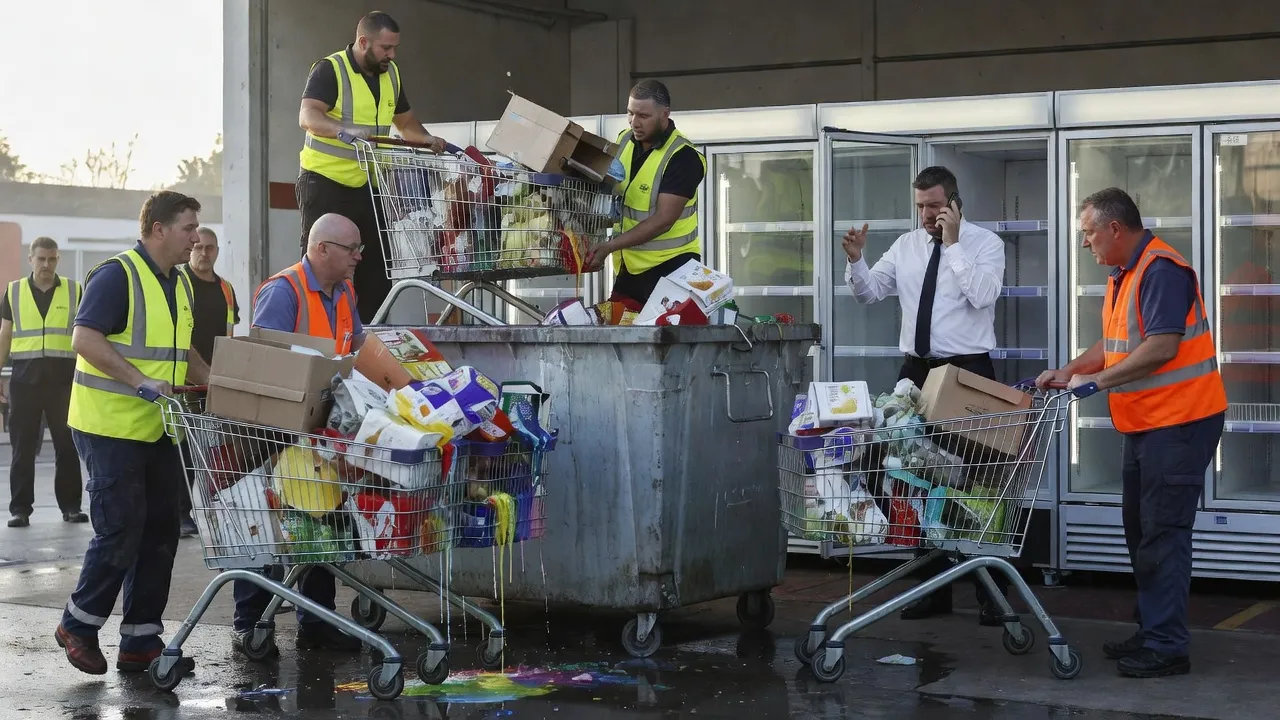
The figures cited come from the retailers. Carrefour says 80 supermarkets were hit, Monoprix about 5% of its roughly 490 stores. Les Mousquetaires, owner of Intermarché, speaks of about 150 stores whose fridges heated up for six hours, with all the affected goods destroyed to rule out health risks. CBC and the Globe report the account of a Paris resident, Geert de Clercq, who saw employees of an Intermarché in central Paris throw out whole carts of frozen food, melted ice cream running onto the pavement.
The seriousness is conveyed through the voice of Coopérative U CEO Dominique Schelcher, quoted on X: targeting "equipment essential to the preservation of fresh products and to the food supply of the French" is "extremely serious" and "unprecedented". The Toronto Sun adds the reaction of European Agriculture Commissioner Christophe Hansen, who says food security requires more attention. It specifies, citing BFMTV, that the targeted systems are those of the Danish manufacturer Danfoss and that E.Leclerc confirms stores were hit.
The European dimension is mentioned soberly: analyst Félix Aimé, of Sekoia, says Spain, Portugal, Poland, Germany and Belgium were also affected. The articles provided identify no perpetrator or motive, and do not address the age of the equipment or insurers' quantified losses. No direct Canadian angle appears: the event is presented as a foreign matter, with no established link to the vulnerability of Canada's distribution chains.
DOMINANT ANGLE
Canberra takes from the attack on French refrigerators mainly its security dimension: an everyday piece of infrastructure hacked remotely, with fires, investigators mobilized and other European countries affected.
KEY POINTS
ANALYSIS
Canberra, 13 October 2026. Australian media treat the affair as a large-scale cyberattack on an ordinary part of everyday life. ABC News, SBS and PerthNow carry the same account: hackers drove up the temperature of the refrigerators and freezers in hundreds of French supermarkets to as high as 50 °C overnight, causing fires and the loss of food.
All three outlets cite the Paris prosecutor's office, which describes a "large-scale" attack hitting "connected refrigerators in several major food retailers" in France. They report that Prime Minister Sébastien Lecornu has tasked the ANSSI with investigating and that Paris is coordinating with its European counterparts, as other countries may be affected. SBS adds, in wire-copy wording, that the targets were cold-regulation systems made by the Danish manufacturer Danfoss.
The figures are given retailer by retailer. Carrefour says 80 supermarkets were hit. Monoprix, which operates about 490 stores in France, mentions 5% of its network. Les Mousquetaires, owner of Intermarché, says the fridges in about 150 of its stores were heated to 50 °C for six hours, the hackers having managed to switch the equipment into defrost mode. A spokesperson says all the food concerned was thrown away to rule out health risks.
The account leans on a scene from the ground: Geert de Clercq, a Paris resident, saw staff at an Intermarché in central Paris emptying carts of thawed food into a skip, melted ice running into the street. PerthNow adds that the CEO of Coopérative U, Dominique Schelcher, confirms that his chain was also targeted.
DOMINANT ANGLE
Paris dissects a flaw that is first of all technical: old Danfoss controllers, with no security updates, which ANSSI considers it "urgent" to disconnect from the Internet.
KEY POINTS
ANALYSIS
Paris, October 13, 2026. In the night from Sunday, October 11 to Monday, October 12, hackers remotely took control of the refrigeration control systems of hundreds of French supermarkets. According to Le Monde, the attack was launched "probably around 11 p.m."; the hackers extended the defrost cycle from one hour to eight hours, which delayed the triggering of alarms. In the morning, Aurélien Comte, head of the fresh produce department at the Intermarché in Parempuyre (Gironde), told Sud Ouest he had "been hit by a wave of hot air" of about 50 °C, without having received any notification on his phone.
The toll varies by retailer: about 300 Intermarché and Netto stores, fewer than a hundred at Coopérative U, 80 Carrefour supermarkets, about thirty Monoprix stores and several E.Leclerc. The Paris prosecutor's office opened an investigation of its own accord, entrusted to the Office anticybercriminalité, and reported "outbreaks of fire".
The French press dwells on the technical flaw. According to a source close to the case cited by 20 Minutes with AFP, the attack targeted systems from the Danish manufacturer Danfoss, which says that "the majority of the affected units are old products" that have reached end of life and no longer receive security updates. The manufacturer had flagged a major vulnerability on September 18. The director general of ANSSI, Vincent Strubel, considers it "urgent to disconnect them from the Internet" or to adopt very restrictive network filtering, referring to the Danfoss AK-SM and AK-SC controllers.
DOMINANT ANGLE
Islamabad takes from this attack the technical flaw: obsolete cooling units running outdated firmware, with Danfoss urging its customers to update their systems.
KEY POINTS
ANALYSIS
Islamabad, October 13, 2026. Pakistani media treat the affair as a textbook case of connected-device vulnerability. ARY News carries the Reuters dispatch: hackers drove up the temperature of refrigerators and freezers in hundreds of French supermarkets to as much as 50 °C (122 °F) overnight, causing fires and the loss of food. The Paris prosecutor's office described on Monday a "large-scale" attack affecting "connected refrigerators" at several major chains, and Prime Minister Sébastien Lecornu has tasked the ANSSI with investigating, according to a member of his office.
The figures come from the retailers. Carrefour says 80 of its supermarkets were hit; Monoprix, which operates about 490 stores in France, says 5% of its stores were affected. Les Mousquetaires, owner of Intermarché, reports around 150 stores whose fridges were heated for six hours; a spokesperson says all the affected products were thrown away to rule out any health risk. Reuters relays the account of a Paris resident, Geert de Clercq, who saw employees at an Intermarché emptying carts of thawed frozen goods into a skip, melted ice running onto the road. The CEO of Coopérative U, Dominique Schelcher, confirms that his group was also targeted.
Daily Times stresses the technical and European dimension. According to that account, the ANSSI identified a vulnerability in software supplied by Denmark's Danfoss, which says the affected units were running outdated firmware and urges its customers to update their systems. The disruption reportedly went beyond refrigeration: electronic shelf labels and delivery systems also experienced problems. In the Netherlands, Ahold Delhaize's chains (Albert Heijn, Etos, Gall & Gall) reported a separate security incident, and Delhaize stores in Belgium were disrupted, with no confirmation from the authorities of a link.
DOMINANT ANGLE
Singapore takes from the attack on French refrigerators a food security signal, in which hackers target the cooling systems of a supply chain.
KEY POINTS
ANALYSIS
Singapore, 13 October 2026. Channel News Asia and the Straits Times relay the attack from AFP, Reuters and Bloomberg dispatches. In the night of 11 October, hackers took control of refrigeration systems in French supermarkets and forced them into defrost mode. Fridges and freezers heated up to 50 °C for about six hours, according to Mousquetaires cited by Bloomberg. Meat, frozen food and vegetables had to be thrown away.
The tally varies by source. The Straits Times, citing Bloomberg, mentions about 150 Intermarché stores, fewer than a hundred Coopérative U stores and 80 Carrefour sites out of 6,000. According to AFP, 150 to 200 Intermarché stores are affected. CNA reports at least 300 Intermarché or Netto stores, more than 100 Coopérative U stores and several E.Leclerc stores, and headlines more than 400 points of sale.
The Paris prosecutor's office confirmed a "large-scale" attack that caused food losses and fires. Prime Minister Sébastien Lecornu has tasked ANSSI with investigating, and France is coordinating with its European partners, as other countries may be affected. The head of Coopérative U, Dominique Schelcher, wrote on X that targeting equipment essential to preserving fresh produce and supplying the French was "extremely serious" and "unprecedented".
The Singaporean reading dwells on food security. CNA quotes European Commissioner Christophe Hansen: "Food security requires more attention at all levels", and notes that he considers the "exploitation of food" to have become a reality. The Straits Times places the episode after warnings that hackers are seeking to cause physical damage through operational technology systems, and says France is preparing to protect its critical infrastructure.
DOMINANT ANGLE
Pretoria focuses on an attack on the food cold chain: South African press, via wire copy, presents it as infrastructure sabotage causing fires and food losses, with ANSSI called in and Europe alerted.
KEY POINTS
ANALYSIS
Pretoria has no reading of its own on this affair: South African coverage rests on a wire dispatch by Leo Marchandon and Gabriel Stargardter, published on October 12 by Daily Maverick and TimesLIVE under near-identical headlines: “Hackers heat French supermarket fridges”.
The account opens on the scale. Hackers forced the temperature of many refrigerators up to 50 °C overnight, causing “fires and food losses” in several hundred stores. The Paris prosecutor's office speaks of a “large-scale” attack hitting “connected refrigerators” at several major retail chains. Prime Minister Sébastien Lecornu has tasked the National Cybersecurity Agency of France (ANSSI) with investigating, according to a person close to him.
Figures are given chain by chain. Carrefour says 80 supermarkets were hit, but not the vast majority of its 6,000 stores. Monoprix, which has about 490 stores in France, reports 5% affected. Les Mousquetaires, owner of Intermarché, mentions about 150 stores whose fridges were heated for six hours, and a spokesperson says all the food concerned was thrown away to rule out any health risk. E.Leclerc and Auchan did not respond to requests for comment.
The text also paints a concrete picture: a Paris resident, Geert de Clercq, saw Intermarché employees throwing entire trolleys of thawed frozen food into a skip, the melted ice running onto the road.
Explore every perspective on this subject across 6 countries.
Compare viewpoints and see where they diverge.
published on
countries
sources
articles
gap
Accounts from stores, tallies by retail chain and the questions still open allow the story to be read beyond the summary. The six corpora analyzed report on it, four of them mainly from Reuters wire dispatches.
The perpetrator of the attack has not been identified; the Paris prosecutor's office investigation is open and ANSSI recommends disconnecting the affected equipment from the Internet.
On the morning of Monday, October 12, staff discovered the damage on site. Aurélien Comte, head of the fresh department at the Intermarché in Parempuyre (Gironde), told Sud Ouest he had "been hit by a wave of heat" when opening the cold rooms, without having received any notification on his phone.
« A catastrophe, never seen on this scale »
In Paris, Reuters reports the account of a resident, Geert de Clercq. He saw employees at a central Intermarché emptying carts of thawed frozen food into a skip, the melted ice running onto the roadway. A spokesperson for Les Mousquetaires says, according to the dispatches, that all the food concerned was thrown away to rule out health risks.
In Haguenau (Bas-Rhin), an Intermarché and a Super U report losses of 270,000 euros, according to the French press. At national level, Thierry Cotillard, head of Les Mousquetaires, speaks on BFMTV of losses of "tens of millions of euros".
On the number of Les Mousquetaires stores affected, sources give different figures. The French press cites about 300 Intermarché and Netto stores. The Reuters and Bloomberg dispatches, relayed in Australia, Canada, Pakistan, South Africa and Singapore, speak of about 150 stores heated for six hours.
The Straits Times also quotes AFP, for whom 150 to 200 Intermarché stores are affected. Channel News Asia gives at least 300 Intermarché or Netto stores and more than 100 Coopérative U stores. The texts do not specify whether these figures cover the same scope or the same time of tally.
Carrefour's figure, by contrast, does not vary: 80 supermarkets, which Singapore sets against a network of 6,000 stores. Monoprix, which operates about 490 stores in France according to Reuters, reports 5% affected. Le Monde counts around thirty. According to Reuters, E.Leclerc and Auchan did not respond to its requests.
The extension abroad rests on a single voice in the dispatches: Felix Aime, an analyst at Sekoia, cites Spain, Portugal, Poland, Germany and Belgium. The French articles read do not repeat this list. This measures what each corpus retained, not the real extent of the attack.
« Food security requires more attention at all levels »
Daily Times describes, in the conditional, chains affected in France, Belgium and the Netherlands. Ahold Delhaize, parent company of Albert Heijn, reports a separate security incident. Delhaize stores in Belgium were disrupted, without the authorities confirming a link with the French supermarkets.
In Brussels, the European Commissioner for Agriculture, Christophe Hansen, reacted on X, according to Channel News Asia. On the industry side, ABC reports that the French retail federation is demanding "total transparency" from the publisher of the software used by the affected units.
None of the corpora identifies the author of the attack. Daily Times mentions neither a claim of responsibility nor a ransom demand. Reuters, picked up by Daily Maverick, notes the absence of any loss estimate for the sector as a whole.
Responsibility for filing a complaint is the subject of an isolated clarification: according to the Straits Times, Les Mousquetaires say it would fall to the supplier to file a complaint. Danfoss says, in the same article, that it is "aware of incidents in France" and is helping its customers.
The foreign corpora read do not address insurance or the financial cost to the groups; the quantified losses come from French sources alone.
Danfoss (Denmark) says most of the affected units are old, end-of-life and without security updates.
ANSSI cites the Danfoss AK-SM and AK-SC controllers and considers it urgent to disconnect them from the Internet.
Defrost duration extended from one hour to eight hours, alarms delayed; attack launched "probably around 11 p.m."
The European extension comes from a single expert, Felix Aime, an analyst at Sekoia, according to whom Spain, Portugal, Poland, Germany and Belgium are also affected. ABC adds that the French retail federation is demanding "full transparency" from the vendor of the software used by the affected units.
SBS places the episode within a broader concern about the damage malicious actors can cause in Europe. The articles read do not say who is behind the attack, and do not address insurance or the financial cost to the groups.
Retail executives speak of an unprecedented shock. Thierry Cotillard, head of Les Mousquetaires, tells BFMTV it is "a catastrophe, never seen on this scale" and speaks of losses of "tens of millions of euros nationally"; he sees in it "a real vulnerability issue" for "food sovereignty". Dominique Schelcher, CEO of Coopérative U, says on X that "attacking equipment essential to the preservation of fresh products and to the food supply of the French is extremely serious and unprecedented". In Haguenau (Bas-Rhin), an Intermarché and a Super U report 270,000 euros in losses. The perpetrators of the attack have not been identified.
Reuters also quotes Felix Aime, an analyst at Sekoia, who says Spain, Portugal, Poland, Germany and Belgium were also affected. Paris is coordinating with its European counterparts and assessing whether other French companies are exposed. Neither of the two texts identifies the perpetrators or mentions any claim of responsibility or ransom demand.
The technical side remains brief. The Danish manufacturer Danfoss says it is "aware of incidents in France" and is helping its customers; according to experts, older Danfoss equipment had not received updates. Mousquetaires specifies that it would be up to the supplier to file a complaint. The Straits Times also reports that the Dutch group Ahold Delhaize, with a large presence in the United States, is dealing with a "security issue". The excerpts name no perpetrator of the attack.
The head of Coopérative U, Dominique Schelcher, wrote on X that targeting equipment essential to keeping fresh products and supplying the French is “extremely serious” and “unprecedented”. Intermarché CEO Thierry Cotillard spoke on BFM TV.
The European dimension is relayed: France is coordinating with its counterparts, as other countries may be affected. Felix Aime, an analyst at Sekoia, cites Spain, Portugal, Poland, Germany and Belgium. TimesLIVE adds that Ahold Delhaize, parent company of Albert Heijn, is facing a “security issue” and has taken several systems offline.
Neither of the two reprints identifies a perpetrator, and the dispatch puts no figure on overall losses for the sector at this stage.
More divergent than 37% of recent comparable stories (reference: 90 recent stories measured with the same method).





