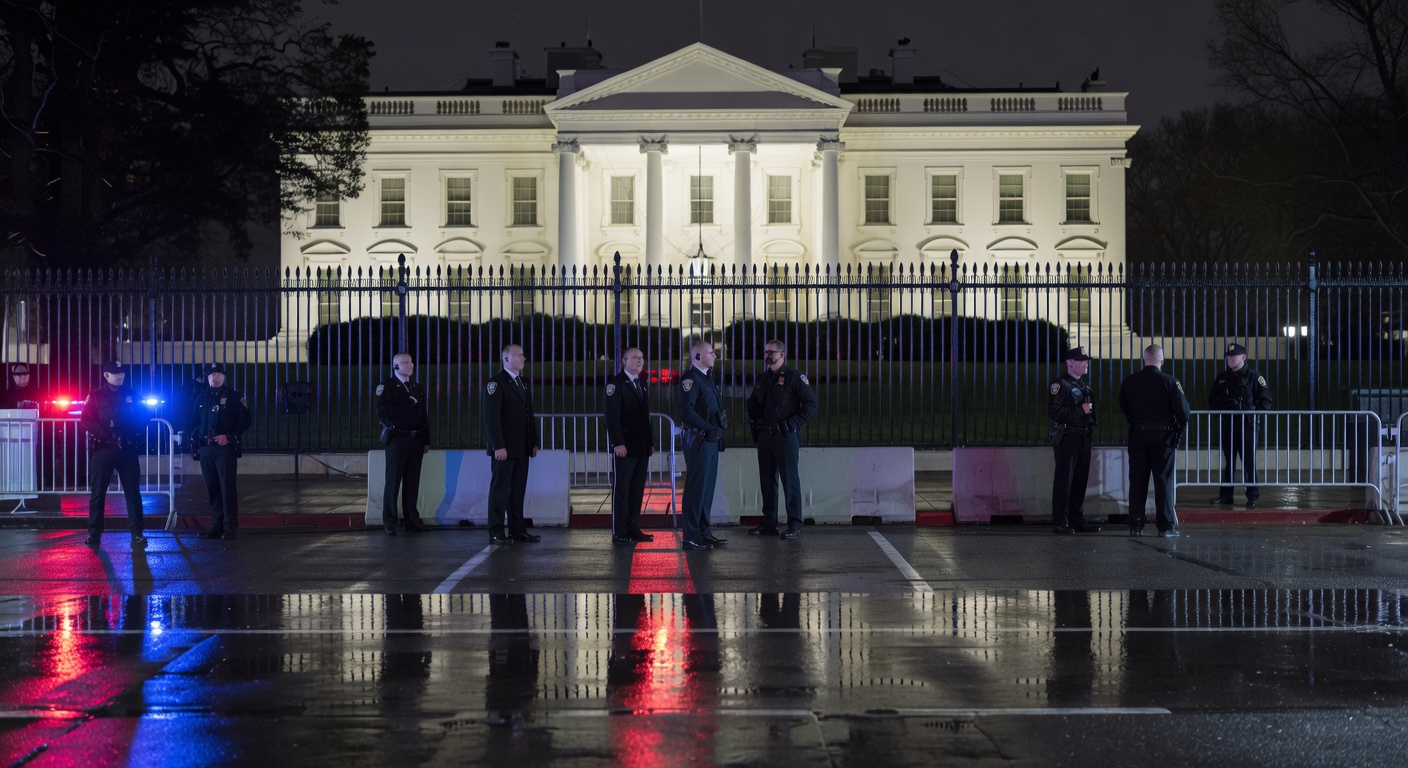
On 24 May 2026, around 6:00 p.m., a 21-year-old man from Maryland, Nasire Best, opened fire on a Secret Service security checkpoint at the intersection of 17th Street and Pennsylvania Avenue NW, outside the White House. Agents returned fire: the attacker was shot and later pronounced dead at hospital. A civilian bystander, hit during the exchange of gunfire, was hospitalized in serious but stable condition. President Trump, who was inside the building, was unharmed.
The attacker was known to security services before the incident: he had a criminal record and documented psychiatric history. Afterward, the president publicly praised the Secret Service's response, calling the intervention swift and professional.
The episode comes amid heightened security tension around the U.S. presidency, with several incidents reported in the preceding weeks, while the administration was engaged in sensitive diplomatic negotiations linked to Iran. It highlights a structural tension: the coexistence of one of the world's most sophisticated protection systems and legal access to firearms for individuals already flagged by security services.
How the event should be read remains disputed. Some actors see it as the third violent episode in a month around the president, a sign of broader instability; others treat it as an isolated incident. Likewise, emphasis falls in some cases on the attacker's mental health profile and his family's words, and in others on the efficiency of the neutralization protocol. The question of firearm access surfaces for some without being stated explicitly.