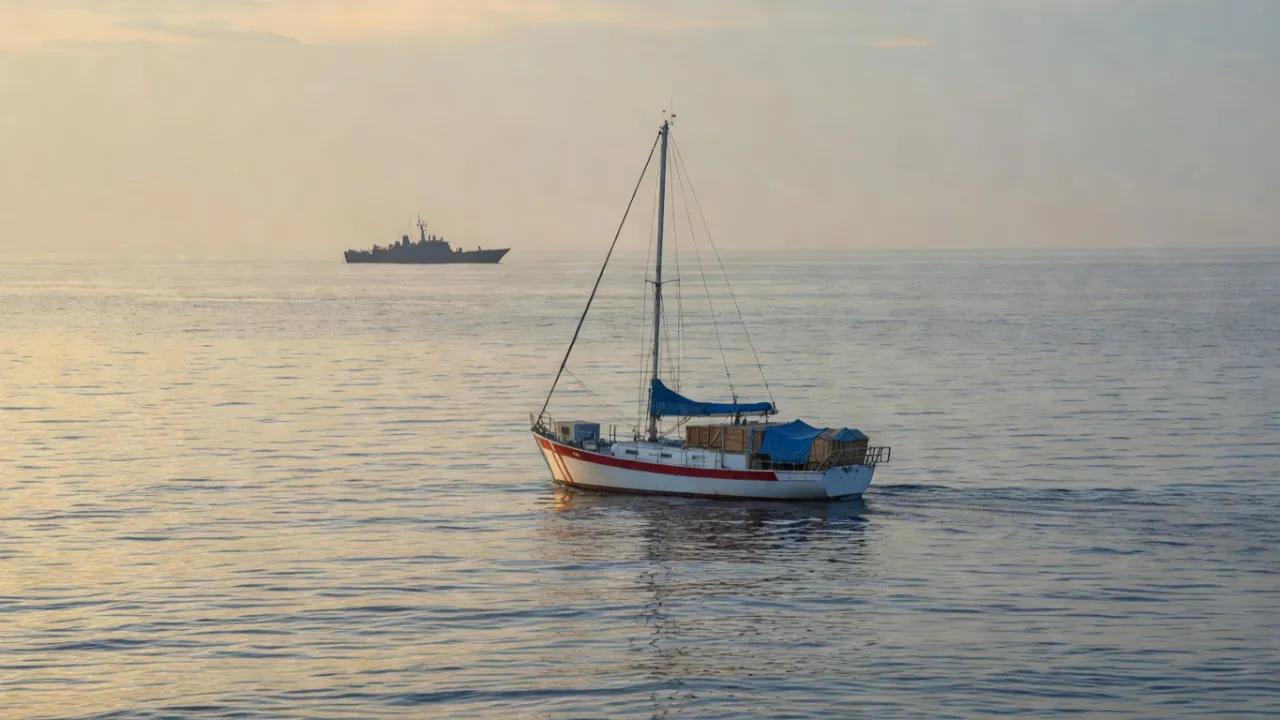
Israeli naval forces intercepted most of the vessels in the Global Sumud Flotilla in international waters, roughly 250 to 463 kilometres off the coast of Gaza, detaining several hundred activists from dozens of countries. Having departed from the Turkish port of Marmaris, the flotilla was a renewed attempt to breach the naval blockade imposed on Gaza since 2007.
The event quickly took on a diplomatic dimension. The Israeli prime minister publicly praised the operation, while the Turkish president denounced it as an act of "piracy and banditry." Ten states co-signed a joint statement condemning the interception and demanding the release of those detained. The presence of nationals from many countries triggered consular procedures in several capitals, notably in Australia, Indonesia, South Korea and Pakistan.
The incident is part of a sequence of repeated naval operations since 2025 aimed at maintaining the blockade, whose legality is contested by the UN and a majority of states. It exposes several fault lines: between countries organising into a diplomatic coalition and democracies that voice criticism without a formal break, and between one side backing the operation and the rest of the world.
Several points remain disputed. One side presents the blockade and the interception as a lawful security operation; others see it as a violation of the law of the high seas. The nature of the cargo is also contested: some assert that no aid was found on board and describe a political manoeuvre, while the organisers describe a civilian humanitarian mission. The use of force during the boarding is likewise disputed, with some actors reporting gunfire that the other side denies. No binding international mechanism exists to arbitrate these terms.