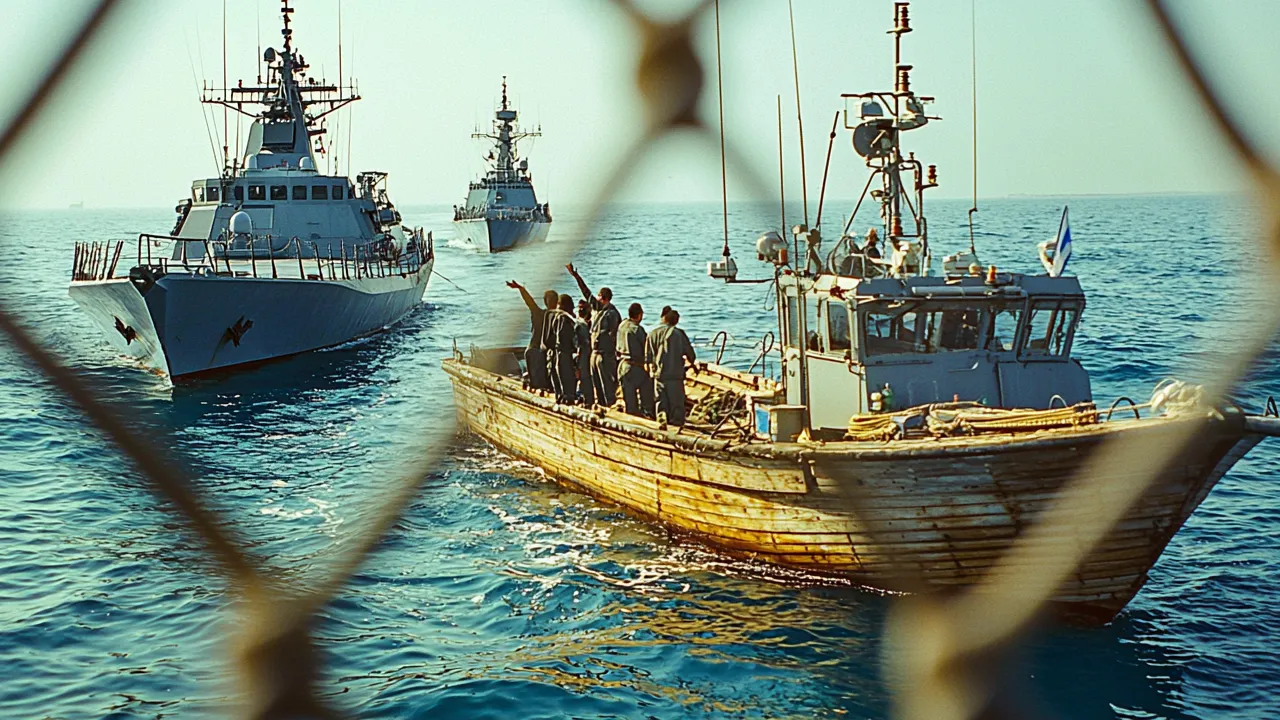
The Global Sumud humanitarian flotilla, organized by an international coalition of NGOs, was intercepted by the Israeli navy before reaching Gaza. The operation took place in the Mediterranean, at a significant distance from the Gaza Strip; the exact location — international waters or an area covered by the blockade — remains disputed among the actors involved. At the same time, Médecins Sans Frontières published a report documenting restrictions on access to water in Gaza that it describes as "deliberate."
The flotilla was part of a blockade of Gaza that has lasted for months and has led to a humanitarian crisis documented by MSF, the UN and many organizations. The report on water deprivation carries particular legal weight: the use of water as a weapon of war is prohibited under international humanitarian law, notably Additional Protocol I to the Geneva Conventions. The episode comes as a war involving Iran absorbs diplomatic attention, pushing the situation in Gaza into the background for major capitals.
The legal characterization of the interception divides the actors. Several states view it as a violation of international maritime law, or even an act of piracy carried out in international waters and an obstacle to humanitarian aid. Israeli authorities, by contrast, present it as a legitimate maritime control conducted within the framework of the blockade, in response to cooperation requests.
The dispute extends beyond the legal question: some actors emphasize the humanitarian dimension and the water shortage, others the security stakes or the principle of freedom of navigation. The question of the interception's legality is set to be brought before the UN and international courts in the following days, within a Security Council where the use of vetoes will weigh on any decision.